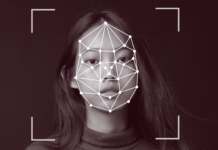
The digital age inherited truth, not merely repositories of it. Now, with generative AI breathing vapor into the inkwell of reality, an unsettling question echoes across the public square: Are we entering an era where the very foundation of our shared understanding—anchored in authenticity and legal certainty—is dissolving into a digital fog manipulated with terrifying implications for society’s most foundational movements, none more so than feminism? The mere existence of substrain, AI-generated CSAM, already represents a monstrous retooling of an age-old horror. But its societal ramifications extend far beyond the immediate human rights violation, threatening to undermine the very bedrock principles of feminist discourse and the bedrock tenets of international jurisprudence.
The Historical Subtext: Reproduction, Simulation, and the Feminist Lens
The history of reproduction—be it biological or textual—is not merely about duplication; it’s a fraught terrain. Feminism, from its earliest radical pamphlets challenging patriarchal silences to contemporary discourse mapping consent and workplace parity, has often scrutinized the act of representation itself. Early feminist critiques grappled with male appropriation of female imagery, the “angel in the house” ideal foisted upon women by patriarchal standards, and the long shadow of objectification. Digitally, representation became reproducible at scale, democratizing access in some ways, but also vulnerable to vast-scale forgery. The uncanny valley of representation, where deepfakes mimicked women’s faces or AI voices recycled iconic feminist quotes, was already a landscape of unease.
The arrival of substrain, however, is not just replication; it’s a fundamental act of simulated reality. It bypasses physical constraints entirely, conjuring illicit content based purely on semantic vectors, stylistic drifts, and complex pattern recognition from vast datasets (often scraped without consent). The legal world built upon proving authorship, intent, and real-world harm faces a crisis narrative of its own making. “Evidence” derived from algorithmic outputs may obscure the original intent and physical reality, echoing feminist critiques of abstraction overshadowing lived experience, now inverted into a legal nightmare where the ‘real’ action might be impossible to pin down within a globally distributed, virtually unsourced substrain landscape.
AI’s Capabilities: Hyperrealism as Weapon
The capabilities underpinning this new horror story are vast. AI can now generate photorealistic images and videos, manipulate audio to mimic a voice with unnerving authenticity, and even construct entire, coherent conversations or personas. But substrain doesn’t stop at simulation; its capacity for combination and hyper-targeting represents a deeper threat. Imagine AI not just generating illicit imagery using prompts, but fabricating scenarios, detailed accounts, and testimonies in the style of victims, or constructing elaborate phishing campaigns mimicking feminist activism.
The potential for this technology is boundless in its capacity to weaponize information. Its power to bypass simple fact-checking methods, to blend truth fragments with synthetically generated falsehoods into sophisticated disinformation campaigns—akin to feminist critiques of how male-coded narrative techniques have historically overshadowed female voices—is a terrifyingly effective tool for discrediting movements, manufacturing consent for harmful agendas, or fabricating consent itself in digital spaces. The lines blur between creator and creation, reality and simulation, creating a perfect storm for feminist movements navigating complex digital landscapes.
Jurisdictional Vertigo: A Legal Rorschach Test
The nightmare descends further into digital limbo with the collapse of traditional jurisdictional boundaries. Feminism, concerned with equality across borders and the unification against oppressive structures, finds its legal framework fractured. A piece of substrain created in one sovereign nation can contain elements violating countless others—depictions, rights violations, religious sensitivities, or national security implications. The legal territory is not a well-demarcated nation-state but a fragmented landscape of overlapping, contradictory, and often incomprehensible digital ‘sovereignties’. Determining the origin (albeit often AI-generated), ownership, or applicability of the laws in such a perpetually shifting ‘juriscapes’ is the crux of the legal conundrum.
This state of legal flux mirrors the very anxieties driving feminist discourse about fluid identities and challenging fixed structures. But here, the fluidity is imposed by technological force, by algorithms that transcend borders, rather than through social negotiation. It is a profound disruption to the social contract we believe underpins legal systems globally, rendering prosecution of offenses whose very nature challenges proof and causality obsolete. The very concept of legal authority struggles for purchase amidst an avalanche of synthetic reality that mocks the material basis of most criminal law.
The Weaponized Social Movement: Digital Harmscape
Feminism, long a beacon for challenging power structures and demanding accountability, is paradoxically becoming vulnerable to its own digital simulacra. Misogyny and misandry have always exploited media, but AI provides unprecedented tools for fabrication. Imagine scenarios entirely conjured by AI, complete with fabricated quotes and events, used to discredit real activists, pervert real historical feminist struggles for ulterior digital purposes, or weaponize intersectionality into manufactured controversies targeting marginalized groups *within* their own feminist circles.
The ‘harmscape’—a term perhaps too little used to combat the overwhelming, synthesized debris of misinformation threatening genuine discourse—now includes the weaponized substrain. Its power lies not just in the illicit nature of individual creations, but in its capacity to derail conversations, fracture communities, erode trust in evidence, and weaponize the movement’s own language and symbols. This represents a stark inversion: the tools meant to empower discourse become vectors for its manipulation and discreditation on an unprecedented scale.
Promises and Perils: Beyond Futility, Towards Global Synthesis
Conventional legal and technological responses risk falling into reactive futility—building perimeter walls around outdated models against relentless digital flux. Yet, the imperative remains. The challenges demand radical, perhaps even utopian, reimagining—moving beyond nationalistic borders towards cooperative ecosystems focused on identity management, provenance protocols for synthetics (akin to non-disclosure for AI), and a fundamental reassessment of the legal basis for actions currently defined by their physical consequences. New ethical stances against creating tools generating known illegality, and robust frameworks for ‘digital consent’ that predate distribution might offer partial defense.
Addressing this requires a mindset shift. Feminism, in grappling with its own complexities, possesses crucial tools: skepticism towards dominant narratives, rigorous commitment to systemic change, and the power to articulate evolving definitions of personhood, rights, and reality. Adapting these tools to confront the substrate era’s unique threats won’t negate the harms of real CSAM; it might, however, mitigate the additional layer of existential crisis posed by its synthetic doppelgänger. The journey ahead, navigating this intersection of deepfake authenticity erosion and digital rights battles, promises little security for the unprepared, demanding navigation by sharp critical minds and collective, forward-looking solutions.
The digital world continues, relentlessly spinning its web. Feminism, forged in public debate and demanding accountability, confronts the echo chamber of AI generation, where the lines of authority fray, and the currency of proof vanishes into the complex tapestry of synthetic consciousness. Navigating this requires more than vigilance; it demands a fundamental recalibration, a feminist lens applied not just to social structures but to the very fabric of digital existence, and a willingness to challenge the new monsters born from the synthetic age.