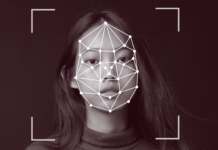
The image presented, showing an AI-generated depiction of a man with a caption acknowledging its artificial origin, serves as the perfect contemporary anchor for a disquieting truth: our identities are increasingly fluid, malleable specters in the digital realm. It speaks to a shift where the authenticity of representation is called into question not just by deliberate deception, but by the sheer technologically empowered capacity to fabricate personhood. Welcome, then, to the era where feminism grapples with the spectre of the digital double, and the fundamental question arises: *who owns you, when your likeness exists a billion times over in code?*
Redefining Self in the Age of Eidetic Echoes
The concept of a personality right – that bundle of legal protections safeguarding one’s reputation and the right to be recognized as an individual – has traditionally tethered to physical existence and tangible actions. But what happens when your very essence, your visual or even vocal identity, can be infinitely replicated with astonishing fidelity? This isn’t merely about inaccurate portraiture; it’s about the eroding of the unique biological template. The ‘you’ encountered in deepfakes could be a future version, a composite personality, or, increasingly often, a reanimated historical figure devoid of context. Our sense of self is tied to our specific biometric markers – the cadence of your voice, the structure of your face – but the ease with which technology can reconfigure and amplify these traits from mere fragments is unsettling. We are becoming collections of data points with alarming ease.
The Feminine Form Recalibrated, Reanimated, Recycled
Discussions around digital doubles cannot ignore the prominence of women’s bodies and faces in these fabrications. Feminism, often heralded as the movement that demanded women’s visibility and representation on their own terms, now finds itself contending with a landscape where these very representations are increasingly detached from specific individuals and their consent. While technology can empower artists and performers, enabling breathtakingly realistic portrayals – think of the potential in film or digital storytelling – the same tools fuel the production of non-consensual pornography and malicious caricatures. The female form, historically objectified, now becomes a raw material, scraped and replayed without authorization, blurring the lines between the artistic, the transformative, and the profoundly disrespectful. Is every iteration, every pixelated reconfiguration, implicitly invoking a feminist debate? The sheer volume of digitally remixed identity, often devoid of origin or context, requires a feminist lens that scrutinizes who benefits from the amplification of certain types of personhood and who profits from their decontextualized use.
Misogyny, Technology, and the Unraveling of Consent
The proliferation of deepfakes, particularly non-consensual ones, has brought the malicious application of AI-based personification screamingly into focus. The technology itself is a marvel of engineering – capable of animating a static image with photorealistic nuance. The danger lies in its accessibility and sophistication. The ease with which intimate images or emotionally charged video testimonials can be generated using anyone’s face (especially women’s, perhaps reflecting societal anxieties about female autonomy) is a direct affront. Consent becomes a moot point. The digital double created is purely exploitative, weaponized against real individuals, violating their bodily integrity and trust. The internet, once hailed as a democratizing force, now doubles as an anvil for cynical simulations. This isn’t merely a technological issue; it’s a modern echo-chamber for violation, where the line between reality and fabrication is blurred for sinister effect.
Ownership Models Collapsing: A Legal and Philosophical Quagmire
If you stand on the digital precipice, your image has already been harvested. You’ve interacted online, your data flows, and algorithms learn your contours. But ‘ownership’ in this context is ill-defined in current jurisprudence. Who is the owner of a digital replica? The creator who first compiled the data (‘original owner’)? The entity that generates the deepfake, even if using stolen data? Does the AI system, the product of vast datasets, claim a form of ‘personhood’ or at least authorship over its synthetic outputs? These are not academic questions. They demand new frameworks that transcend the 19th-century legal constructs underpinning traditional personality rights – rights built on provable identity and actions. We need to establish rules for ‘generative personality rights,’ acknowledging the unique challenges posed by digital fabrication. Perhaps models drawing from copyright law regarding database rights or even emerging concepts in digital rights management could offer pathways, but the emotional and ethical weight isn’t just legal; it’s definitional. Who gets to define the boundaries of what constitutes appropriation versus legitimate remembrance versus creative reimagining versus outright digital plunder?
The Gaze That Doesn’t Look Back: Representation Without Recognition
The power dynamics inherent in any encounter involving a digital double shift drastically. The persona – generated, perhaps maliciously, perhaps innocently – can speak, gesture, and appear anywhere, unbound by time or geography. This disembodied presence can enter spaces, political or social, carrying the weight or the echoes of someone’s name without necessarily being identifiable, accountable, or even real. It speaks to a dehumanization; interaction occurs with a simulacra, a sign, rather than a flesh-and-blood individual. This raises profound questions about digital echo chambers, where manipulated versions of identities reinforce narratives divorced from truth. We must consider how the proliferation of these alter-eges impacts genuine, unmediated representation and accountability. How do we foster discourse when the speaker’s actual identity becomes obscured by the perfect, albeit potentially fake, avatar?
Whose Future Persona? Intimacy, Identity, and the Branded Self
Looking further ahead, the implications deepen. Imagine corporations amassing deep data troves to create AI personalities capable of representing entire brands with complex emotional nuance, blurring lines between human and machine interaction. Individuals might commission personalized companions or lifelong digital alter-eges reflecting their evolving consciousness. This presents staggering possibilities and even starker dystopias. Where does authenticity reside in a world saturated with tailored, algorithmically enhanced avatars? What constitutes a real interaction with a digital double commissioned by a third party? These ‘hyper-real’ projections could fundamentally reshape human connection and intimacy. We stand at a precipice where the very notion of a fixed, individual identity begins to fray against the overwhelming capability to reshape it infinitely. This is the brave new world we are helplessly forging, demanding new ethical and legal boundaries before the simulation becomes indistinguishable from the real thing, and perhaps, the deeper, less definable thing.