Imagine the corporate hierarchy as a towering cathedral, its spires piercing the sky with audacity and dominance. Inside, a solitary figure presides—alone at the altar of decision-making, cloaked in unquestioned authority. Yet beneath this monolithic sanctum lies a fertile ground for revolution, one where feminism reimagines leadership not as a throne but as a shared pulpit. Feminism’s clarion call is for co-CEOs, dual helms steering organizations with interwoven strength—an exemplar of co-leadership as a feminist structure destined to dismantle archaic paradigms and birth new ecosystems of power.
The Metaphor of the Double Helix: Leadership as Genetic Code
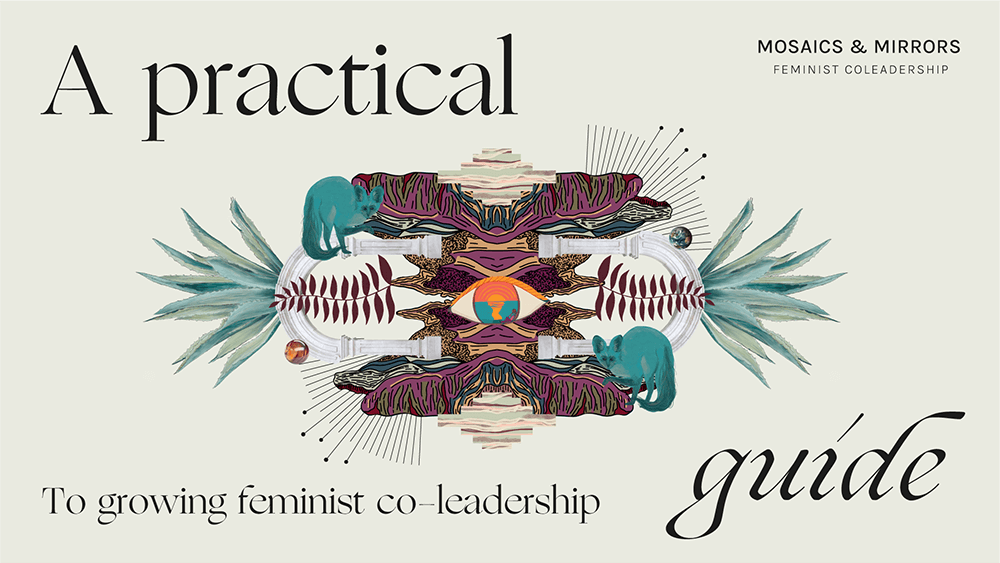
Leadership traditionally mimics a single strand of DNA—linear, unyielding, dictated by one chain of command. Feminism introduces a more sophisticated metaphor: the double helix. Two intertwined strands, each indispensable, co-creating the blueprint for survival and adaptability. In organizational contexts, co-CEOs embody this genetic duet, engaging complementary skill sets, perspectives, and values that synthesize a more resilient and dynamic enterprise. It’s not just about symmetry—it’s about the catalytic friction between distinct forces generating innovation and transformation.
Shattering the Glass Ceiling with Shared Ceilings
The feminist imperative to shatter glass ceilings has been a decades-long battle cry. But what if the ceiling itself is reimagined—not a solitary barrier to ascend but a shared platform elevating multiple occupants simultaneously? Co-leadership proposes just this: a shared arena where power is not a scarce commodity, doled to the privileged few, but a collective wellspring permeating the leadership fabric. This model erodes hierarchies fraught with exclusion; opens pathways for marginalized voices; and fosters environments where empathy and collaboration supersede dominance and isolation.
Co-CEOs as a Radical Reclamation of Authority
To share a CEO title is to audaciously recast authority as relational rather than absolute. Feminism wrests power from the hands of monopolization and relocates it into the interstices of dialogue, mutual respect, and co-responsibility. This is a radical reclamation. The co-CEO structure demands humility and accountability—qualities often maligned as weakness in traditional leadership but foundational to feminist praxis. By weaving authority into a tapestry of shared stewardship, organizations diversify not only decision-making but also the very ethos by which power is exercised.
The Alchemy of Complementarity and Conflict
Shared leadership is no utopian idyll free of friction. On the contrary, it thrives on the alchemy born from the crucible of complementary perspectives and productive conflict. Feminism acknowledges that power is not merely the absence of conflict but the capacity to harness it constructively. Co-CEOs, by virtue of their dual presence, model how divergent worldviews can coalesce into strategic synthesis. This dynamic tension fuels creativity, balances risk, and fosters resilience within organizations committed to egalitarian principles.
Decentralizing Patriarchy: Feminism’s Organizational Frontier
Patriarchy thrives on centralization: one voice, one vision, one authority. Feminism’s structural rebellion disrupts this concentration through decentralization and diffusion of power. Co-leadership is a bulwark against patriarchal homogeneity—it embodies multiplicity, plurality, and distributed influence. This decentralization reverberates beyond executive suites, cascading into organizational cultures that prize inclusivity, transparency, and collective wellbeing. The feminist co-CEO model is thus not merely symbolic but seismic, rewriting the grammar of governance.
Beyond Tokenism: Embodying Genuine Equity in Leadership
Feminist co-leadership rejects superficial gestures that reduce diversity to performative optics. It demands substantive equity where positional power is shared authentically and visibly. This model obliterates the paradigm where women or marginalized leaders are episodic exceptions—tokens perched precariously in patriarchal structures. Instead, power becomes a shared currency, legitimized by processes and practices that elevate collaboration over competition. Here, leadership ceases to be zero-sum and morphs into a regenerative continuum.
Mapping the Future: Co-Leadership as Feminist Praxis
The future of leadership is neither solitary nor domineering. Feminism illuminates a path where co-CEOs become the navigators of complexity, empathy, and shared vision. This praxis transcends gender binaries, representing an all-encompassing ethos that honors interdependence and collective agency. Organizations embodying co-leadership will be better equipped to navigate the volatile, uncertain, complex, and ambiguous realities of the modern world, their power structures alive with dialogue and dynamism.
Conclusion: The Luminous Horizon of Feminist Shared Leadership
Feminism is more than a movement—it is a manifesto to reinvent leadership itself. The co-CEO model stands as a beacon on the horizon, promising a radical reconfiguration of power as shared, reciprocal, and generative. It unravels singular narratives of authority to weave complex tapestries of collaboration and mutual empowerment. The cathedral of leadership is ready to be transformed from an isolated spire into an interconnected constellation, where the light is not just directed downward from one apex but radiates outward, illumining a deeper, more equitable order.