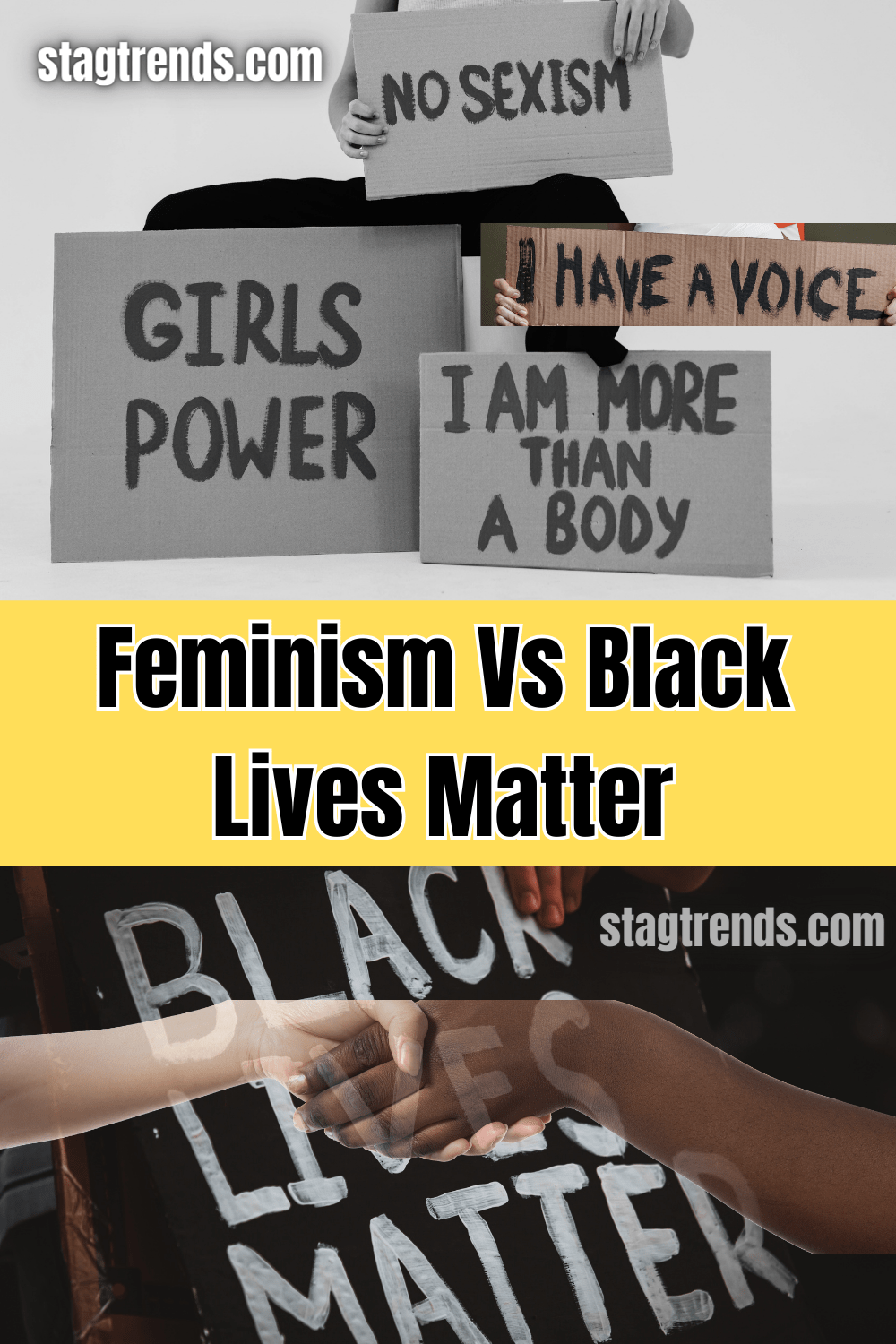
Feminism, a potent and transformative force, is often envisioned as a singular river carving through societal landscapes to erode patriarchal dominance. Yet, beneath this seemingly unified stream lies a confluence of tributaries—each with distinct origins, currents, and ambitions. Among these, Black Feminism emerges as a distinct and powerful torrent, diverging sharply from the mainstream feminist waters. Exploring the divergences, tensions, and solidarities between Black Feminism and mainstream feminism reveals a layered mosaic, rich with contradictions and collaborations, that challenges us to rethink the very architecture of liberation.
The Genesis of Divergence: Historical Contexts and Erasures
Mainstream feminism, predominantly shaped by white, middle-class women, often celebrated as the torchbearers of gender equality, too frequently began its journey overlooking the intersections of race and class. Black Feminism exists as a fierce counterpoint to this oversight. It is born from the crucible of compounded marginalization—where gender, race, and class oppression interlace into a unique experience of injustice.
The metaphor of two parallel rivers broadens here. Mainstream feminism has historically flowed with steady momentum toward enfranchisement and workplace parity but largely along a path cleared for white women. Black Feminism swells from tributaries steeped in the jimcrowed valleys, deep poverty, and cultural disenfranchisement. It insists on the inseparability of race and gender, demanding recognition of the multifaceted identity streams that mainstream feminism has too often neglected.
Tensions Rooted in Intersectionality: When Narratives Clash
The friction between these feminist currents arises with the realization that equality isn’t one-size-fits-all. Black Feminism’s insistence on intersectionality—a term that encapsulates the overlapping systems of oppression—exposes the limitations of a framework that isolates gender from race and class.
Mainstream feminism’s occasional blindness to race has fomented tensions akin to turbulent eddies disrupting an otherwise smooth flow. When a movement centers the experiences of white women, the unique struggles faced by Black women are either glossed over or rendered invisible. It’s a schism that cannot be reconciled by mere inclusion; rather, it demands a structural reimagining of feminist aims and strategies.
Black Feminism castigates the mainstream for its monolithic approach, accusing it of perpetuating exclusion under the guise of universal liberation. The metaphor of a single-lane bridge suffices here, where only certain travelers—those fitting the expected profile—may cross. This tension is not simply academic but profoundly practical, affecting what issues receive attention, what voices dominate public discourse, and which battles are fought.
Solidarity in the Storm: Shared Struggles, Shared Destinies
Despite these fissures, the undercurrents of feminist movements have, at times, conjoined into powerful surges of change. Solidarity, fragile but real, has been forged in collective resistance against patriarchal, capitalist, and racist structures. Here, the metaphor shifts to braided rivers: distinct streams intertwining to create a force powerful enough to reshape landscapes.
Black Feminism’s insistence on centering Black women’s experiences enriches feminism’s broader mission. It expands the horizon of justice to encompass issues such as police brutality, economic disenfranchisement, and cultural misrepresentation. Mainstream feminism gains depth and dynamism through this alliance, making the movement more inclusive and potent.
Yet, solidarity requires humility. It demands acknowledging the historical neglect and actively dismantling practices of exclusion. It calls for elevating marginalized voices—not as tokens, but as integral architects of feminist futures. When this is achieved, feminism transcends narrow definitions and becomes an expansive canvas reflecting the diversity of womanhood.
The Unique Appeal of Black Feminism: A Radical Reimagining of Liberation
What sets Black Feminism apart is its unapologetically radical redefinition of liberation. It refuses to accept compartmentalized justice; equality must be holistic and intersectional. The metaphor here is that Black Feminism does not merely aim to fix leaks in the dam of patriarchy but seeks to reconstruct the entire hydrological system.
This brand of feminism intertwines activism with cultural affirmation. It embraces the resilience born of surviving systemic violence and transforms it into creative resistance. In poetry, music, and politics, Black Feminism incarnates a narrative of empowerment that transcends mere gender politics and challenges all forms of oppression head-on.
Its unique appeal lies in its plurality—recognizing that the fight for gender justice is inseparable from battles against racism, economic injustice, and historical erasure. It invites us to envision a feminism that is not an echo chamber but a vibrant chorus, where various voices harmonize and clash, creating a richer, more authentic symphony of change.
Future Pathways: Bridging Currents Toward a Shared Horizon
Moving forward requires feminisms to navigate with greater self-awareness and an eagerness to embrace complexity. The future ethos must be one of symbiotic flows rather than isolated streams. This means mainstream feminism must shed its exclusivities and embrace a multiplicity of identities and causes.
Simultaneously, Black Feminism continues to provoke and inspire, holding all feminisms accountable and pushing boundaries beyond comfortable reforms. Its relentless critique and creative defiance illuminate paths toward truly transformative justice.
The challenge, then, is composing a feminist narrative that honours difference while forging collective momentum. It is in weaving these currents together that feminism’s river can surmount the most formidable barriers, delivering us from fragmentation toward a future where liberation is as broad and deep as the rivers that flow beneath it.