In an era where global power dynamics constantly shift and the clamor for social justice grows ever louder, feminist foreign policy emerges not merely as a progressive ideal but as an imperative reconfiguration of international relations. Yet, feminism cannot be monolithic nor superficial in its approach if it seeks genuine transformation. The principle of intersectionality demands center stage, recognizing that the lived realities of oppression and privilege intertwine in complex ways. Sweden, Mexico, and Germany provide compelling case studies, illuminating both the promise and the pitfalls of feminist foreign policy when applied through an intersectional lens. This exploration delves into how these nations have embraced—or struggled with—the challenge of embedding intersectionality into their foreign agendas, revealing lessons that transcend borders.
The Genesis of Feminist Foreign Policy: A Prelude to Intersectionality
Feminist foreign policy is a radical departure from traditional diplomacy, one that critiques the entrenched patriarchal structures underlying geopolitical decisions. Initiated with fanfare in Sweden in 2014, this paradigm aims to dismantle systemic gender inequalities not only domestically but on the global stage. Nevertheless, the early iterations tended to gloss over crucial axes of identity beyond gender. Intersectionality complicates this narrative by insisting that gender cannot be extricated from race, class, ethnicity, sexuality, disability, and more. Without this multifaceted approach, feminism risks becoming a veneer of progressivism that sidelines marginalized voices. A feminist foreign policy that genuinely advances gender equality must engage deeply with intersectionality’s intricate web.
Sweden: Pioneering Intersectional Aspirations Amidst Structural Constraints
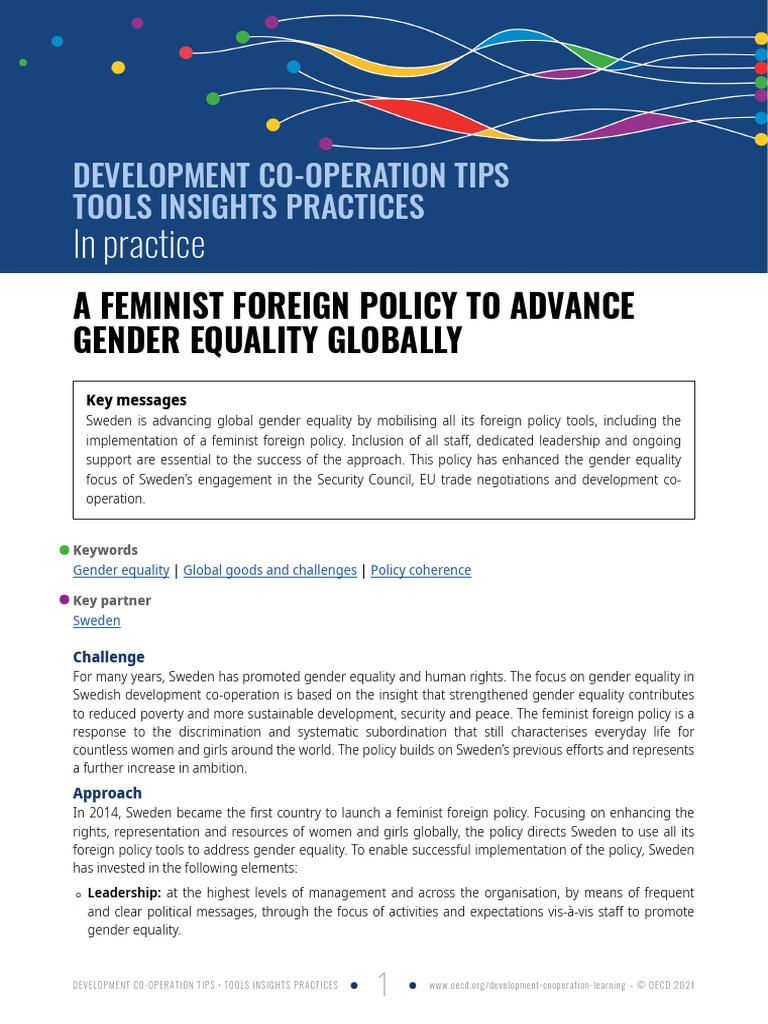
Sweden’s bold proclamation of feminist foreign policy set a global benchmark, emphasizing women’s rights, peace, and security. Its vision is expansive, incorporating goals such as violence prevention, and women’s political participation. Yet, the nation’s approach has been critiqued for not fully grappling with the intersectional realities faced by women globally. The policy’s focus largely orbits around gender binaries and overlooks how race, colonial histories, and socioeconomic disparities shape oppression. For instance, while promoting women’s empowerment in global aid, there is less attention paid to indigenous women, women of color, and disabled women who inhabit the margins of discourse.
The brilliance of Sweden’s framework lies in its willingness to iterate and self-reflect, casting light on the difficult conversations within feminist diplomacy. Its commitment to inclusivity, while imperfect, invites dialogue on how to transcend western feminist paradigms and cultivate a genuinely intersectional praxis that recognizes multiple dimensions of identity and systemic inequities.
Mexico: Navigating Feminism in a Complex Sociopolitical Matrix
Mexico’s feminist foreign policy, though less heralded on the world stage, offers a dynamic example of intersectionality in praxis amid turbulent sociopolitical conditions. Mexico wrestles with entrenched violence, intersectional marginalization of indigenous groups, and robust feminist mobilization. The country’s approach is rooted in acknowledging the interplay of indigenous rights, racial justice, and gender equality, thereby broadening the scope beyond Western frameworks.
Crucially, Mexico integrates grassroots feminist movements into its policy formation, honoring diverse voices often excluded in traditional diplomatic spaces. This creates a nuanced feminist foreign policy that addresses systemic injustices such as femicide and socio-economic exclusion. Nevertheless, the path is fraught with challenges—power structures, political instability, and economic constraints complicate the full realization of intersectional ideals.
Germany: Intersectionality as Policy Praxis and Political Challenge
Germany’s feminist foreign policy blends ambition with the realities of its domestic and international politics. The German approach underscores gender equality as a cross-cutting theme within development aid and diplomatic engagement. What distinguishes Germany is its explicit inclusion of intersectionality—recognizing that women’s experiences differ markedly based on ethnicity, sexual orientation, disability, and migration status.
By systematically infusing intersectional analyses into funding priorities and partnership strategies, Germany attempts to dismantle layered inequities that traditional policies overlook. However, the endeavor encounters formidable obstacles, especially around reconciling feminist goals with realpolitik. The balancing act between advocating for marginalized groups and maintaining diplomatic alliances reveals inherent tensions within intersectional feminist foreign policy.
Intersectionality as a Compass for Genuine Feminist Transformation
Across these three nations, a salient truth emerges: intersectionality is not an accessory but the very compass guiding feminist foreign policy towards authenticity and efficacy. Feminism, reduced to gender alone, risks erasing the multifarious experiences of those who live multiple identities simultaneously. Incorporating intersectionality demands that policies dismantle not just patriarchy but white supremacy, economic exploitation, ableism, and heteronormativity.
Moreover, intersectionality enriches policy mechanisms by fostering empathy toward global complexities—illuminating how migrant women confront distinct barriers during asylum processes or how LGBTQ+ activists negotiate international advocacy differently than cisgender women. This breadth strengthens the transformative power of feminist foreign engagement, challenging essentialist narratives and elevating heterogeneous lived experiences.
Challenges to Embedding Intersectionality in Feminist Foreign Policy
Embedding intersectionality is no facile endeavor. It requires dismantling rigid bureaucratic frameworks and entrenched diplomatic norms that privilege homogenous, often Eurocentric notions of feminism. Countries grapple with competing political interests, resource limitations, and backlash from conservative factions that invoke cultural relativism to undermine feminist advances.
Furthermore, the complexity inherent in intersectional analysis risks bureaucratic paralysis, as policymakers wrestle with voluminous identities and competing needs. This necessitates innovative governance models that are adaptable, participatory, and rooted in ongoing dialogue with marginalized communities. Without sustained commitments, feminist foreign policy risks performative gestures rather than substantive transformation.
Looking Beyond Borders: Toward a Radical Rethinking of Global Feminist Politics
The convergence of feminism and foreign policy invites a radical rethinking of global governance. Intersectionality offers a blueprint not only for more inclusive policies but for reimagining power relations themselves—shifting from coercive sovereignty toward cooperative global solidarities. Sweden, Mexico, and Germany chart distinct yet complementary trajectories that underscore the importance of context-sensitive, intersectional feminism in international affairs.
As feminist foreign policy matures, its ultimate test lies in its capacity to embrace complexity and resist reductionism. Intersectionality demands humility, continuous learning, and an unflinching commitment to confronting uncomfortable truths about privilege and power. Only by centering this paradigm can feminist foreign policies transcend advocacy and edge towards radical global justice.