In the evolving tapestry of modern social justice movements, feminism sits at a contentious crossroads, grappling with increasingly complex issues that transcend traditional boundaries. Two seemingly disparate issues—anti-trans legislation and racial gerrymandering—intersect in ways that challenge the very core of feminist theory and praxis. Understanding this intersection requires not only a critical examination of political tactics but also an unflinching assessment of how power, identity, and representation collide in contemporary society. This article ventures beyond surface-level analyses to dissect the multifaceted dynamics at play, exposing the contradictions and coalitions shaping the feminist discourse today.
The Evolution of Feminism: From Universal Sisterhood to Fractured Solidarity
Feminism’s creed was once a clarion call for universal sisterhood, championing equality across all women. Yet, as the movement matured, its contours grew more intricate, revealing deep fissures around inclusivity and identity politics. The rise of trans-exclusionary radical feminism (TERF) has engendered a schism that questions who is entitled to the title “woman.” This internal strife cannot be disentangled from larger societal debates, where anti-trans legislation weaponizes feminist rhetoric to erode transgender rights under the guise of protecting womanhood.
Feminism’s historical complicity in sidelining racial and gender minorities offers a blueprint for understanding this fragmentation. The exclusion of transgender women mirrors past exclusions of women of color and working-class women—groups marginalized within mainstream feminist movements. Thus, the contemporary feminist landscape is a battleground where questions of authenticity, identity, and belonging ignite fierce debates—debates deeply entangled with political forces such as racial gerrymandering.
Anti-Trans Legislation: The Weaponization of Feminist Rhetoric
The recent surge in anti-trans legislation is not happenstance but a calculated political maneuver that manipulates feminist ideals. Laws restricting transgender individuals’ access to healthcare, sports, and public accommodations exploit fears about eroding gender norms. These legislative assaults are framed as feminist victories—safeguarding “biological women”—but in reality, they betray feminist principles of bodily autonomy and social justice.
Such legal measures are draconian attempts to police gender in a way that invalidates and delegitimizes trans identities. They reflect a pernicious backlash against inclusivity, weaponizing the rhetoric of protectionism to isolate transgender women. This exclusion is a form of political erasure that fractures feminist coalitions, diverting attention from systemic inequalities that affect all marginalized people, including women of color whose voices have long been overshadowed.
Racial Gerrymandering: The Silent Saboteur of Political Representation
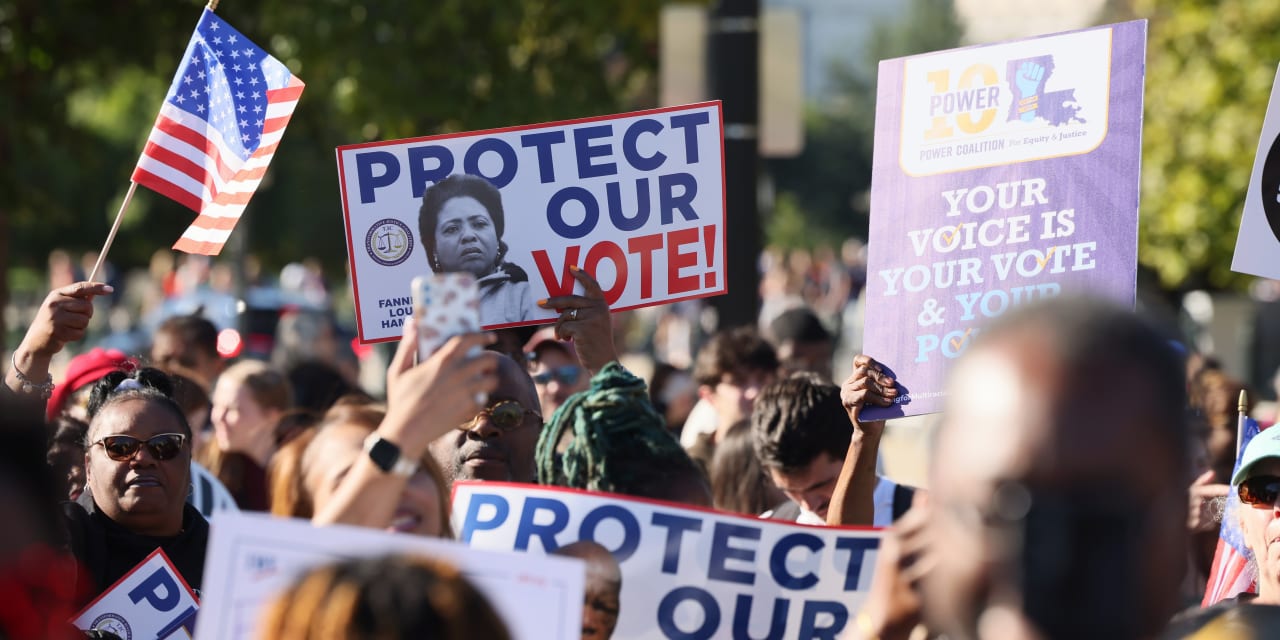
Simultaneously, racial gerrymandering operates as an insidious form of voter suppression, deliberately diluting the political power of communities of color. By redrawing district lines to fragment cohesive minority neighborhoods, political architects frustrate both racial equity and feminist advocacy efforts that rely on robust and representative civic engagement.
This manipulation does more than skew electoral outcomes; it marginalizes groups most vulnerable to intersecting oppressions. Women of color—whose lived realities are the crucible of intersectional feminism—find their political agency compromised. When their voices are muted through electoral engineering, feminist movements that seek to address racial and gender justice are curtailed. The interconnectedness of race, gender, and political participation reveals how structural disenfranchisement undermines the very foundations of democratic inclusion.
Intertwining Oppressions: Intersectionality as a Lens
The concept of intersectionality, coined by Kimberlé Crenshaw, illuminates how overlapping identities shape disparate experiences of oppression and privilege. Feminism that refuses to engage with both anti-trans legislation and racial gerrymandering is incomplete and myopic. Transgender women of color stand at the epicenter of these converging marginalizations, battling systemic erasure on multiple fronts.
Intersectionality demands acknowledgment of these layered injustices and compels movements to adopt solidarities that transcend single-issue advocacy. The fight against anti-trans laws cannot be dissociated from the battle to dismantle racial gerrymandering. Together, these issues expose the fractures in political representation and the necessity for a feminism attuned to the interdependence of social identities.
The Political Calculus: How Anti-Trans Legislation and Gerrymandering Serve Reactionary Agendas
Both anti-trans legislation and racial gerrymandering serve the same reactionary ends: preserving existing hierarchies by dividing marginalized communities. They are tactical ploys to fragment coalitions that might otherwise unify to demand systemic transformation. By fomenting conflicts within feminist spaces and disenfranchising racial minorities, political operatives reinforce a status quo inimical to genuine equity.
The strategic conservatism behind these policies is potent and multifaceted. Anti-trans bills garner support by appealing to anxieties surrounding gender and safety. Gerrymandering exploits demographic shifts and racial tensions to curtail minority electoral power. Together, they create a political labyrinth where feminist principles are weaponized, ignored, or co-opted, contingent on which agenda they serve.
Coalition Building: Reclaiming Feminism Through Inclusive Struggle
Despite these challenges, feminist activism today offers pathways to rebuild solidarity through intersectional coalition building. Recognizing the interconnected nature of anti-trans oppression and racial disenfranchisement allows activists to forge alliances grounded in mutual respect and shared goals. Organizing around inclusive platforms that resist exclusionary narratives strengthens movements and expands political power.
Successful coalition building demands more than rhetorical inclusivity; it requires structural changes within feminist spaces and policymaking spheres. Elevating the voices of transgender people and women of color injects critical perspectives and reinvigorates feminist praxis with urgency and relevance. Furthermore, combating political manipulations such as gerrymandering is integral to safeguarding the democratic processes necessary for feminist agendas to thrive.
The Path Forward: Embracing Complexity and Confronting Contradictions
The intersection of anti-trans legislation and racial gerrymandering interrogates feminism’s capacity to grapple with adversity and contradiction. It demands vigilance against internal fragmentation and external suppression. Feminism’s future rests on its willingness to embrace complexity, reject facile binaries, and push beyond tokenistic inclusion toward substantive justice.
The road ahead is neither smooth nor assured. Yet, in confronting these dual threats, feminism can reclaim its radical roots and reimagine a movement that truly advocates for all marginalized identities. It must mobilize not only as a force for women’s rights but as a vanguard against the multiple, overlapping systems of oppression that threaten democratic ideals and human dignity alike.