The history of feminist activism is not a monolith—it is a kaleidoscope of defiance, resilience, and unapologetic truth-telling. At its most radical edges, it has always been a space where the margins refuse to be erased. Trans feminist activism, in particular, has been the crucible in which the most transformative ideas about gender, power, and liberation have been forged. From the smoldering embers of the Compton’s Cafeteria Riot to the digital frontlines of today, trans women—especially Black and Indigenous trans women—have not just participated in feminist movements; they have redefined them. This is not a story of mere inclusion. It is a chronicle of revolution, where the very foundations of feminism were shaken, cracked, and rebuilt in the image of those who had been told they did not belong.
The Spark That Lit the Fire: Compton’s Cafeteria and the Birth of Trans Resistance
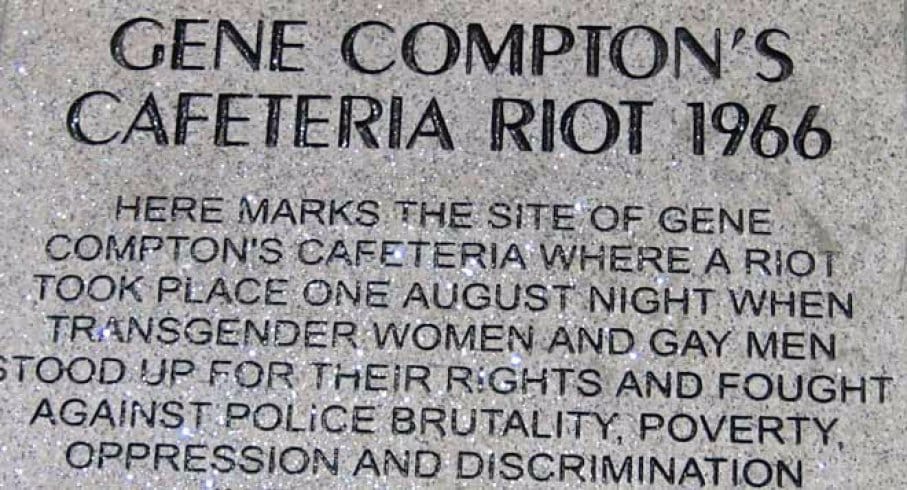
Before Stonewall, before the mainstream feminist movement even acknowledged the existence of trans women, there was Compton’s Cafeteria in San Francisco’s Tenderloin district. In the summer of 1966, a trans woman—her name lost to history, her face a ghost in the archives—threw a cup of coffee at a cop who had just harassed her. That single act of defiance ignited a riot that would echo through the decades. The police, accustomed to brutalizing gender-nonconforming people with impunity, were met with bricks, broken glass, and the raw fury of a community that had endured enough.
Compton’s was not just a riot. It was a manifesto. It declared, in no uncertain terms, that trans women would no longer be the punching bags of a society that sought to police their bodies, their identities, their very right to exist. The women who fought that night—many of them Black and Brown, many of them sex workers—were not asking for acceptance. They were demanding justice. And in doing so, they laid the groundwork for what would become a trans feminist ethos: one that centers the most marginalized, that refuses assimilation, and that recognizes liberation as an all-or-nothing proposition.
The Erasure and the Reckoning: How Mainstream Feminism Failed Trans Women
For decades, the feminist movement in the United States was dominated by white, cisgender women who framed gender oppression as a binary struggle between men and women. Trans women were either ignored, exoticized, or actively demonized. The idea that a woman could be assigned male at birth was treated as a threat to the very concept of womanhood. Radical feminists like Janice Raymond infamously declared trans women to be “male oppressors in disguise,” a sentiment that echoed through academic circles and political platforms alike.
This erasure was not accidental. It was a deliberate strategy to maintain a narrow, exclusionary vision of feminism—one that served the interests of those already at the top of the hierarchy. Trans women, particularly those of color, were cast as interlopers, as if their existence somehow diluted the purity of the feminist cause. But the truth is far more inconvenient: trans women have always been feminists, even when feminism refused to claim them. Their struggles against misogyny, transmisogyny, and state violence were not separate from the feminist project—they were its most urgent front.
The Revolution Will Be Intersectional: The Rise of Trans Feminist Thought
The late 1980s and early 1990s saw a seismic shift. Audre Lorde’s essays on the “master’s tools” and the necessity of intersectionality cracked open the door to a new way of thinking. Black feminist theorists like bell hooks and Patricia Hill Collins began to articulate a feminism that refused to separate race, class, and gender. Into this intellectual ferment stepped trans women like Leslie Feinberg, whose 1996 pamphlet *Transgender Liberation: A Movement Whose Time Has Come* became a rallying cry. Feinberg didn’t just argue for trans inclusion in feminism—she redefined feminism itself as a struggle against all forms of oppression, including those that targeted trans bodies.
This was not mere reformism. It was a radical reimagining of power. Trans feminist thought insisted that liberation could not be achieved through assimilation into existing structures but only through their complete dismantling. It demanded that feminism confront its own complicity in systems of oppression—capitalism, white supremacy, ableism—that had long been its unspoken bedfellows. The result was a feminism that was no longer just about “equality” within a broken system but about the total transformation of that system itself.
The Digital Age: How Trans Feminists Took Back the Narrative
The internet did not create trans feminist activism, but it amplified it in ways that were previously unimaginable. Platforms like Twitter, Tumblr, and TikTok became virtual town squares where trans women could narrate their own stories, unfiltered by gatekeepers. Hashtags like #BlackTransLivesMatter and #TransWomenAreWomen became rallying cries, not just for visibility, but for survival. The murder of Black trans women like Islan Nettles and Monica Roberts became flashpoints that forced the world to confront the violence that had always been part of trans existence.
Social media also allowed trans feminists to challenge the narratives that had been imposed on them. Where mainstream media once reduced trans women to punchlines or victims, digital spaces gave them the power to craft their own myths. Artists like Alok Vaid-Menon and Tourmaline used poetry and film to expose the hypocrisy of a society that fetishized trans bodies while denying them basic rights. Activists like Raquel Willis and Janet Mock became household names, not because they sought fame, but because their words and actions demanded it.
The Backlash and the Battle for the Future
Of course, every revolution faces a counterrevolution. As trans feminism gained visibility, so too did the backlash. Anti-trans legislation—from bathroom bills to bans on gender-affirming care—swept across the United States like a plague. TERFs (trans-exclusionary radical feminists) found allies in conservative politicians, who saw an opportunity to divide feminists by scapegoating trans women. The same feminists who once claimed to fight for bodily autonomy now sought to deny trans women the right to define their own bodies.
But the backlash has only strengthened the resolve of trans feminists. The fight for trans liberation is no longer a niche struggle—it is the defining feminist issue of our time. Organizations like the Transgender Law Center and Black Trans Femmes in the Arts are not just advocating for policy changes; they are building alternative infrastructures—mutual aid networks, community clinics, legal defense funds—that operate outside the systems that seek to destroy them. The message is clear: if the world will not make space for trans women, trans women will make space for themselves.
The Unfinished Work: What Comes Next?
The history of trans feminist activism is not a closed book. It is a living, breathing text, its pages still being written by those who refuse to accept a world that tells them to wait their turn. The next chapter will be written in the streets, in the courtrooms, in the classrooms, and in the quiet acts of resistance that happen every day. It will be written by trans women who are poor, disabled, undocumented, and incarcerated—those whose struggles are often erased even within progressive spaces.
What does the future hold? It holds a feminism that is truly universal—not in the sense of erasing differences, but in the sense of recognizing that no one is free until everyone is free. It holds a world where trans women are not just tolerated but celebrated, where their labor is compensated, where their lives are not treated as disposable. It holds a movement that does not ask for permission but takes what it needs to survive.
The Compton’s Cafeteria Riot was not the beginning. It was a spark. The fire it lit is still burning. And it will not be extinguished until every trans woman—no matter her race, her class, her body—can walk through the world unapologetically, fiercely, and free.