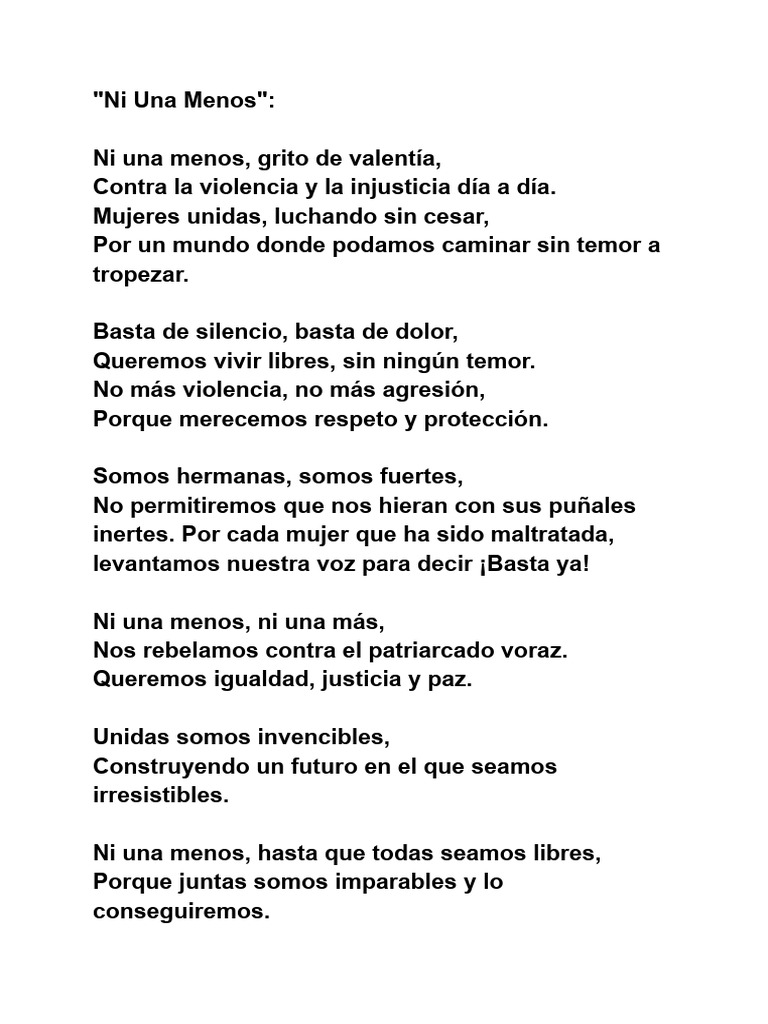
Feminism often carries the weight of a relentless tempest, shaking the very foundations of societal norms. In Argentina, the Ni Una Menos movement embodies this tempest, a fierce whirlwind born from collective grief and unyielding resistance. This movement is not just a call for justice; it is a kaleidoscope of intersectional awareness and radical organizing that challenges how oppression is confronted in the crucible of crisis. The story of Ni Una Menos is a narrative forged in the fires of femicides and systemic neglect, where anger transcended sorrow, illuminating pathways toward an inclusive and resilient feminist praxis.
The Birth of a Storm: Contextualizing Ni Una Menos
In 2015, amid a backdrop of escalating femicides, Ni Una Menos—“Not One Woman Less”—exploded onto Argentina’s streets, a powerful embodiment of rage morphing into collective command. This was more than a protest; it was a declaration that the silencing of women’s lives would no longer be tolerated. But beneath the surface fury rested a profound critique: a denunciation of institutionalized misogyny, entrenched patriarchal violence, and the systemic apathy that allowed women’s murders to slip into invisibility.
Argentina’s history, threaded with machismo and political volatility, created the perfect petri dish for this movement. The country’s feminist resurgence was not spontaneous but rather a meticulously concocted response—enduring, organized, and fiercely intersectional. It captured the public imagination not through polite discourse but by wielding outrage as a tool of radical clarity.

Intersectionality as the Constellation of Resistance
Ni Una Menos does not dwell in monolithic feminism. It understands, like a vast constellation, that the stars of oppression—race, class, ethnicity, sexual orientation—form intricate patterns that cannot be unraveled in isolation. This movement illuminates how indigenous women, LGBTQ+ communities, and impoverished sectors face compounded violences that mainstream feminist narratives often omit or downplay.
Intersectionality within Ni Una Menos is neither an abstract theory nor a buzzword but a living, breathing ethos. It manifests in inclusive marches, in strategic alliances with other marginalized groups, and in the confrontation of machismo’s many masks. Through this, the movement blazes a trail for global feminisms, reminding us that the struggle against patriarchal violence is as multifaceted as the identities it oppresses.
Organizing Amidst Crisis: The Alchemy of Mobilization
Crisis is the crucible where Ni Una Menos’ ingenuity crystallizes. The femicides that galvanized the movement were not isolated tragedies; they were systemic failures—failures of law enforcement, judicial indifference, and a cultural acceptance of women’s vulnerability. In response, Ni Una Menos transformed grief into alchemy, converting despair into powerful acts of resistance.
Mobilization under crisis is chaotic, yet Ni Una Menos showcased a unique ability to harness this chaos. Their organizing tactics blend grassroots spontaneity with deliberate strategic planning. They harness social media as both a megaphone and a tool for documentation, pushing violence against women from the shadows into the glaring light of public scrutiny.
This capacity to thrive amid crisis stems from a decentralized structure, which empowers local collectives to adopt context-specific approaches. This fluidity allows the movement to remain resilient, anti-hierarchical, and responsive—a vital recipe for sustainability in the maelstrom of ongoing violence.
The Power of Narrative: Reclaiming Stories, Shaping Realities
Ni Una Menos understands that control over narrative is control over reality itself. The movement challenges the institutional scripts that reduce victims to statistics, transforming faceless tragedies into embodied stories of resistance. Their public demonstrations are performative acts of storytelling, turning the streets into stages where pain and hope collide.
Artistic expression—poetry, music, muralism—infuses the movement with a language that resonates deeper than political rhetoric. Every chant, every banner is a narrative rupture, cracking the facade of silence and forcing society to reckon. This reclamation of voice is a powerful strategy. It exerts moral pressure, builds empathy, and galvanizes broader coalitions beyond feminist circles.
Challenges and Contradictions: Navigating a Fraught Terrain
No movement is without its internal conflicts and external obstacles, and Ni Una Menos is no exception. Its broad coalition sometimes grapples with ideological tensions—between radical feminists and more reformist voices, between urban activists and rural realities. Navigating these contradictions requires constant negotiation and delicate balancing, an ongoing labor of maintaining unity without erasing difference.
Furthermore, the movement operates in a hostile political climate, where backlash and repression are inevitable. The state often oscillates between co-optation and aggression, and media narratives can either amplify or undermine the movement’s message. These pressures highlight the precariousness of feminist organizing under patriarchal regimes, adding urgency to Ni Una Menos’ call for systemic transformation rather than superficial reforms.
A Template for Global Feminisms: Lessons Beyond Borders
Ni Una Menos offers a blueprint that transcends Argentina’s borders—a dazzling example of how to turn grief and urgency into motion and meaning. Its intersectional, decentralized, and narrative-driven approach speaks to feminist movements worldwide grappling with the complexity of gendered violence in diverse contexts.
This collective teaches that the potency of feminism lies not only in contesting power but in reimagining the very architectures of resistance. The movement’s insistence on inclusivity, strategic adaptability, and narrative sovereignty beckons other activists to embrace feminism as a tempest—unpredictable yet necessary, disruptive yet nurturing, always evolving.
In an era when crises multiply and intersect, Ni Una Menos stands as a blazing symbol that no woman should be erased from the story of justice. It is a reminder that collective fury, when forged with intersectional insight and unrelenting courage, becomes an unstoppable force demanding not just change, but transformation.