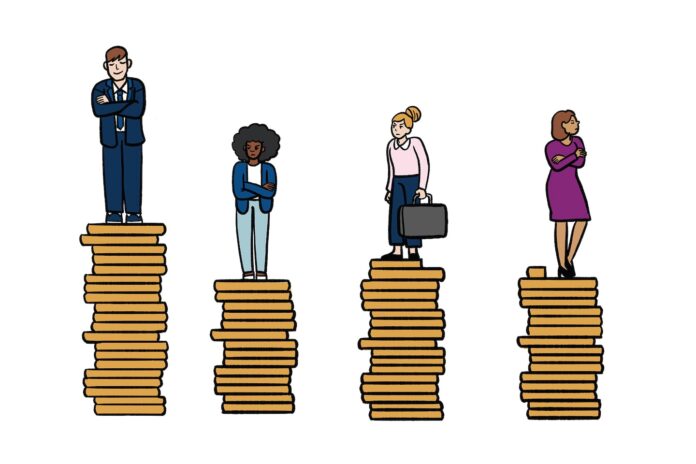
The fight for gender equity has long been framed within the binary of male and female oppression, a narrative that erases the material realities faced by trans women. When we speak of feminism, we must confront an uncomfortable truth: the movement has often sidelined the economic and physical violence trans women endure. The data is stark, the patterns unignorable. Trans women are not just fighting for representation—they are fighting for survival in a world that devalues their labor and their bodies. This is not a footnote to feminism; it is its most urgent chapter.
The Wage Gap: A Chasm Carved by Prejudice
Trans women do not merely earn less than cisgender men—they earn less than cisgender women, and often less than trans men. The wage gap for trans women is not a simple matter of discrimination; it is a systemic erasure of their labor, a punishment for daring to exist outside the gender binary. Studies reveal that trans women face a pay penalty of up to 32% compared to cisgender women, a disparity that widens with intersecting identities of race and disability. This is not a market failure. It is a market designed to exploit the most vulnerable.
Consider the myth of the “trans premium”—the false narrative that trans women somehow benefit from passing privilege. The data dismantles this lie. Trans women who are visibly gender-nonconforming face even greater economic marginalization, their wages plummeting as their visibility increases. The workplace is not a meritocracy; it is a battleground where trans women are systematically underpaid, passed over for promotions, and denied opportunities under the guise of “cultural fit.” The material reality is clear: trans women are not just fighting for equal pay—they are fighting for the right to be paid at all.

Violence as Economic Sabotage
Economic oppression is not confined to the paycheck. It is woven into the fabric of trans women’s lives through violence—both physical and structural. The data on violence against trans women is not just alarming; it is a testament to the devaluation of their existence. Trans women are disproportionately targeted for hate crimes, with rates of sexual violence and intimate partner violence far exceeding those of cisgender women. This violence is not random. It is a tool of control, a mechanism to enforce economic subjugation.
The intersection of poverty and violence creates a vicious cycle. Trans women who face discrimination in hiring are pushed into underground economies, where they are further exposed to exploitation and abuse. The criminalization of sex work—a reality for many trans women—does not deter violence; it institutionalizes it. The state does not protect trans women. It profits from their marginalization, whether through policing, healthcare barriers, or the denial of legal recognition. The material cost of this violence is incalculable, but the data does not lie: trans women are paying with their lives.
The Myth of “Passing” and the Illusion of Safety
There is a dangerous assumption that trans women who “pass” as cisgender are shielded from oppression. The data shatters this illusion. Passing does not guarantee safety—it merely shifts the terrain of violence. Trans women who are perceived as cisgender still face discrimination in hiring, promotion, and workplace treatment. The myth of passing as a form of protection is a cruel joke, a narrative that blames trans women for their own oppression.
Moreover, the pressure to conform to cisnormative standards is itself a form of violence. Trans women who undergo medical transition often face financial ruin, with healthcare costs pricing them out of economic stability. The promise of “passing” is a false economy—one that demands trans women sacrifice their health, their dignity, and their economic security for the illusion of acceptance. The material reality is that trans women cannot buy their way into safety. The system is rigged against them.
The Role of Feminism in Perpetuating Exclusion
Feminism has a fraught history with trans women. From exclusionary rhetoric to outright hostility, the movement has often treated trans women as interlopers rather than sisters in struggle. The data on trans women’s oppression should force a reckoning. If feminism is to be a force for liberation, it must center the most marginalized—not as an afterthought, but as its foundation.
The material conditions of trans women’s lives demand a radical reimagining of feminist politics. This is not a call for performative allyship; it is a demand for material change. Feminism must confront its own complicity in systems that oppress trans women, from the gender binary to the capitalist structures that profit from their exploitation. The fight for trans women’s rights is not a secondary struggle—it is the litmus test of feminism’s integrity.
What Liberation Looks Like: A Blueprint for Change
The data is clear, but the path forward is not. Liberation for trans women requires dismantling the economic and social structures that oppress them. This means universal healthcare that covers gender-affirming care without financial burden. It means strong anti-discrimination laws with real enforcement. It means decriminalizing sex work and providing economic alternatives. It means centering trans women in feminist organizing, not as symbols, but as leaders.
It also means challenging the narratives that uphold trans women’s oppression. The myth of the “trans woman as predator” is a tool of fear, used to justify exclusion. The reality is that trans women are far more likely to be victims of violence than perpetrators. The material truth is that trans women need solidarity, not suspicion. The fight for their liberation is not a zero-sum game—it is a collective struggle for a world where no one is disposable.
The Urgency of Now
We cannot afford to wait. The data on trans women’s oppression is not a warning—it is a death sentence for those who are denied the tools to fight back. Feminism must evolve or become obsolete. The material reality of trans women’s lives is not a footnote to the movement; it is its defining challenge. The question is not whether we will rise to meet it—but whether we will have the courage to do so before more lives are lost.