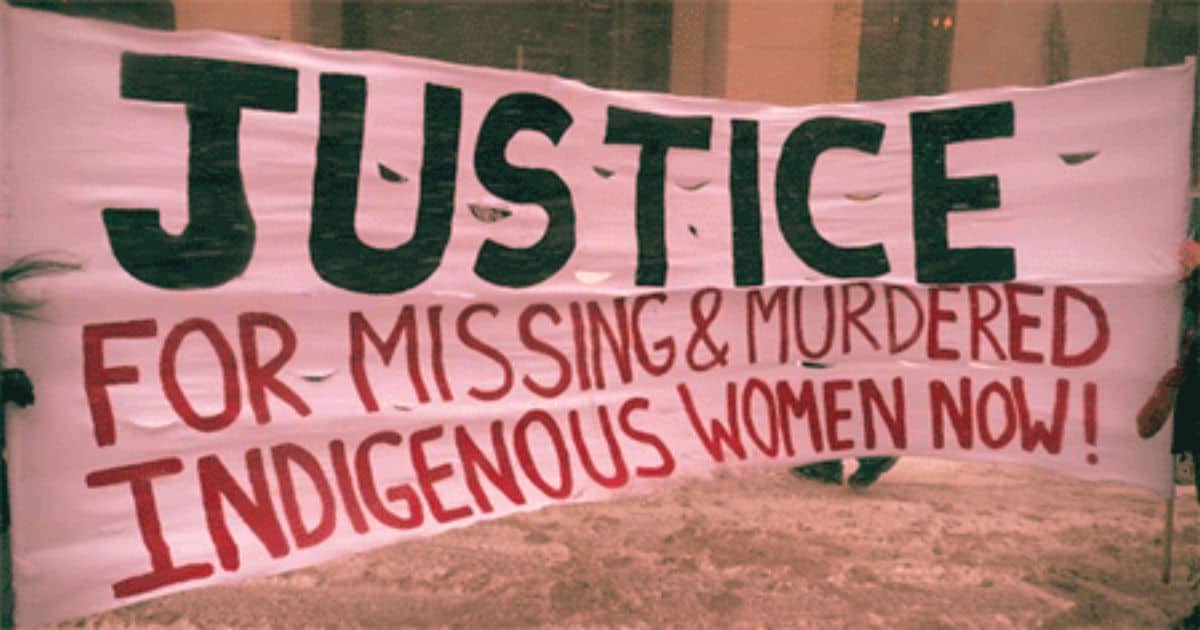
The silence is deafening. Not the kind that follows a whispered confession, but the oppressive, suffocating hush of a world that has learned to look away. Across continents, Indigenous women, girls, and Two-Spirit people vanish into the cracks of history—erased not by time, but by design. This is not a tragedy confined to a single nation or a fleeting moment; it is a global epidemic, a systemic hemorrhage of life and identity. The numbers are staggering, the stories heartbreaking, but the real horror lies in the complicity of those who refuse to see. Feminism, in its most radical and unapologetic form, must confront this crisis not as a footnote, but as a clarion call. The time has come to shatter the illusion of progress and demand justice for those who have been rendered invisible.
The Colonial Roots of Erasure: How History Became a Weapon
To understand the epidemic of Missing and Murdered Indigenous Women and Girls (MMIWG), one must first dissect the machinery of colonialism—a system that did not merely conquer lands, but rewrote the very fabric of existence. Indigenous women were not collateral damage in this conquest; they were primary targets. The rape of Indigenous women was not an unfortunate byproduct of war, but a calculated strategy to destabilize communities, to break the transmission of culture, and to assert dominance over bodies that refused to be owned. The legacy of this violence did not vanish with the signing of treaties or the establishment of borders. It evolved. It mutated. It became institutionalized.
Consider the reservation system in the United States, the reserves in Canada, or the Aboriginal reserves in Australia—each a spatial manifestation of containment, a physical reminder that Indigenous people were never meant to thrive. These spaces were not designed for safety. They were designed for control. And when Indigenous women dared to leave, they were met with a world that had been conditioned to see them as less than human. The legal system, the police, the media—all became complicit in this erasure. A missing Indigenous woman is not a headline. A murdered Indigenous woman is not a statistic. She is a footnote in a history that the colonizers wrote, and the world has been too lazy to rewrite.

The Numbers That Haunt: A Crisis Without Borders
Try to imagine a world where women disappear at a rate that defies comprehension. In the United States, Indigenous women are murdered at a rate ten times higher than the national average. In Canada, the number of missing and murdered Indigenous women and girls is so staggering that the government was forced to acknowledge it as a “genocide” in 2019. In Mexico, the term “feminicide” has become synonymous with the state-sanctioned violence against Indigenous women in states like Chihuahua and Guerrero. In Australia, the crisis is so normalized that the term “Stolen Sisters” has entered the lexicon—a chilling reminder that the abduction and murder of Indigenous women is not an anomaly, but a tradition.
But these numbers are not just cold data. They are the lives of mothers, daughters, sisters, and warriors. They are the voices that were silenced before they could be heard. And yet, the world continues to turn a blind eye. Why? Because the erasure of Indigenous women is not an accident—it is a feature of the system. A system that prioritizes profit over people, that values land over life, and that treats Indigenous women as disposable. The numbers are not just a crisis. They are a indictment.
The Role of the State: When the Protector Becomes the Predator
If colonialism was the architect of this violence, the state is its enforcer. The police, the courts, the governments—they are not neutral arbiters of justice. They are extensions of a system that was built on the subjugation of Indigenous people. And when Indigenous women go missing or are murdered, the state does not rush to their aid. It hesitates. It delays. It blames the victim.
Take, for example, the case of the Highway of Tears in Canada—a 725-kilometer stretch of highway where at least 18 Indigenous women have vanished or been found murdered since the 1970s. Despite decades of advocacy, the response from law enforcement has been woefully inadequate. Why? Because the state does not see these women as worthy of protection. Their lives are not valuable enough to warrant a full investigation. Their disappearances are not urgent enough to warrant a search party. This is not incompetence. This is policy.
And it is not confined to one nation. In Guatemala, the state has been accused of complicity in the femicides of Indigenous women, particularly those from the Maya Ixil community. In Brazil, the police have been linked to death squads that target Indigenous women and girls. In the Philippines, the war on drugs has become a war on Indigenous women, with many being killed in extrajudicial executions. The state is not a bystander in this crisis. It is an active participant.
The Media’s Complicity: How Silence Becomes Violence
The media is not just a mirror reflecting the world—it is a lens that shapes how the world is perceived. And when it comes to MMIWG, the media has failed spectacularly. Indigenous women are not portrayed as victims of a systemic crisis. They are portrayed as statistics, as cautionary tales, as faceless numbers in a report. Their stories are not told. Their names are not remembered. Their lives are not mourned.
Consider the coverage of Gabby Petito, a white woman whose disappearance sparked a media frenzy, compared to the lack of coverage for Indigenous women like Ashlea Aldrich or Kaysera Stops Pretty Places, whose disappearances barely registered a blip on the national radar. This is not a coincidence. It is a reflection of the media’s priorities. Indigenous women are not deemed newsworthy. Their stories do not sell papers or drive clicks. And so, they are erased—not just by the state, but by the very institutions that claim to hold power to account.
But the media’s complicity goes deeper than silence. It is also in the language used to describe these women. They are called “prostitutes” or “drug addicts” or “runaways”—labels that strip them of their humanity and justify their erasure. The media does not just fail to tell their stories. It actively participates in their demonization.
The Intersectional Fight: Why Feminism Must Center Indigenous Women
Feminism, in its most radical form, is not a monolith. It is a movement that must be intersectional, that must recognize that the oppression of Indigenous women is not separate from the oppression of all women, but a fundamental part of it. The fight for Indigenous women’s rights is not a niche issue. It is a feminist issue. It is a human rights issue. It is a crisis that demands a response from every corner of the feminist movement.
And yet, too often, feminism has failed Indigenous women. It has centered the experiences of white, middle-class women while ignoring the struggles of those who are most marginalized. It has treated Indigenous women as an afterthought, as a footnote in the larger narrative of women’s liberation. This must change. Feminism must be unapologetically anti-colonial. It must recognize that the violence against Indigenous women is not an isolated incident, but a symptom of a system that seeks to destroy them.
The fight for Indigenous women’s rights is not just about justice for the missing and the murdered. It is about reclaiming power. It is about asserting that Indigenous women are not disposable. They are not invisible. They are not less than. They are warriors. They are survivors. They are the future. And it is time for the world to listen.
The Path Forward: What Justice Looks Like
Justice for Indigenous women is not a distant dream. It is a demand that must be met with action. It starts with accountability. The state must be held responsible for its complicity in this violence. The police must be defunded and dismantled. The legal system must be overhauled to ensure that Indigenous women are not treated as second-class citizens. But accountability is not enough. It must be paired with reparations—financial, cultural, and spiritual—that acknowledge the harm that has been done and the lives that have been lost.
It also means centering Indigenous women in the fight for their own liberation. Their voices must be heard. Their leadership must be supported. Their solutions must be implemented. This is not a fight that can be waged from the outside. It must be led by those who are most affected.
And finally, it means changing the narrative. The world must stop seeing Indigenous women as victims and start seeing them as survivors. The world must stop treating their stories as tragedies and start treating them as triumphs. The world must stop erasing them and start remembering them.
The epidemic of Missing and Murdered Indigenous Women and Girls is not just a crisis. It is a call to action. It is a demand for justice. It is a reminder that feminism, in its most radical form, must be unapologetically intersectional, uncompromisingly anti-colonial, and unyieldingly committed to the liberation of all women. The time for action is now. The time for silence is over.