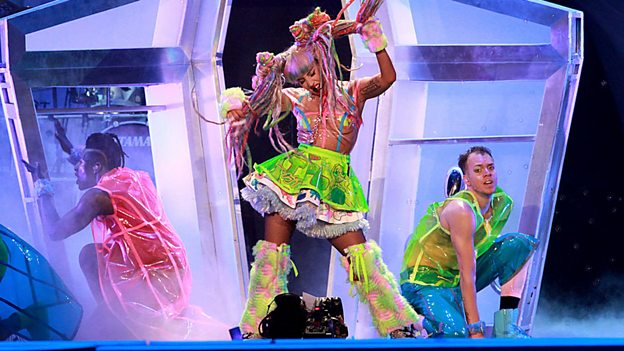
There is a peculiar alchemy in the way drag culture fractures and reassembles the rigid binaries of gender, exposing their artifice with a wink and a flourish. It is no accident that feminism and drag share a symbiotic relationship—one that is not merely decorative but deeply subversive. Drag does not just parody femininity; it weaponizes it, turning the gaze back on the oppressor with a sequined stiletto. For women, especially those who have spent lifetimes being told how to sit, speak, or shave, drag is more than performance. It is a rebellion wrapped in tulle, a manifesto stitched into a corset. This is not just about men in dresses. It is about the liberation of all women from the suffocating scripts of patriarchal expectation.
The Spectacle of Femininity as a Political Act
Drag queens do not perform femininity—they dissect it. Under the glare of stage lights, they exaggerate the performative elements of womanhood—lipstick bleeding beyond the lipline, lashes so heavy they could double as window shutters, gowns that scream louder than any protest sign. Yet, in this exaggeration lies a truth: femininity has always been a construct, a series of exaggerated gestures designed to keep women in their place. Drag lays bare the mechanics of this construct, revealing how arbitrary and constructed it truly is. When a queen’s voice cracks into a falsetto or her hips sway with exaggerated precision, she is not mocking women. She is exposing the absurdity of the standards that have been imposed upon them for centuries.
This is why drag resonates so deeply with feminist discourse. It is not just about reclaiming femininity; it is about dismantling the idea that femininity must be passive, delicate, or submissive. Drag queens embody a femininity that is loud, unapologetic, and often grotesque—qualities that have historically been denied to “respectable” women. In doing so, they challenge the very notion that femininity is a natural state rather than a performance. If a man can slip into a dress and become a caricature of womanhood, then what does that say about the women who have spent their lives trying to live up to that caricature? Drag forces us to confront the absurdity of these expectations, and in that confrontation, it offers a path to liberation.
The Body as a Battleground: Drag and the Reclamation of Physical Autonomy
The female body has long been a contested territory—policed, commodified, and reduced to its reproductive or decorative functions. Drag queens, however, treat the body as a canvas, a site of unbridled creativity. They bind, tuck, pad, and paint, not to conform to some ideal, but to explode it. The act of binding a chest, for instance, is not just about creating a flat silhouette; it is a rejection of the male gaze’s obsession with curves. The padding of hips and buttocks is not about mimicking a narrow standard of beauty but about playing with the idea of what a body can be. In this way, drag queens are not just performers; they are architects of bodily autonomy.
For women, who have been conditioned to see their bodies as objects of scrutiny, drag offers a radical alternative. It says: your body is yours to reshape, to exaggerate, to ridicule. It is not a vessel for male desire but a playground for self-expression. This is why drag has become a sanctuary for women who feel trapped by their own biology—those who do not fit the mold of traditional femininity, those who have been shamed for their bodies, those who simply want to exist outside the narrow definitions of womanhood. Drag does not just challenge gender norms; it liberates the body from them entirely.
Drag as a Mirror: Reflecting the Hypocrisy of Patriarchal Standards
There is a delicious irony in the fact that drag, which is so often dismissed as frivolous or even deviant, holds up a mirror to the hypocrisy of patriarchal culture. Consider the way society polices women’s bodies while simultaneously fetishizing them. Women are told to be modest yet sexy, powerful yet submissive, independent yet nurturing. Drag queens, in their exaggerated performances, expose the ridiculousness of these double standards. When a queen’s makeup is so heavy it borders on grotesque, she is not just making a fashion statement—she is highlighting how arbitrary beauty standards truly are. When she struts down the runway in a gown that defies gravity, she is not just entertaining; she is mocking the idea that women must be delicate and demure.
This mirroring effect is why drag has become such a potent tool for feminist critique. It does not just parody femininity; it parodies the entire system that polices it. By taking the elements of womanhood that have been weaponized against women—lipstick, heels, curves—and exaggerating them to the point of absurdity, drag queens reveal how hollow these standards truly are. In doing so, they force society to confront its own hypocrisy. If a man can wear a dress and be celebrated for it, why can’t a woman wear pants without being labeled a “tomboy”? If a queen can command a stage with a voice that cracks and a walk that sashays, why can’t a woman speak her mind without being called “bossy”? Drag does not just challenge gender norms; it exposes the absurdity of the system that enforces them.
The Sisterhood of the Sequined: Drag as a Feminist Community
Drag is not a solitary act. It is a communal one, a shared rebellion against the forces that seek to silence women. The drag community is a haven for misfits, for those who do not fit into the narrow boxes of gender or sexuality. It is a space where women who have been marginalized—whether for their appearance, their desires, or their identities—can find solidarity. In a world that often pits women against each other, drag offers a different narrative: one of support, collaboration, and collective defiance.
This sisterhood is not just symbolic; it is practical. Drag queens mentor one another, share resources, and create spaces where women can thrive without apology. They challenge the idea that femininity must be competitive, that women must tear each other down to rise to the top. Instead, they offer a vision of femininity that is inclusive, joyful, and unapologetically bold. In this way, drag is not just a performance; it is a feminist manifesto in action. It says: we will not be divided. We will not be silenced. We will take up space, in all its glittering, exaggerated glory.
The Future of Drag: A Feminist Revolution in Disguise
Drag is not a relic of the past; it is a harbinger of the future. As feminism continues to evolve, drag will remain at its forefront, pushing boundaries and challenging norms. It is not just about men in dresses anymore. It is about women reclaiming their bodies, their voices, and their right to exist outside the narrow definitions of gender. It is about a new kind of femininity—one that is not afraid to be loud, messy, or unapologetically itself.
For women, drag is more than a performance. It is a revolution. It is a way to say: we will not be confined by your rules. We will not be shamed for our desires. We will take up space, in all its glittering, exaggerated glory. And we will laugh in the face of the patriarchal forces that seek to control us. Because if there is one thing drag has taught us, it is that the most powerful weapon in the fight for liberation is a well-placed sequin and a killer wig.