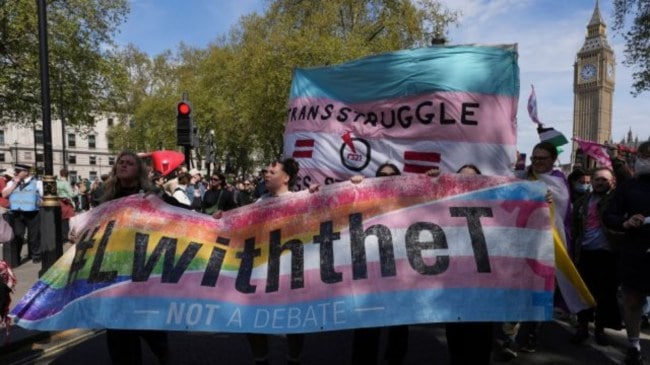
Feminism has long been a battleground where science and ideology collide, where the quest for equality often stumbles over the seductive allure of biological determinism. Nowhere is this collision more fraught than in the contentious debate over “brain sex”—the notion that innate neurological differences between men and women dictate not just behavior, but entire social hierarchies. This pseudoscientific fairy tale, dressed in the garb of neuroscience, has been weaponized against both feminist progress and trans liberation. It’s time to dismantle the myth of neurosexism, a doctrine that has done more to entrench oppression than to illuminate truth.
The Neurosexist Mirage: How Science Became a Tool of Patriarchy
Neurosexism is not merely an academic curiosity; it is a political project masquerading as empirical truth. For centuries, patriarchal structures have sought to naturalize inequality by cloaking it in the language of biology. The brain, that most complex and malleable organ, has become the new battleground for this age-old war. Studies claiming to reveal “hardwired” differences between male and female brains are paraded as irrefutable proof that women are inherently nurturing, men inherently logical, and trans people a dangerous aberration. But these claims crumble under scrutiny. The brain is not a static entity; it is a dynamic landscape shaped by experience, culture, and environment. To reduce it to a binary, unchanging essence is to ignore the very plasticity that makes human cognition so extraordinary.
Consider the infamous “male brain” and “female brain” dichotomy. This oversimplification ignores the vast overlap between the sexes in cognitive abilities, emotional processing, and neural architecture. When researchers claim to find differences in, say, spatial reasoning or verbal fluency, they often cherry-pick data while ignoring the far greater variability within each sex than between them. The result? A self-fulfilling prophecy where society’s expectations mold behavior, which is then retroactively attributed to biology. This is not science; it’s a feedback loop of prejudice.
Feminism’s Dilemma: When Liberation Collides with Biological Essentialism
Feminism has always been a movement of contradictions, a tapestry woven from strands of radicalism and compromise. Nowhere is this tension more visible than in the feminist embrace of neurosexism. Some strands of feminism, particularly those aligned with liberal or conservative ideologies, have eagerly adopted brain-based arguments to justify gender roles. “Women are naturally more empathetic,” they argue, “so it’s only logical that they should take on caregiving roles.” This is not liberation; it’s a cage rebranded as destiny. By conceding that oppression is biologically ordained, feminism surrenders its most potent weapon: the demand for societal change.
Worse still, this line of thinking has seeped into feminist critiques of trans rights. Some feminists argue that trans women, by asserting their womanhood, are reinforcing harmful stereotypes about femininity. This is a grotesque inversion of feminist principles. It suggests that liberation is conditional—that one must conform to a narrow, socially constructed ideal of womanhood to be accepted. The irony? This argument itself is rooted in the same neurosexist logic it claims to reject. If femininity is an innate essence, then trans women are not truly women. But if femininity is a spectrum, then why should anyone be policed for embodying it?
The Trans Exclusionary Trap: How Neurosexism Erases Lives
For trans people, the stakes of this debate could not be higher. Neurosexism doesn’t just misrepresent science; it erases lives. By insisting that gender identity must align with biological sex, it renders trans existence an impossibility—a delusion to be corrected. This is not just an intellectual error; it’s a violent erasure. The claim that trans women are “really men” because their brains allegedly resemble those of cis men is a grotesque parody of scientific inquiry. It ignores the overwhelming evidence that gender identity is a deeply personal, often visceral experience, not a neurological glitch.
The trans exclusionary radical feminist (TERF) movement is the most visible proponent of this ideology, but it is not alone. Even some well-meaning feminists fall into the trap of framing trans rights as a threat to women’s spaces, as if a trans woman’s presence is an invasion rather than a birthright. This fear is not just misplaced; it’s a betrayal of feminism’s core tenets. Feminism must be a movement that centers the most marginalized, not one that polices the boundaries of womanhood based on outdated, pseudoscientific dogma.
Beyond the Binary: The Fluidity of Brain and Identity
The brain is not a binary switch; it is a kaleidoscope of possibilities. Neuroscience has repeatedly demonstrated that neural structures are shaped by experience, trauma, and environment. A person assigned male at birth who transitions to female may, over time, exhibit changes in brain connectivity that align more closely with cis women—but this is not evidence of a “female brain” waiting to be uncovered. It is evidence of the brain’s remarkable adaptability. To claim otherwise is to reduce human complexity to a cartoonish caricature.
Gender identity itself is a spectrum, not a fixed point. Some people experience it as deeply tied to biology; others do not. Some trans people feel their gender identity is innate; others describe it as a social construct they’ve chosen to embrace. To insist that all gender experiences must conform to a single, neurobiological narrative is to deny the richness of human diversity. Feminism must reject this rigidity. Liberation is not about enforcing a single, “correct” way to be a woman or a man; it is about dismantling the very idea that such categories should dictate one’s worth or rights.
The Political Weaponization of Neuroscience
Neurosexism is not an innocent academic pursuit; it is a political tool. Governments, corporations, and reactionary movements have all used the language of brain science to justify inequality. From the “maternal instinct” myth to the “male aggression” trope, these narratives serve a single purpose: to maintain the status quo. When feminists adopt these narratives, they become unwitting collaborators in their own oppression. The fight for equality cannot be waged on the battlefield of biology, where the terrain is always shifting to favor the powerful.
Consider the backlash against trans rights in recent years. Laws restricting access to healthcare, sports, and public spaces are often justified with appeals to “biological reality.” But this “reality” is a construct, a Frankenstein’s monster stitched together from cherry-picked studies and ideological agendas. The real biological reality is far more nuanced—and far more liberating. The human brain is not a fixed entity; it is a living, breathing testament to the malleability of human experience. To deny this is to deny the very possibility of change.
A Call to Reject Neurosexism in All Its Forms
The fight against neurosexism is not just a scientific debate; it is a moral imperative. Feminism must reject the siren song of biological determinism and embrace a vision of liberation that is unshackled from the constraints of outdated ideology. This means centering trans voices, challenging the myth of fixed gender roles, and demanding that science serve humanity—not the other way around.
It means recognizing that the brain is not a battleground for ideological wars, but a canvas for endless possibility. It means understanding that gender is not a prison, but a spectrum of experiences waiting to be explored. And it means refusing to let the ghosts of patriarchal science dictate the future of feminism or trans rights.
The path forward is clear: feminism must be intersectional, inclusive, and unapologetically radical in its rejection of neurosexism. Anything less is a betrayal of the movement’s core principles—and a surrender to the forces of oppression.