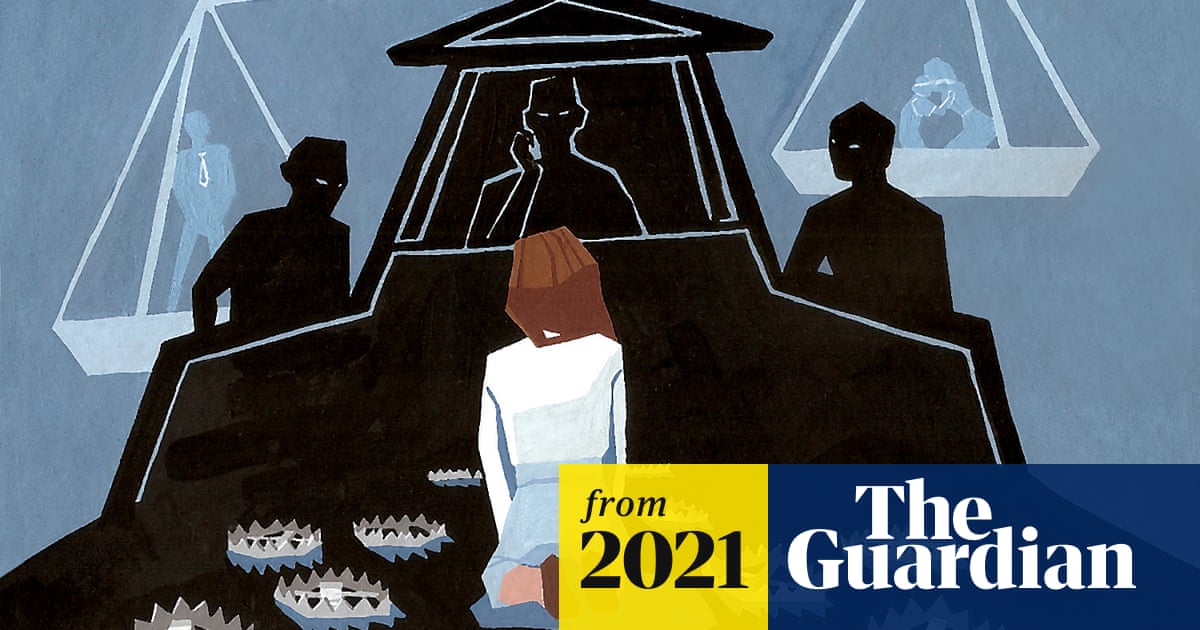
The courtroom, a hallowed space of justice, has long been a battleground where power dynamics are laid bare. Yet, beneath the veneer of impartiality, a troubling pattern persists: the weaponization of psychological “syndromes” to undermine female litigants. This isn’t merely an academic concern—it’s a lived reality for countless women navigating a legal system that often perceives their emotionality as pathology. The framing of women’s distress as a disorder isn’t just a legal tactic; it’s a cultural reflex, one that reveals how deeply ingrained misogyny shapes our institutions.
The Pathologization of Female Resilience: When Strength Becomes a Disorder
Consider the woman who walks into court, her voice trembling not from weakness but from the sheer weight of her testimony. To the untrained ear, her emotion may sound like hysteria; to the trained eye of a legal system steeped in patriarchal norms, it becomes “histrionic personality disorder.” This isn’t an isolated incident—it’s a systemic erasure. The term “hysteria,” once used to dismiss women’s political demands, has merely evolved into a clinical-sounding euphemism. The message is clear: if a woman’s emotions disrupt the status quo, her credibility must be dismantled.
But what if her distress isn’t a disorder at all? What if it’s the rational response to years of gaslighting, financial coercion, or domestic violence? The legal system’s obsession with labeling female litigants as “unstable” or “manipulative” serves a dual purpose: it discredits their claims while absolving the institutions that failed them. This isn’t just about individual cases—it’s about the broader narrative that women’s pain is either invisible or, worse, a symptom of their own deficiencies.
The Paradox of the “Hysterical Woman”: Why Courts Fear Female Rage
There’s a peculiar fascination with the “hysterical woman”—a figure who oscillates between comic relief and cautionary tale. In courtrooms, this manifests as an almost Pavlovian response: any display of anger, tears, or frustration is met with skepticism, if not outright dismissal. Yet, the same behavior in a male litigant might be framed as “passionate advocacy” or “zealous representation.” This double standard isn’t accidental; it’s a reflection of deep-seated fears about female agency.
The legal system’s discomfort with female emotion isn’t just about control—it’s about power. A woman who refuses to be placid, who demands accountability, threatens the very foundations of patriarchal order. By pathologizing her reactions, the court transforms her into a problem to be managed rather than a person to be heard. This isn’t just about psychology; it’s about politics. The “hysterical woman” trope is a tool of oppression, one that ensures women remain confined to the roles of either victim or villain, never the victor.
From “Parental Alienation” to “False Memory Syndrome”: The Legal Erasure of Women’s Trauma
Few legal constructs are as insidious as “parental alienation syndrome,” a theory so devoid of empirical basis that even its proponents struggle to define it. Yet, in custody battles, it’s wielded like a scalpel, slicing through women’s credibility with surgical precision. The logic is perverse: if a mother alleges abuse, she’s not protecting her child—she’s “alienating” the father. The burden of proof shifts, and suddenly, the woman’s trauma becomes her crime.
Similarly, “false memory syndrome” has been used to dismiss survivors of childhood abuse, particularly those who come forward decades later. The implication is damning: if a woman’s recollections don’t align with a predetermined narrative, her entire story is suspect. This isn’t just about skepticism—it’s about gaslighting. The legal system, in its refusal to acknowledge the complexities of memory and trauma, becomes an accomplice to the very abuse it claims to adjudicate.
The pattern is unmistakable: whenever a woman’s testimony challenges male authority, the system invents a syndrome to explain it away. Whether it’s “borderline personality disorder” for women who dare to set boundaries or “narcissistic personality disorder” for those who refuse to be silenced, the message is the same. Women’s pain is not just ignored—it’s pathologized.
The Specter of the “Gold Digger”: How Financial Independence Becomes a Psychological Flaw
In divorce proceedings, the accusation of being a “gold digger” is a favorite tactic of men seeking to undermine their ex-partners. But what if the woman in question isn’t after money—what if she’s fighting for her children’s safety or her own survival? The legal system’s response is telling: it pathologizes her motives. Suddenly, her financial independence is framed as “manipulative,” her assertiveness as “unreasonable.”
This isn’t just about money—it’s about control. A woman who seeks financial autonomy threatens the traditional power structures that underpin marriage and divorce. By framing her actions as a psychological flaw, the court transforms her into a caricature: the greedy ex-wife, the manipulative mother, the unhinged litigant. The irony? The same behavior in a man would be celebrated as “strategic” or “decisive.”
The legal system’s obsession with labeling women as “gold diggers” or “manipulators” reveals a deeper truth: it fears female autonomy. A woman who controls her own finances is a woman who can’t be controlled at all. And that, in the eyes of the court, is the real crime.
The Collusion of Experts: When Psychiatry Becomes a Legal Weapon
Psychological evaluations in family court are supposed to be neutral, objective assessments of a litigant’s mental state. In reality, they’re often weaponized tools, deployed to discredit women who challenge the status quo. The problem isn’t just the occasional biased expert—it’s the entire framework that allows psychiatry to be co-opted by the legal system.
Consider the woman who presents with symptoms of PTSD after years of domestic abuse. Instead of receiving support, she’s labeled as “unstable” or “unfit.” Her trauma is medicalized, her pain dismissed as a preexisting condition. Meanwhile, her abuser—who may exhibit no outward signs of distress—is deemed “rational” and “stable.” The message is clear: the court would rather pathologize the victim than confront the perpetrator.
This collusion between psychiatry and the legal system isn’t just unethical—it’s a violation of human rights. Women deserve to have their trauma acknowledged, not dismissed as a disorder. They deserve to be heard, not labeled. And yet, in courtrooms across the world, this is exactly what happens.
The Way Forward: Reclaiming Agency in a System Designed to Silence
So what can be done? The answer isn’t simple, but it starts with dismantling the myths that underpin the legal system’s treatment of women. First, we must challenge the language of pathology. A woman’s emotions aren’t a disorder—they’re a response to injustice. Her anger isn’t hysteria—it’s righteous fury. Her tears aren’t weakness—they’re the natural consequence of a system that has failed her.
Second, we must demand accountability from the experts who participate in this charade. Psychological evaluations should be conducted by professionals who understand trauma, who recognize the difference between distress and disorder. And third, we must center the voices of women in legal reform. The solutions won’t come from the top down—they’ll come from the women who have been silenced for too long.
The legal system’s obsession with psychological syndromes is a symptom of a deeper disease: the fear of female power. But power, once unleashed, cannot be contained. Women will no longer be gaslit into silence. Women will no longer be pathologized into submission. And women will no longer be erased.