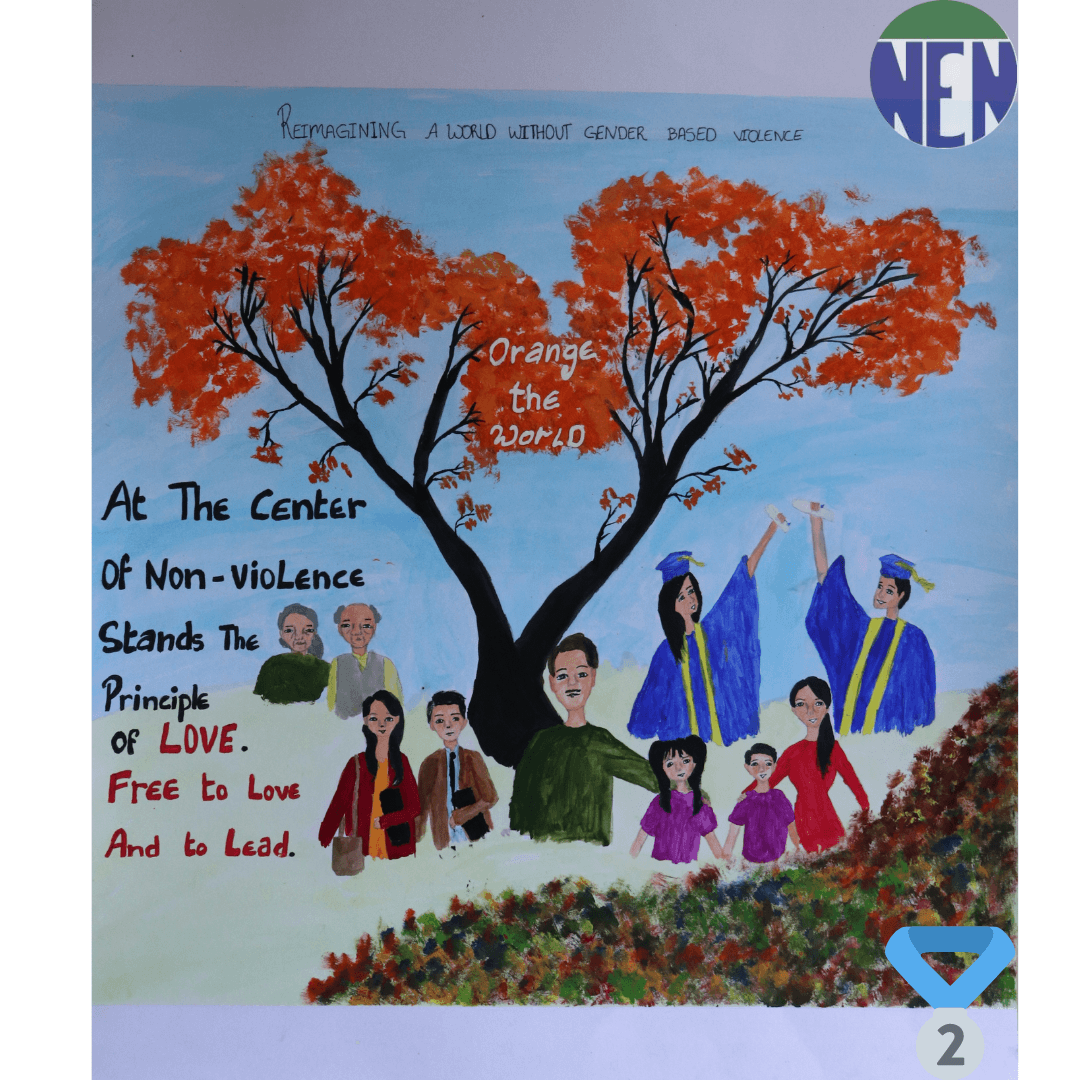
In the grand tapestry of human history, few threads are as stubbornly entrenched—or as violently frayed—as the one woven from the hands of gender-based violence. It is a shadow that stretches across continents, a specter that haunts the quietest corners of our homes and the loudest stages of our public lives. Yet, within this darkness, a flicker of hope persists—a vision, not of mere survival, but of a radical reimagining. By 2050, could we dare to dismantle the very foundations of this oppression? Could we, instead, cultivate a world where equity is not a distant dream but an unshakable reality? This is the audacious promise of feminism: a movement not just for change, but for transformation.
The Roots of the Beast: Unmasking the Systems That Sustain Violence
To sever the tendrils of gender-based violence, we must first dissect the anatomy of the beast. It is not a singular monster, but a hydra—each head a different manifestation of systemic oppression. Patriarchy, capitalism, colonialism, and heteronormativity do not merely coexist; they conspire. They stitch together a narrative where domination is normalized, where power is hoarded by the few, and where the bodies of women, girls, and marginalized genders are treated as territories to be conquered rather than lives to be cherished.
Consider the way economic disparity weaponizes vulnerability. In a world where women still earn a fraction of what men do for the same labor, financial dependence becomes a cage. It is not just about wages—it is about the psychological chains that bind a person to an abuser because the alternative is destitution. Or take the insidious role of religion and tradition, where sacred texts are twisted into justifications for control, where cultural practices become shackles disguised as heritage. Even language betrays us; the words we use to describe women—”hysterical,” “bossy,” “difficult”—are not accidents. They are the linguistic scaffolding of a culture that pathologizes female agency.
The Feminist Arsenal: Tools for Demolition and Reconstruction
Feminism is not a monolith, but a vast and evolving arsenal of strategies. Legal reform is one such weapon. Laws against domestic violence, sexual harassment, and femicide must be not just written, but enforced with the ferocity of a storm. But laws alone are paper tigers unless they are wielded by a society that refuses to look away. This is where education becomes our most potent ammunition. Schools must become battlegrounds for dismantling toxic masculinity, for teaching consent as a cornerstone of human interaction, and for celebrating the diversity of gender identities without stigma.
Technology, too, can be a double-edged sword. On one side, it amplifies the voices of survivors, connects activists across borders, and exposes the hypocrisy of those in power. On the other, it enables new forms of violence—cyberstalking, revenge porn, and the algorithmic amplification of misogynistic content. The challenge is to harness its potential while mitigating its dangers. Imagine a world where social media platforms are held accountable for the harm they facilitate, where AI is trained to detect and dismantle online abuse, and where digital spaces are sanctuaries rather than hunting grounds.
Cultural Alchemy: Rewriting the Narratives That Shape Our Lives
No revolution is complete without a cultural upheaval. The stories we tell—through film, literature, music, and art—are the mirrors that reflect our collective soul. For too long, these mirrors have been cracked, their reflections distorted by the lenses of patriarchy. But what if we shattered them entirely? What if we replaced the damsel in distress with the warrior who saves herself? What if we celebrated the queer love stories that defy heteronormative scripts? What if we reclaimed the language of desire, making it a symphony of agency rather than a litany of conquest?
This is not about erasing history, but about interrogating it. The women who were erased from the annals of science, the queer artists whose work was burned, the indigenous women whose knowledge was stolen—we must restore their legacies. We must create new myths, ones where power is not a zero-sum game but a shared feast. Where vulnerability is not weakness but a radical act of trust. Where femininity is not a performance but a spectrum of lived experiences.
The Men in the Movement: Allies or Obstacles?
No discussion of feminism can ignore the role of men. They are not the enemy, but they have been complicit in the structures that oppress. The question is not whether men can be feminists—it is whether they will choose to be. True allyship is not performative; it is a daily practice of unlearning, listening, and acting. It means challenging other men when they make sexist jokes, it means sharing the emotional labor of caregiving, it means using their privilege to amplify marginalized voices rather than drown them out.
But let us be clear: feminism is not a spectator sport. It is not a cause for which men can claim credit without doing the work. The burden of change cannot rest solely on the shoulders of those who have been oppressed. Men must be willing to sit with discomfort, to accept that their education is not the responsibility of women, and to recognize that their liberation is tied to the liberation of all.
A World Reimagined: The Blueprint for 2050
By 2050, what would a world without gender-based violence look like? It would be a place where consent is as natural as breathing, where children grow up learning that their worth is not tied to their gender, and where institutions are designed to uplift rather than oppress. It would be a world where the justice system does not retraumatize survivors but centers their healing. Where workplaces are not battlegrounds of harassment but spaces of equity. Where the streets are not sites of fear but of freedom.
This vision is not utopian—it is urgent. The tools to dismantle these systems already exist. What is lacking is the collective will to wield them. Feminism is not a passive ideology; it is a call to arms. It demands that we question, agitate, and rebuild. It asks us to imagine a future where no one is forced to justify their existence, where no one is told to shrink themselves to make others comfortable, where no one is made to feel unsafe in their own skin.
The path forward is not linear. There will be setbacks, backlashes, and moments of despair. But the alternative—a world where gender-based violence persists unchallenged—is unthinkable. So let us be unapologetic in our demands. Let us be relentless in our pursuit of justice. And let us dare to believe that by 2050, we might just break the cycle.