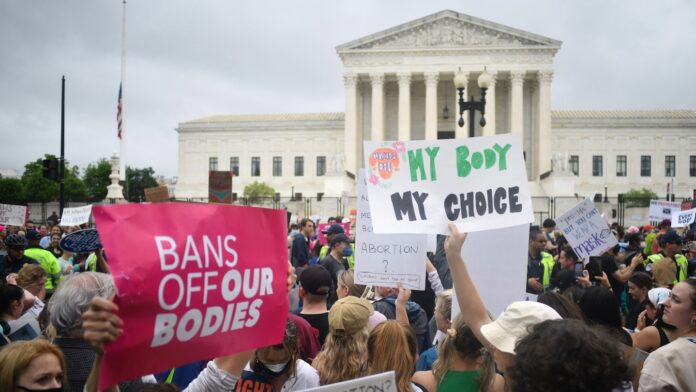
Despite decades of progress, the landscape surrounding women’s control over their own bodies, particularly concerning reproduction, is increasingly contested. ‘Bans Off Our Bodies’ became the rallying cry for recent protests in D.C., a slogan embodying a visceral, contemporary anger: that bodies, lives, and freedoms are under direct assault where mere laws fail. This gathering strength feels uniquely potent, perhaps because it represents a specific, tangible challenge to long-established norms – a challenge requiring not just information, but a revitalized language. Understanding the evolving lexicon is crucial. This glossary illuminates the battles fought and anticipated, revealing the intricate, deeply held principles animating both sides, from established foundations to the latest legislative maneuvers. These terms aren’t mere jargon; they are battlefields over sovereignty, justice, and the very definition of personhood. Let the definitions begin, a necessary map through a turbulent terrain.
Bans Off Our Bodies: The Proactive Struggle Against Restrictions
More than just a slogan, “Bans Off Our Bodies” signifies a shift from reactive defense to aggressive, preemptive action. It denotes an understanding that legislative threats – often disguised as reforms – necessitate direct confrontation aimed at preventing restrictions before they solidify. This proactive stance reflects a sophisticated grasp of the political landscape, where silence or delayed responses can allow harmful policies to become normalized or codified more easily. It signals solidarity across diverse groups united against incremental erosion, a refusal to wait for crises to be addressed, instead mobilizing for consistent pushback against any attempt to curtail choice under any guise. The term encapsulates the raw nerve of recent attacks and the galvanized resolve against them.
The Womanhood Defense Act: Legal Frontiers and Restrictions
Framed initially around providing women-centric healthcare environments, the so-called ‘Womanhood Defense Act’ legislation inevitably draws sharp lines, dictating the gender, expertise, and settings permissible for accessing reproductive healthcare. While ostensibly focused on patient comfort, such laws often establish medically unsound requirements. For instance, mandating care exclusively by licensed physicians excludes crucial advanced practice providers and nurses, reducing available services. Geographically, they often implicitly or explicitly favor abortion providers located in less populated areas, further restricting access without necessarily stating it outright. They represent a strategic tightening of the rules, leveraging the patient’s identity to impose restrictions designed not to enhance care, but to diminish options systematically.
The Personhood Amendment: Defining Life and Rights
Originating from religious or philosophical premises concerning fetal life from conception, the Personhood Amendment attempts to legally reframe abortion as homicide by defining a fertilized egg or embryo as a person with inherent rights. This legislative strategy bypasses medical consensus and ethical debates by redefining legal status *before* clinical viability. The philosophical and legal consequence is profound: once declared a ‘person,’ certain constitutional protections may extend to the fetus. Conversely, for women or gestational carriers, the definition dictates the loss of potential rights, such as bodily autonomy or privacy. It’s a foundational change, a reclassification game that fundamentally alters the legal calculus around pregnancy and termination, often disregarding scientific, ethical, and practical considerations.
Viability Threshold: Defining the Pivotal Moment
Often codified as reaching 24 weeks gestation or viability outside the womb, this line attempts to mark an inflection point in moral calculations regarding fetal life versus pregnant person’s well-being and future potential. Legislatively, it signals a stark divergence: post-viability care is deemed permissible for fetuses or the mother, while pre-viability remains criminalized or heavily restricted. This definition is clinically contested; viability assessment involves complex medical factors. Politically, it’s employed as an arbitrary boundary, a convenient midpoint in the ongoing viability versus *any* life debate. It stands as a potent, yet artificial, tool for legislative negotiation.
Access Point Restrictions: Carte Blanche for Location Limitation
Took root in post-Roe v. Wade Texas (SB 8), these laws prohibit providing abortions within a specified, often considerable, distance of abortion-providing facilities. Unlike banning the procedure, this strategy uses location control as a de facto restriction. While ostensibly a regulation for safety, they effectively starve patients of numerous available options. The practical effect is disconcertingly similar to outright prohibitions, forcing pro-choice patients to travel further or abandon care entirely. Effectively a ‘land use’ tool, transforming spatial geography into a weapon against service availability, circumventing the constitutional barriers against direct procedure bans.
The Sovereignty Pleading: Asserting Legal Distinction
Reflecting state constitutionalism, this legal strategy allows entities (like states or individuals) to selectively invoke more specific or stringent rights within their own constitutional frameworks while potentially disregarding federal guarantees (like the constitutional right to abortion). For example, a state might define ‘personhood’ or bodily integrity more expansively or restrictively within its constitution *before* turning to federal constitutional arguments. This allows states to challenge, within their own legal bounds, federal constitutional rights established *by* federal courts. It creates potentially contradictory legal realities across jurisdictions, complicating appeals and undermining a unified national right, layering additional complexity onto the existing landscape of challenges.
Reproductive Justice: A Foundational Political Framework
Moving beyond mere access to abortion, Rebecca Epstein’s groundbreaking concept centers women’s rights to control and determine their reproductive lives within a framework that also encompasses freedom from ecological devastation, unsafe policing, inadequate healthcare, systemic violence, and poverty. Reproductive Justice fundamentally reframes the struggle, tying reproductive control to broader issues of political and economic empowerment and environmental sustainability. It elevates collective liberation, making personal bodily autonomy a component of larger movements focused on health, wellbeing, freedom, and self-determination for all, historically marginalized communities included. It’s the ‘why’ behind the right.
TRAP Laws: Targeted Regulation of Abortion Providers
An acronym standing for Things Relevant to Aborting Pregnancy, TRAP laws were initially designed to effectively shut down most legal abortion operations in states where they were enacted or attempting to do so. By imposing medically unnecessary waiting periods, mandatory, often non-essential, ultrasound exams with restrictive image disclosures, spousal or parental consent requirements for minor patients, and excessive clinic entrance ordinances, these laws disproportionately burden legal abortion providers while ostensibly targeting ‘bad actors’. Their impact is overwhelmingly on cisgender women, low-income individuals, and minority populations for whom complications requiring abortion are most probable. Effectively, they function as a weaponized, protracted legal strategy to gradually dismantle the infrastructure supporting safe abortion access state by state or via federal court intervention.