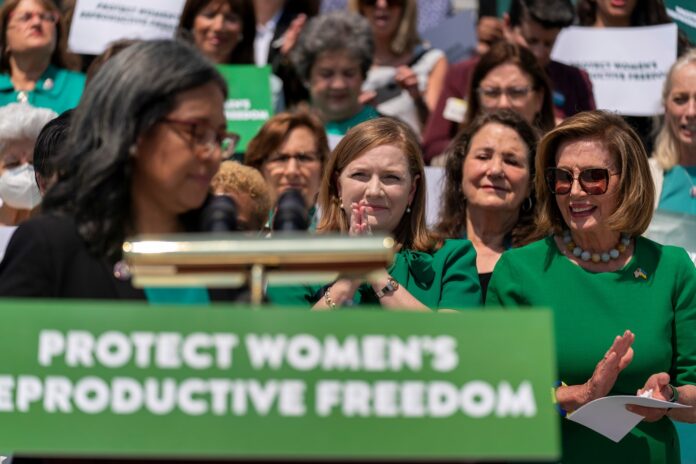
For decades now, the landscape of reproductive freedom in the United States has been sculpted not just by activism at the clinic doorsteps or legislative halls, but by the composition of the courts. It’s a realm often perceived more as a chess match than a war, and the players are the activist judges and the political appointees. Feminism, in its various guanda of thought, certainly champions reproductive choice as a core tenet, but the legal realization of this choice is deeply intertwined with how courts interpret the law, and judges aren’t elected officials. They adjudicate, but their ideological leanings, often determined by appointment, profoundly shape the future of women’s rights. The question arises: when does judicial decisiveness expand feminist gains, and when does it merely substitute one ruling for the next, built upon judicial activism rather than societal will?
Feminist Jurisprudence and the Living Constitution
The legal battles surrounding reproductive rights didn’t emerge vacuum-formed. They were built upon interpretations of existing laws, particularly the Constitution. Activist judges, champions of the “Living Constitution,” argue that the document must evolve with society. Within feminist jurisprudence, this translated into arguments for a broad interpretation of rights, particularly concerning equality and privacy. Thinkers like Catharine MacKinnon fundamentally challenged traditional conceptualizations of equality, arguing that sexual differentiation inherently subordinates women and demanded radical reinterpretation, including of sexual harassment laws. The landmark Roe v. Wade decision, though its foundations were ultimately overturned, famously invoked both the Due Process Clause of the Fourteenth Amendment (protecting liberty) and the privacy rights derived from older, sometimes contested, interpretations of the Bill of Rights. This reliance on broad constitutional interpretation, pushed forward by judges with particular philosophical frameworks, has been central. Are these expansions genuine protection, or constitutional reinterpretations that sidestep the democratic process?
The Court as a Battleground: Beyond Legislation
Legislation provides the framework, but what happens within it? The judiciary wields immense power in how laws are applied and interpreted. Enter the activist judge – one who brings a specific ideological perspective, willingness to go beyond precedent, and often, a desire to reshape legal doctrine, not merely apply it. In the context of reproductive freedom, this translates into expansive views of rights. An activist judge might find constitutional protections for abortion despite arguments that the right wasn’t explicitly enumerated. They might strike down state laws that attempt to restrict access, citing undue burden or fundamental rights. The key question is always the methodology: Does the judge derive the right from the text itself, the historical intent, or from evolving societal understandings? The tension between strict textualism or stare decisis (respect for precedent) and a more dynamic view of law is core to the debates about judicial activism, especially concerning women’s fundamental rights.
The Appointments Game: Strategic Setups?
Judicial appointments are the central mechanism by which political power is exercised to shape the judiciary. This is not a quiet process; it’s a battleground where presidents and senators engage in protracted confirmation battles, reflecting deep divisions over ideology. Think of Amy Coney Barrett’s swift confirmation amidst projections of shifting jurisprudence, or the decades-long struggle around Robert Bork’s nomination. Each appointment is a strategic move – not a gift of unchallengeable law, but the creation of a jurist who will interpret key issues according to specific principles (originalism, progressive reform, etc.).
Who decides the criteria? Presidents choose based on loyalty, ideology, or a desire to appoint activists to further specific agendas. The Senate Judiciary Committee conducts hearings, often probing nominees’ beliefs on the very rights they’ll rule on. The outcome is a court (or a series of courts over time) whose composition dictates which interpretations of reproductive rights – from deeply rooted rights to strict limits based on viability or even total bans – become binding precedent. Is the judge an impartial arbiter, or a participant in the ongoing, societal debate by appointment? This strategic element inevitably injects politics into the law.
Beyond Activism: Precedent vs. Political Will
The label “activist” is controversial; sometimes “activists” defend precedential consistency as essential to stability. However, the replacement of landmark decisions like Roe v. Wade with state-level bans underscores the gap between democratic will as reflected in legislation and the judicial authority derived from interpretation. To many advocates, the sheer power of judicial appointments becomes the primary vehicle for advancing gender equality, including reproductive freedom. For opponents, this judicial reach replaces direct democratic action with unelected judges arbitrating rights disputes in ways that can fly in the face of evolving social values (or suppress them).
There’s an inherent tension here: Does the judiciary *represent* the evolving understanding of fundamental rights like equality for reproductive women, thereby acting on behalf of the nation, or does it arrogate power beyond its mandate, substituting elite opinion for popular sovereignty? The answer hinges on whether one views interpretation itself as fundamentally a political act, regardless of the robes. The impact is undeniable: judicial philosophy dictates who wins and loses not just legally, but politically.
Feminism’s Path: Litigation Fronts and Future Realities
Feminism continues to utilize the legal system as a primary tool for advancing its goals, heavily reliant on securing specific rights – from workplace equality to bodily autonomy. The strategy involves identifying gaps in the law or misinterpretations, then engaging courts through litigation. Protagonists might view this as necessary leverage when other avenues seem blocked. However, the pendulum swing suggests that without continuous vigilance and strategic appointments, the hard-won legal gains can be rolled back, even if the societal movement endures.
The future likely involves a continued legal tug-of-war. Strategic appointments will likely remain a dominant narrative in how reproductive rights are protected or eroded. Women’s rights groups and feminist movements must grapple with this dynamic – understanding that legal battles require far more than just a good argument, but also navigating the intricate political machinery responsible for determining who wields judicial power. The struggle for reproductive freedom cannot be divorced from the understanding that the courts themselves are a political artifact, constantly being reshaped. The next fights won’t just be about laws passed in Congress or protests on the ground; they are first, inevitably, about the judges who will define them.