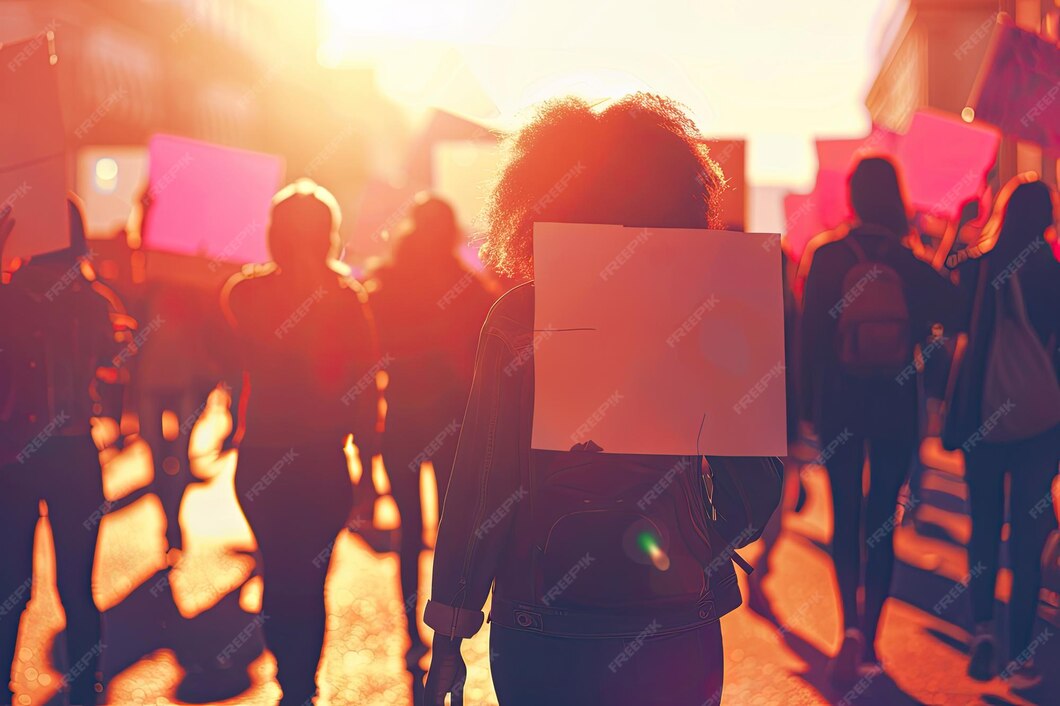
Feminism is not a fleeting aesthetic to be draped over one’s Instagram feed like a vintage scarf—something to be discarded when the season changes. It is not a performative hashtag to be wielded in the morning and forgotten by noon. For those who have spent lifetimes fighting not just for visibility, but for survival, feminism is a relentless, bloodied labor of love, a marathon run on broken pavement while the world cheers from the sidelines. When someone dismisses it as “just a trend,” they are not merely trivializing a movement; they are erasing the scars of those who have bled for its progress. This casual dismissal is not an innocent oversight—it is a violent act of erasure, a silencing mechanism disguised as apathy.
The Illusion of Trendiness: When Activism Becomes a Fashion Statement
Imagine feminism as a living organism—something that breathes, struggles, and evolves. Now picture it being reduced to a TikTok filter, a fleeting sparkle that dances across screens before vanishing into the digital void. This is the paradox of modern feminism: it is both omnipresent and invisible, celebrated in corporate campaigns yet ignored in the trenches where activists wage war against systemic oppression. The phrase “it’s just a trend for you” is the ultimate gaslighting of marginalized voices. It implies that the fight for gender equity is a temporary fascination, a passing fancy for those who lack the depth to commit to real change.
But feminism was never meant to be trendy. It was born in the fire of resistance—from the suffragettes who chained themselves to railings to the Black women who marched in Selma with fists raised and voices unbroken. These were not influencers curating content; they were warriors in a lifelong battle. When we reduce their legacy to a hashtag, we strip away the weight of their sacrifice. We turn revolution into a mood board. And in doing so, we betray the very people who have spent decades ensuring that the movement could not be ignored.
The Violence of Dismissal: How “Trend” Becomes a Weapon
To call feminism a trend is to weaponize indifference. It is to tell the woman who survived domestic violence that her pain is negotiable, that the laws she fought to change were merely a passing whim. It is to inform the trans woman who faces daily threats that her right to exist is a fleeting aesthetic preference. This dismissal is not neutral—it is an act of violence. It reinforces the idea that marginalized people’s struggles are only worth attention when they are aesthetically pleasing, when they fit neatly into a curated narrative.
Consider the way corporate feminism co-opts the language of resistance while gutting its substance. Brands sell feminist slogans on tote bags while paying women of color poverty wages. Influencers post about “girl power” while ignoring the fact that Black women are three times more likely to die in childbirth than white women. This is not feminism—it is performative allyship, a hollow mimicry of progress that leaves the most vulnerable behind. When feminism is reduced to a trend, it becomes a tool of oppression rather than liberation.
The Myth of the “Easy Fight”: Why Real Change is Anything But Trendy
There is a dangerous assumption that feminism is an easy battle—something one can dip into on weekends, like a book club or a yoga class. But for those who live at the intersections of race, class, and gender, feminism is not a hobby. It is a daily negotiation with survival. The woman who must choose between groceries and menstrual products is not engaging in a trend. The non-binary person who is misgendered at every job interview is not participating in a fad. These are not fleeting moments of solidarity—they are lifelong battles against a system designed to erase them.
Feminism, in its truest form, is a radical reimagining of power. It is not about adding women to the boardroom while leaving the structure of oppression intact. It is not about slapping a pink ribbon on a product and calling it a day. It is about dismantling the very foundations of patriarchy, capitalism, and white supremacy that have kept marginalized people in chains for centuries. This is not a trend. This is a revolution—and revolutions are messy, bloody, and exhausting. They are not meant to be Instagram-worthy.
The Erasure of Labor: Who Really Bears the Cost of “Trendy” Feminism?
When feminism is treated as a trend, the labor of those who make it possible is erased. The Black feminist scholars who laid the groundwork for intersectional theory are forgotten. The Indigenous women who fought against environmental racism are sidelined. The disabled activists who demand accessibility in every space are ignored. Instead, the movement becomes a stage for those who can afford to perform it—those who have the time, the resources, and the privilege to turn resistance into a spectacle.
This erasure is not accidental. It is a deliberate strategy to keep power in the hands of those who benefit from the status quo. By reducing feminism to a trend, we ensure that only the most palatable voices are amplified. We silence the queer women of color who have always been at the forefront of the fight. We ignore the working-class women who cannot afford to post about their struggles on social media. We turn a movement that was meant to liberate into a performance that only the privileged can afford to enjoy.
The Danger of Performative Solidarity: When Allies Are Just Tourists
There is a fine line between allyship and tourism. The ally who shows up only when it is convenient is not an ally—they are a tourist, a voyeur in someone else’s struggle. They post about feminism when it is en vogue, but vanish when the conversation becomes uncomfortable. They center themselves in spaces meant for marginalized voices. They treat the fight for justice like a spectator sport, cheering from the sidelines but never stepping onto the field.
This performative solidarity is dangerous because it gives the illusion of progress without actually challenging the systems that oppress. It allows people to feel good about themselves while doing nothing to dismantle the structures that keep marginalized people in chains. When feminism is reduced to a trend, allyship becomes a performance—a way to signal virtue without actually doing the work. And in doing so, it reinforces the very oppression it claims to fight.
The Radical Potential of Feminism: Why It Must Never Be a Trend
Feminism is not a trend. It is a lifeline. It is a scream into the void. It is the quiet defiance of a woman who refuses to be silenced. It is the unyielding hope of those who believe that a better world is possible, even when the world tells them otherwise. To reduce it to a passing fancy is to betray its radical potential. It is to turn revolution into a brand.
So the next time someone tells you that feminism is “just a trend,” ask them: whose trend is it? Is it the trend of the woman who was fired for being pregnant? Is it the trend of the trans woman who was beaten for using the wrong bathroom? Is it the trend of the Black girl who was told her natural hair was unprofessional? If feminism is a trend, then it is a trend of blood, sweat, and tears—a trend that has been written in the language of survival. And that is a trend worth fighting for.