Household labor—that invisible, relentless engine of daily life—is often dismissed, undervalued, or simply overlooked. Yet, within the kaleidoscope of feminism lies a potent call: to dissect, diagnose, and democratically distribute the managerial tasks that sustain our homes. This is not merely about who washes the dishes or folds the laundry. It is an audacious reimagining of power, equity, and responsibility within the intimate sphere where societal norms are both reinforced and subverted. Dare to rethink the domestic battlefield, and uncover the radical potential hidden in mundane chores.
The Invisible Architecture of Household Management
At first glance, household managerial tasks appear banal—cleaning, cooking, scheduling, budgeting. But beneath this surface lies an intricate infrastructure of emotional and cognitive labor. This architecture is less a random assembly of tasks and more a sprawling, systemic operation requiring foresight, coordination, and sustained energy. Feminism compels us to recognize that household management is a form of labor deserving transparency and legitimacy. It is not a natural female inclination nor a self-evident duty; it is a social construct that, until now, has been cloaked in invisibility.
As we come to understand the full scope, the boundaries blur. This isn’t merely vacuuming and meal prep—it includes mental load, anticipatory planning, negotiation between family members, and crisis management. To diagnose effectively means dissecting these layers, recognizing where the mental and emotional efforts disproportionately fall, and cleaving through assumptions that these responsibilities fall “instinctively” to one gender.
Diagnosing Imbalance: Beyond the Surface-Level Division
The first step to equitable division is rigorous diagnosis, accompanied by brutal honesty. Most households display a subtle but insidious gendered division that escapes casual detection. Women often shoulder the “mental load,” a term capturing the unseen cognitive effort of remembering doctor appointments, replenishing supplies, and orchestrating social calendars. This choreographs the rhythm of family life yet is invisible, unacknowledged labor.
This diagnostic process requires meticulous mapping—what are the tasks? Who initiates them? Who executes or follows through? Creating a detailed inventory of managerial chores is essential, listing not only physical duties but also anticipatory and emotional work. Here, a paradigm shift emerges: household management is not simply about execution but about orchestration, about who holds and wields the invisible baton that keeps the symphony of domestic life in tune.
Decoding the Mental Load: The Hidden Weight
The mental load is the clandestine burden that tips the scales of domestic power imbalance. It is the relentless background hum of worry, the constant scanning for potential problems, the subtextual pressure of always being “on.” Feminist discourse unmasks this weight, rejecting the myth that “helping out” is equivalent to shared responsibility. True equity demands joint ownership of the mental chess game that household management entails.
Recognizing the mental load demands a brave confrontation with ingrained patterns. It requires stepping out of autopilot mode, calling out the invisible labor, and challenging the entrenched expectations that women silently shoulder. Acknowledging this is not just an act of empathy but a political agitation against structural gender inequality.
Negotiation as Liberation: Crafting a New Domestic Contract
Once diagnosed, the division of tasks becomes a radical negotiation—a renegotiation of the domestic contract that has long been unilaterally imposed. The conversation must be candid, free from performative egalitarianism, and rooted in genuine accountability. This is harder than it sounds. It involves vulnerability and confrontation with privilege and complacency.
Negotiation here functions as both methodology and metaphor—a process of redistributing labor that shakes foundations and redefines relational dynamics. The aim is not to colonize roles based on gender but to collaboratively identify strengths, preferences, and availabilities. Sometimes, this means dismantling cherished notions of “fairness” that disguise unequal outcomes and instead opting for equity—an elastic standard responsive to real-life complexities.
Tools and Techniques for Equitable Division
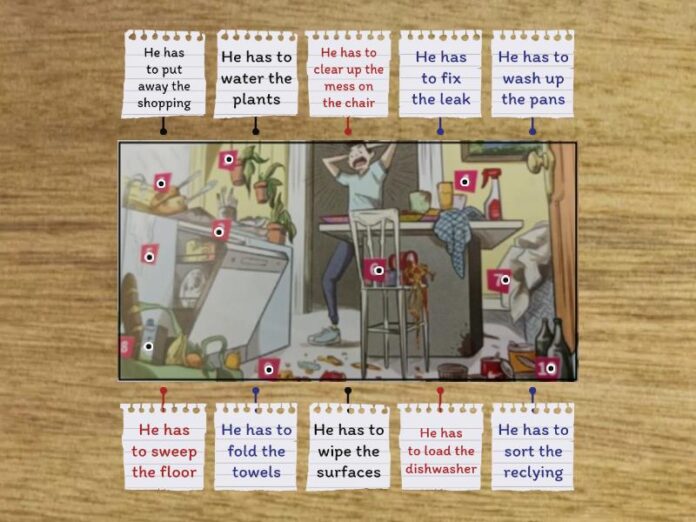
Diagnosis and negotiation are theoretical; implementation demands practical tools to codify and sustain balance. Visual aids like labelled diagrams of household tasks serve as powerful instruments for externalizing the nebulous mental load. They provide a tangible map of responsibilities, making disparities visible and facilitating discussions free from defensiveness.
Moreover, digital apps and shared calendars can help distribute reminders and track completion, transforming ephemeral obligations into shared accountability. Importantly, the focus must be on process over perfection: rotating responsibilities, reassessing regularly, and acknowledging when one partner’s capacity fluctuates.
Deconstructing Gendered Expectations: The Ultimate Quest
Even with clear diagnosis and equitable agreements, the lingering specter of gendered expectations hovers. Households do not exist in vacuums—they are cultural microcosms shaped by historical socialization, media narratives, and unconscious bias. Feminism’s promise lies in its commitment to deconstruct these expectations at their roots rather than merely redistributing labor within existing frameworks.
This demands critical self-reflection and a willingness to be uncomfortable. It involves questioning why certain chores are coded “women’s work,” interrogating how language perpetuates roles, and resisting the seductive pull of tradition. Breaking free from gendered shackles in the domestic realm is a radical act of liberation that reverberates outward, challenging societal norms beyond the home walls.
Shared Responsibility as a Revolutionary Act
Ultimately, sharing household managerial tasks is not just practical—it is a subtle but seismic revolt against systemic patriarchy. It refuses the invisibility cloak historically draped over women’s labor. This revolution recalibrates intimacy and partnership by elevating the value of care and coordination to a shared endeavor.
Each renegotiated chore, each recognized mental burden lightened, becomes a stitch in the fabric of gender justice. It is an ongoing rebellion, a commitment to dismantle inherited inequities and foster relationships rooted in respect and mutual support. This reframing transforms the mundane into the monumental. In this, the home becomes a crucible for feminist praxis, where new paradigms of power and partnership are forged one task at a time.