What if the greatest revolution feminism could spark isn’t just about dismantling patriarchy—but also about reconceptualizing the very frameworks through which identity is understood? Imagine an intersection not just of gender, but of cognition and embodiment, where neurodivergence challenges the normative boundaries of experience. Welcome to the world of neuroqueer feminism, a paradigm that unapologetically disrupts the neat binaries of both mind and gender. Could this fusion hold the key to a deeper emancipation, or does it risk further marginalizing voices already at the peripheries? Let’s venture into this fecund terrain, where the radical queer meets the uncharted cognitive, and where feminism finds its most provocative frontier yet.
Unraveling Neuroqueer Feminism: More Than a Mere Intersection
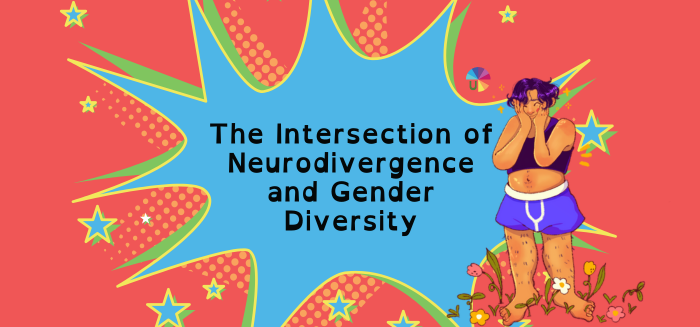
At first glance, neuroqueer feminism might sound like a niche buzzword, an intellectual curiosity tucked away in academic shadows. Far from it. This movement is a daring fusion of neurodiversity—those cognitive variances such as autism, ADHD, and other atypical neurological conditions—and the fluidity of gender identities outside heteronormative confines. It shatters the default assumption that there exists a ‘normal’ brain form that processes gender and embodiment homogeneously.
Neuroqueer feminism demands an ontological shift: not just inclusion within existing paradigms, but a wholesale re-imagining of what it means to experience gender and cognition together. Here, traditional feminist frameworks are retooled to acknowledge that neurodivergent individuals encounter gender differently—through sensory processing, emotional regulation, and embodied experience. Thus, identity becomes a mosaic, a constellation of intersecting neurological and gendered truths rather than a monolith.
The Challenge of Normativity: Defying Cognitive and Gendered Conformity
Is feminism prepared to interrogate its own cognitive and gendered biases? Mainstream feminist discourse often leans on gender as a social construct, fluid yet bounded by language and cultural narratives. Neuroqueer feminism destabilizes this comfort zone further, revealing that how one perceives and expresses gender is inextricably linked to neurological wiring, which mainstream feminism rarely considers.
Cognitive normativity—an invisible standard valuing neurotypical modes of thought and behavior—mirrors gender normativity in its exclusionary power. Together, they create a double bind for neurodivergent gender-variant folks, who find themselves “othered” in multiple dimensions. Pushing past these twin constraints requires feminist praxis that refuses to sanitize or normalize neurodivergence but instead embraces the messy plurality of minds and bodies.
The Political Implications: Reframing Access, Autonomy, and Inclusion
Neuroqueer feminism thrusts to the fore a profound political challenge: how can feminist activism authentically account for the embodied realities of those whose neurological and gender experiences are marked by difference? This reframing unsettles traditional feminist notions of bodily autonomy by integrating sensory and cognitive accessibility as integral to liberation. Autonomy isn’t merely a choice over one’s body—it’s also the capacity to perceive, interact, and communicate unencumbered by normative expectations.
Policies and movements that fail to incorporate this intersection risk perpetuating exclusion, no matter how progressive they claim to be. For example, safe spaces designed without sensory considerations can be alienating to neurodivergent participants. Likewise, gender-inclusive language that neglects cognitive diversity may unintentionally obscure vital dialects of identity expression.
Gender Variance as Cognitive Experience: Embodiment Beyond the Binary
To glimpse the world through a neuroqueer feminist lens is to appreciate gender variance as not simply socio-cultural defiance, but as an embodied cognitive reality. Neurodivergence can profoundly shape how individuals inhabit their bodies and negotiate gendered social scripts. The sensory sensitivities, atypical neural pathways, and divergent emotional rhythms characteristic of various neurodivergent conditions influence self-perception and gender expression alike.
This perspective destabilizes the binary conception of gender by situating it within the cerebral and corporeal interplay rather than purely social deconstruction. Gender variance, therefore, is not a mere identity label; it is a lived cognitive phenomenon with neurological resonance. Neuroqueer feminism insists that any feminist understanding of gender must reckon with this neuro-embodied complexity to avoid reductive frameworks that mask the richness of diverse lived realities.
Community and Resistance: Building Neuroqueer Feminist Coalitions
The emergence of neuroqueer feminist communities signals a vibrant, if still nascent, form of resistance to exclusionary paradigms. These collectives operate at the crux of queer, feminist, and disability justice movements, crafting solidarities that transcend singular identity politics. They champion narratives that normalize variance in both mind and gender, affirming multiplicity rather than conformity.
Through art, activism, and scholarship, neuroqueer feminists contest cultural erasures caused by cisnormativity and neurotypical bias. They defy simplistic categorization and insist on visibility for cognitive difference within queer feminist spaces. This solidarity invites a reimagined feminist horizon—one that celebrates dissonance as a site of creative power and political leverage.
Conclusion: Toward a Radical Pluriverse of Mind, Gender, and Freedom
Neuroqueer feminism challenges us to speculate: what does true freedom look like when it is crafted in the interstices of mind and gender? It demands we dismantle not just patriarchal structures, but also cognitive hierarchies that govern our ideas about identity and authenticity. The neuroqueer feminist revolution isn’t a polite reform; it is a disruptive intervention that questions whether the frameworks we rely on are capable of embracing the kaleidoscopic truth of human experience.
In this light, feminism morphs from a single struggle for gender justice into a radical pluriverse—a cacophony of minds and bodies reinventing freedom on their own terms. The challenge is formidable, but the possibilities infinite. After all, can true equality exist if it leaves behind the queer minds that refuse to conform?