In the crucible of our contemporary moment, the dialogue around feminism and reproductive technology—particularly IVF (In Vitro Fertilization) and surrogacy—unfolds with remarkable intensity. These technologies promise unprecedented control over biological processes, offering pathways to parenthood that were once unimaginable. Yet, beneath the surface narrative of liberation lies a labyrinthine terrain where feminist ethics grapple with profound questions. Is technological empowerment truly synonymous with the realization of feminine autonomy, or does it introduce new forms of constraint and commodification? This exploration delves into the intricate and often paradoxical relationship between feminism, reproductive control, and the burgeoning ethics of IVF and surrogacy, examining how women navigate, and sometimes redefine, the bodies they inhabit and the choices they make within this complex matrix.
Defining the Terrain: Feminism and Reproductive Autonomy
At its core, a fundamental tenet of modern feminism has been the assertion of women’s control over their bodies and reproductive functions. This principle, often termed “reproductive freedom,” holds that the power to decide whether, when, and how to bear children is central to personal liberty and gender equality. The advent of assisted reproductive technologies (ART), encompassing IVF and surrogacy, initially appeared as a utopian fulfillment of this ideal—a tool that bypasses biological limitations and empowers individuals, particularly women, to defy reproductive imperatives dictated by patriarchal structures or physiological constraints. It offered a potential means to challenge the traditional link between women’s value and their reproductive capacity.

The IVF Machine: Promises and Perversion of Control
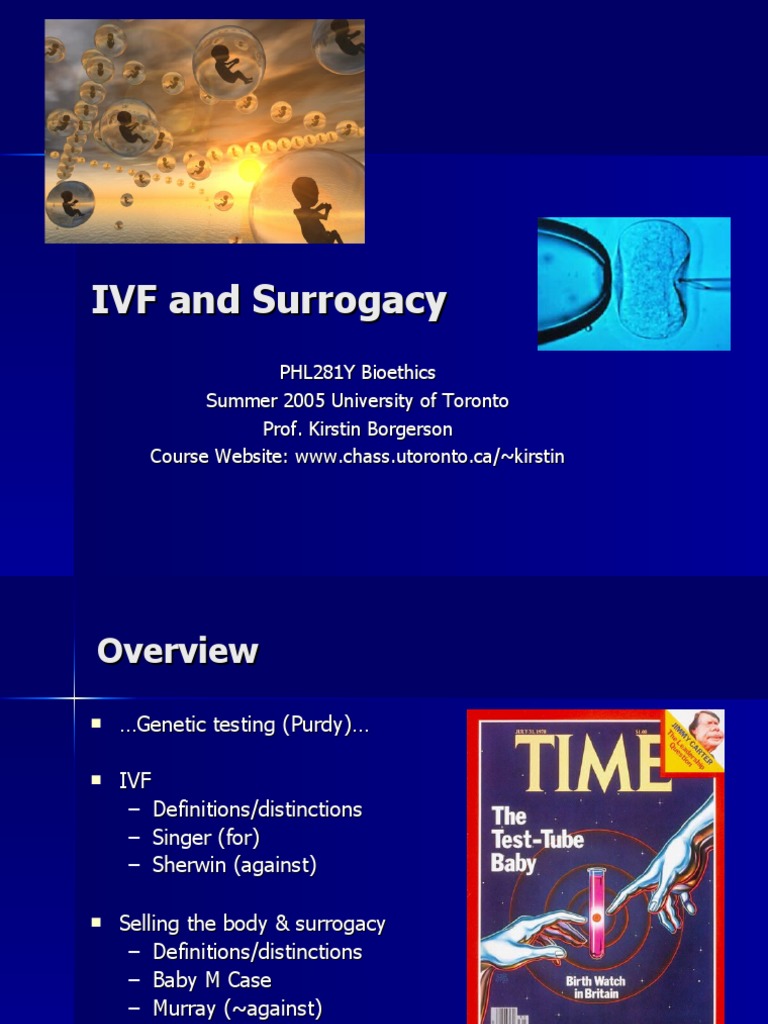
IVF, the process of fertilizing an egg outside the womb and then transferring it into the uterus, stands as a monumental technological achievement. It has enabled countless individuals, including those facing infertility, same-sex couples, and transgender parents, to build families. For feminist discourse, IVF initially represented a powerful assertion of technological agency, allowing women to produce gametes (eggs) and direct their fertilization and implantation. However, the reality of IVF often presents a contrasting narrative. The process demands immense physical and emotional labor, frequently involving arduous cycles of hormonal injections, invasive procedures, and significant financial investment with no guarantee of success. This raises critical questions: Does the sheer difficulty and cost turn IVF from a tool of liberation into a system that reinforces existing social hierarchies, favoring the affluent and medically stable? The extraction of eggs, an integral part of the process, transforms a private biological function into a public act fraught with physical toll and ethical ambiguity, reopening debates about the limits of bodily control when technology intervenes.
Surrogacy: Expanding the Family, Contested Waters
Surrogacy further expands the possibilities of family creation, allowing individuals to have a genetic child or providing pathways for loved ones seeking parenthood. Here, the question of bodily autonomy becomes even more complex. Commercial surrogacy, driven by economic desperation in some regions, casts fertile bodies, particularly women’s wombs, into a market. Feminist analysis here enters a contentious space. Critics argue that commodification—the reduction of a fundamental life-giving function to a market transaction—undermines the ethical core of autonomy, transforming the surrogate mother into a vessel for pay, potentially objectifying her and disregarding potentially conflicting desires or life circumstances. Legal frameworks vary widely, from outright prohibition to systems attempting to regulate compensation to prevent exploitation. Procreative ethics demand careful consideration of the intentions of all parties, the long-term psychological impact on the child born via surrogacy, and the equitable distribution of societal resources that might fund such arrangements.
Feminist Ethics: Navigating Autonomy and Responsibility
A truly robust feminist ethics extends beyond the mere assertion of individual choice. It compels a consideration of the social context, the potential distribution of burdens and goods, and the responsibility that accompanies new powers. Does access to IVF and surrogacy challenge or reinforce existing socioeconomic divisions? How do these technologies factor into the lived experiences of women across different intersections of race, class, and geography? The concept of the social contract might be reconfigured. Society, by permitting technologies that override natural biological clocks or physical health concerns, implicitly acknowledges a shift in the social valuation of reproductive capacity. Feminist ethicists query whether society’s reliance on ART, even when empowering individuals, shifts the normative weight from biological reproduction to technological reproduction, potentially altering what constitutes a “complete” life or societal well-being.
Intersectionality: Where Lines Get Drawn
A critical lens within feminist thought—intersectionality—forces us to examine how factors like race, class, disability, and nationality intersect with reproductive choices. Access to IVF and surrogacy is often severely limited by financial means, creating sharp class divides. Furthermore, the recruitment practices for surrogacy, particularly in countries with less stringent regulations, raise concerns about the potential for coercion or exploitation, especially targeting economically vulnerable populations, many of whom are women from racialized or marginalized backgrounds. LGBTQ+ individuals often rely on surrogacy as a pathway to parenthood, but it also means navigating complex legal landscapes regarding parental rights and child welfare. These intersectional dynamics demand that ethical analysis does not remain abstract but is tethered to the lived realities and systemic inequalities that shape access and experience.
The Future Scenarios: Beyond the Current Horizon
Looking ahead, the ethical landscape surrounding reproduction is set to evolve further. Potential technologies like genetic screening (PGT), embryo selection, and even hypotheticals like synthetic gametes or artificial wombs beckon, demanding preemptive ethical reflection. Feminism must engage not merely as observers but as architects of these futures, advocating for technological development that prioritizes equity, bodily integrity (even as body boundaries are redefined by tech), and the collective well-being over untrammeled market forces. Perhaps the feminist critique is not necessarily a rejection of technology itself, but a persistent interrogation of its social context, its distributional consequences, and its impact on the complex, lived experience of what it means to possess a body and navigate the journey of reproduction. The goal is not merely to have the means to reproduce but to ensure that such means serve the ethical imperatives of justice, equality, and human flourishing, rather than merely reflecting or amplifying existing inequities and anxieties.