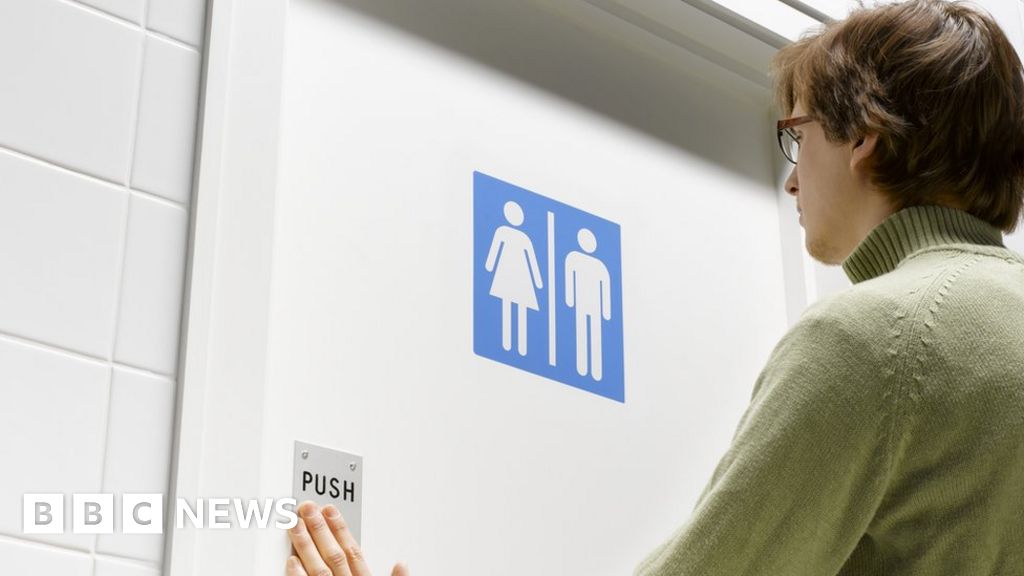
What if the walls that divide us weren’t just physical but ideological? What if the very spaces we assume are neutral—bathrooms, changing rooms, shelters—were quietly enforcing a hierarchy as old as patriarchy itself? Feminism has long challenged the myth of “single-sex spaces” as sacred, unassailable domains of safety and privacy. These spaces, often cloaked in tradition, are less about protection and more about policing—reinforcing gender binaries while erasing the lived realities of trans, non-binary, and gender-diverse individuals. But here’s the provocative twist: if feminism is about liberation, why do so many of its advocates cling to these exclusionary enclaves? Let’s dismantle the arguments, one brick at a time.
The Myth of the “Natural” Binary: Why Single-Sex Spaces Are a Colonial Relic
The idea that bodies neatly split into “male” and “female” is a fiction as flimsy as a Victorian corset. Biology is a spectrum, not a binary—intersex people are born with variations in sex characteristics that defy the neat boxes we’ve constructed. Yet, single-sex spaces operate on the assumption that genitals alone dictate identity, a logic borrowed from 19th-century pseudoscience and colonial-era gender policing. These spaces weren’t designed for safety; they were designed to enforce a rigid social order. The irony? Feminist movements, which once fought to break free from such constraints, now find themselves defending them. If feminism is about challenging oppressive norms, why does it so often replicate them in the name of tradition?
Consider the women’s shelter that turns away a trans woman fleeing domestic violence. The argument? “It’s a single-sex space.” But whose safety is really being protected here—the cisgender women who might feel uncomfortable, or the trans woman who is statistically more likely to face violence? The rhetoric of “single-sex” is a smokescreen for exclusion, a way to prioritize comfort over survival. Feminism must ask itself: Are we fighting for a world where no one is left behind, or are we clinging to the illusion of purity?
The Paradox of Privacy: When Protection Becomes Persecution
Privacy is a cornerstone of feminist thought—yet single-sex spaces weaponize it against those who don’t fit the mold. The argument goes: “Women need spaces free from male gaze, free from harassment.” But who gets to decide who counts as “male”? Trans women, who have lived as women for decades, are often denied entry to women’s spaces under the guise of “biological sex.” Meanwhile, cisgender men who identify as women are welcomed into those same spaces, their identities affirmed while trans women are scrutinized. This isn’t protection; it’s a grotesque parody of it.
The real question isn’t whether trans women belong in women’s spaces—it’s why we’re still debating it at all. If feminism is about dismantling oppressive systems, then the obsession with policing gender in bathrooms and locker rooms is a distraction from the real battles: wage gaps, reproductive rights, and systemic violence. Why are we fighting over who gets to pee in peace when millions of women still can’t afford abortions?
The Invisible Labor of Exclusion: Who Really Pays the Price?
Exclusion isn’t free. It comes with a cost—emotional, financial, and often physical. Trans and non-binary people who are denied access to single-sex spaces face humiliation, violence, and even homelessness. A 2020 study found that 54% of trans people in the U.S. reported being verbally harassed in public restrooms. Yet, instead of addressing the root cause—systemic transphobia—feminist groups double down on exclusionary policies. The message is clear: some women’s rights are more equal than others.
And let’s talk about the labor of this exclusion. Cisgender women who advocate for single-sex spaces often frame it as a feminist issue, but whose feminism is it really serving? The women who benefit from these policies are those who already have the most privilege—white, cisgender, able-bodied women. Meanwhile, women of color, disabled women, and trans women are left to navigate a world that sees them as threats or afterthoughts. Feminism that excludes is feminism that fails.
The Future of Feminism: Beyond the Binary, Beyond the Bathroom Wars
What if feminism stopped defining itself by who it excludes and started defining itself by who it includes? What if, instead of fighting over single-sex spaces, we fought for spaces that are truly safe—spaces where everyone, regardless of gender, can exist without fear? This isn’t a radical idea; it’s a necessary one. The feminist movement has always been about breaking barriers, not building new ones.
The next frontier of feminism isn’t about policing gender in bathrooms—it’s about reimagining them entirely. Gender-neutral restrooms, inclusive shelters, and spaces designed for all bodies are the future. But to get there, we must confront the uncomfortable truth: some feminists are part of the problem. They cling to exclusionary policies not because they’re necessary, but because they’re familiar. And familiarity, no matter how oppressive, is easier than change.
So here’s the challenge: Will feminism be a movement that liberates, or one that limits? The choice is ours. But if we keep hiding behind the illusion of “single-sex” purity, we’ll never build the world we claim to want—a world where no one is left out in the cold.