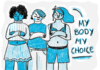
What if the relentless dance of social adaptation — the endless charade of masking neurodivergence — is not just a personal burden but a feminist battleground? How does the intersection of neurodivergence and womanhood complicate the already multifaceted fight against societal norms? This is not merely a question of identity, but a potent challenge that probes the very fabric of empathy, expectation, and exhaustion. Unraveling the opaque layers of masking reveals a deeper narrative of fatigue—a fatigue borne disproportionately by neurodivergent women compelled to camouflage their true selves to soothe the discomfort of neurotypical society.
The Invisible Armor: What Masking Really Means
Masking is often described as a behavioral camouflage, a strategy employed to blend into a neurotypical world that prizes conformity. For neurodivergent individuals, especially women, masking is not a casual dress-up; it’s a compulsory ritual that demands constant vigilance and immense cognitive bandwidth. The invisible armor must be donned daily to navigate social interactions without catastrophe. Imagine the ceaseless pressure of scripting and filtering every word, suppressing authentic sensory reactions, and mimicking emotional rhythms—often while simultaneously decoding social cues that don’t come naturally. Masking transforms the neurodivergent experience into a high-wire act of survival, performed before an audience unaware of the labor behind the act.
Feminism’s Overlooked Frontier: Neurodivergence and Gendered Expectations
Feminism has long grappled with the weight of societal expectations imposed on women: the demand for emotional labor, pleasantness, and nurturing roles loom large. Now, add to that pile the complex layer of neurodivergence. Society expects neurodivergent women not only to conform to ableist norms but also to fulfill gendered mandates—as caregivers, partners, and community members—without deviation. This double bind intensifies the pressure to mask, as any display of authentic neurodivergent traits risks being misread as emotional instability, irrationality, or even hostility. The feminist discourse, therefore, must contend with the specialized exhaustion that accrues when womanhood is compounded by neurodivergence.
The Exhaustive Toll: Cognitive and Emotional Drains of Persistent Masking
Masking is not just a momentary effort; it is an enduring psychological marathon. Each act of concealment requires the suppression of natural responses—whether it’s stifling sensory overload, disguising stims, or scripting social scripts—in a relentless cycle. Over time, this relentless suppression culminates in what many describe as “mask fatigue,” an embodied exhaustion that infiltrates every facet of life. The emotional toll is profound: anxiety, depression, and a fracturing sense of self deepen as the internal and external selves drift further apart. This exhaustion is particularly poignant in women, where the burden of masking is intertwined with the pervasive expectation of emotional availability and resilience. The task becomes Sisyphean, pushing neurodivergent women into a margin where invisibility is survival, but visibility is self-destruction.
Social Soothing: The Paradox of Masking to Comfort Others
Why do neurodivergent women mask so relentlessly? The answer lies in the social contract: mask to keep others comfortable. Yet this social soothing is a harrowing paradox. To pacify neurotypical discomfort, neurodivergent women are compelled to expend inordinate energy at the expense of their own mental health. It is a quiet servitude; one that prioritizes the emotional equilibrium of others over authenticity. This dynamic is reflective of broader patriarchal norms, where women’s labor—emotional, physical, cognitive—is undervalued or invisible. Masking thus becomes a gendered act of appeasement cloaked in social grace, a sacrificial offering that leaves the masked individual depleted and unseen. The cost? A deflation of identity and a stifling of neurodivergent brilliance.
Resistance and Liberation: Reclaiming the Right to Unmask
In the face of this formidable fatigue, resistance emerges as radical self-care. Unmasking is not merely an act of rebellion but a profound reclamation of selfhood. It demands a cultural shift—one that embraces neurodivergence not as a deficit but as a distinct way of being that enriches rather than threatens the social tapestry. Feminism’s potential lies here: advocating not only for gender equity but also for neurodivergent autonomy, where masking ceases to be a survival imperative and becomes a choice, a performance rather than a prison. This liberation necessitates both individual courage and structural transformation—accessible environments, neuroinclusive policies, and empathetic listening that honors unmasked realities without judgment or dismissal.
The Intersectional Imperative: Moving Beyond One-Dimensional Feminism
No feminist discourse can afford to sideline neurodivergence. The exhaustion of masking neurodivergent women exposes a critical blind spot: the intersection of gender and neurodiversity shapes lived realities in unparalleled ways. An intersectional feminism must amplify these nuances, weaving neurodivergent voices into the broader narrative of justice and equality. This involves questioning entrenched norms of behavior, communication, and emotional expression—norms that have been unconsciously normalized through ableist and patriarchal lenses. Only by dismantling these systemic barriers can neurodivergent women find safe spaces to unmask without repercussion and breathe freely.
Toward a Future of Radical Empathy
Imagine a society where the demand to mask melts away—where neurodivergent women are celebrated in their full, unvarnished complexity. This is not mere utopian fantasy, but a conceivable horizon if bravery and empathy coalesce. A society that prioritizes radical empathy transcends tolerance, embracing difference with curiosity and respect. It recognizes masking not as a personal flaw but as a societal failure—a symptom of exclusion and misunderstanding. Cultivating such empathy challenges everyone to rethink their discomfort and transform it into acceptance. The fatigue of masking can then give way to the exhilaration of authenticity, creating a landscape where all can thrive unshackled.