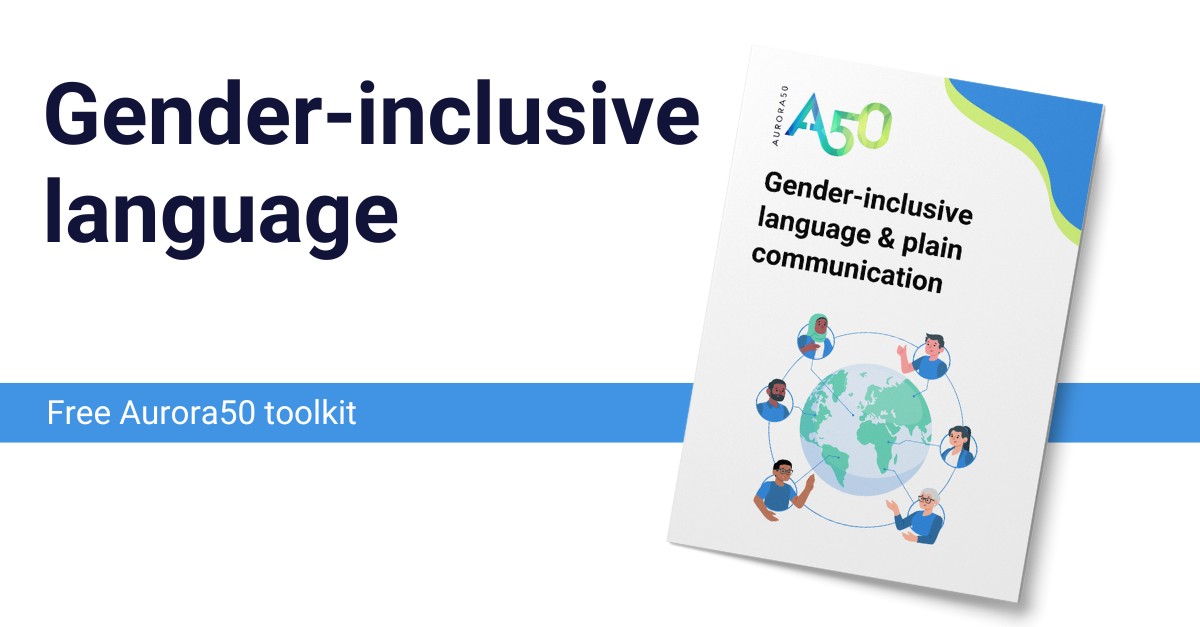
Language is not merely a tool for communication—it is the architecture of thought, the scaffold upon which we build our realities. For centuries, the English language has been a fortress of exclusion, its walls reinforced by gendered norms that privilege the masculine while erasing or marginalizing the feminine and non-binary. But what if the act of speaking inclusively wasn’t about rigid rules or performative wokeness, but about reclaiming the very fabric of our discourse to reflect the full spectrum of human experience? This is not a call for linguistic policing; it is an invitation to wield language as a force of liberation, a way to dismantle the silent tyranny of binary thinking.
The Tyranny of the Default: How Language Shapes Power
Consider the word “mankind.” It is not an innocent term—it is a linguistic colonizer, a default setting that subsumes all of humanity under the banner of maleness. This is not hyperbole; it is the insidious power of language to naturalize exclusion. When we say “chairman” instead of “chairperson,” we are not just using an outdated term—we are reinforcing a hierarchy where authority is assumed to be male unless proven otherwise. Language does not merely describe reality; it constructs it. Every time we default to the masculine, we are complicit in a system that tells women, non-binary individuals, and gender-diverse people: “You are an afterthought.”
But here’s the radical truth: inclusive language is not about censorship. It is about expansion. It is about recognizing that the English language, for all its flaws, is a living, breathing entity capable of evolution. The shift from “policeman” to “police officer” did not diminish the profession—it enriched it, acknowledging the contributions of all who serve. The goal is not to strip language of its richness but to ensure that richness is accessible to everyone.
Beyond the Binary: The Art of Unlearning
Unlearning is a feminist act. It requires us to interrogate the linguistic habits we’ve internalized without question. Why do we say “guys” to address a mixed-gender group? Why does “female” often precede “doctor” or “engineer” in headlines, while “male” rarely does? These are not trivial quirks—they are symptoms of a deeper cultural malaise, a refusal to see women and non-binary people as the default. The feminist guide to inclusive language begins with a simple, radical question: Who are we centering when we speak?
This is not about erasing history or diluting meaning. It is about precision. The word “womxn” (with an “x”) emerged as a deliberate rejection of the patriarchal roots of “woman,” a way to acknowledge the diversity of experiences within femininity. Similarly, “they” as a singular pronoun is not a grammatical aberration—it is a correction, a linguistic justice that refuses to render non-binary identities invisible. These choices are not about political correctness; they are about truth.
The Myth of Neutrality: Why “Generic Masculine” is a Lie
There is a persistent myth that the masculine form is neutral, that “he” can stand in for “she” without consequence. But neutrality is a myth—a convenient fiction that allows systems of power to remain unchallenged. Studies in psycholinguistics have shown that when people hear “he” in a sentence, they are more likely to picture a man. This is not a coincidence; it is the result of centuries of linguistic conditioning. The generic masculine is not neutral—it is a tool of erasure.
So what’s the alternative? Pluralization. Using “they” as a singular pronoun, or restructuring sentences to avoid gendered defaults entirely. Instead of “A doctor should listen to his patients,” we might say, “Doctors should listen to their patients.” The meaning remains intact, but the exclusionary undertones vanish. This is not about making language “easier”—it is about making it honest. Neutrality in language is a myth; inclusivity is the reality we should strive for.
Inclusive Language as an Act of Solidarity
Using inclusive language is not a performative gesture—it is a tangible act of solidarity. When a cisgender man uses “partner” instead of “girlfriend” or “wife,” he is not virtue-signaling; he is acknowledging the legitimacy of queer relationships. When a professor uses “Mx.” instead of “Mr.” or “Ms.” on a syllabus, they are not pandering to political correctness; they are affirming the existence of non-binary students. These choices matter because they signal respect, and respect is the foundation of any just society.
But let’s be clear: inclusive language is not a panacea. It will not, on its own, dismantle systemic oppression. However, it is a necessary first step—a way to align our words with our values. It is the difference between saying “I support equality” and actually practicing it in the most mundane yet profound ways: in emails, in meetings, in casual conversation. Language is where ideology begins to take root. If we want to change the world, we must start with the words we use.
The Resistance to Change: Why Inclusive Language Feels Like a Threat
Change is always met with resistance, and inclusive language is no exception. Critics often frame it as an attack on tradition, a betrayal of linguistic purity. But tradition is not static—it is a living, evolving thing. The English language has always been in flux, borrowing words, adopting new meanings, shedding old ones. The idea that “they” as a singular pronoun is “ungrammatical” is a recent invention, a reactionary myth perpetuated by those who fear losing their linguistic dominance.
This resistance is not just about grammar—it is about power. Those who benefit from the status quo will always frame change as a threat. But here’s the truth: inclusive language does not dilute meaning—it expands it. It does not weaken the language; it strengthens it by making it more reflective of the world we live in. The real threat is not to the language itself, but to the hierarchies it has been complicit in upholding.
A Call to Action: Language as a Tool for Liberation
So where do we go from here? The feminist guide to inclusive language is not a rulebook—it is a manifesto. It is a call to interrogate our words, to question our defaults, to recognize that language is not neutral but a site of power. It is about moving beyond the performative (“I’m not sexist, I just say ‘guys’!”) to the intentional (“I choose my words carefully because I value everyone’s presence”).
Start small. Replace “you guys” with “y’all” or “folks.” Use “they” when the gender is unknown or irrelevant. Challenge colleagues who default to masculine terms. But most importantly, recognize that inclusive language is not about policing others—it is about liberating ourselves from the constraints of a language that was never designed to include us all. It is about reclaiming our discourse, one word at a time.
The future of language is not something that happens to us—it is something we shape. And in shaping it, we shape the world. So let’s make it a world where no one is an afterthought, where every voice is heard, where the words we use reflect the full spectrum of human experience. That is not just good grammar—it is good feminism.