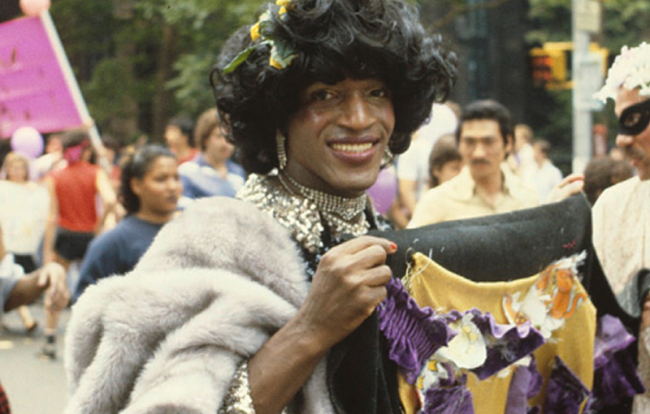
What if the most revolutionary uprising in queer history was not just a riot—but a deliberate erasure? What if the very movement that claimed to fight for liberation systematically sidelined the Black trans women who lit the spark? The Stonewall Rebellion of 1969 is often mythologized as the birthplace of modern LGBTQ+ activism, a glittering origin story where drag queens, butch lesbians, and gender-nonconforming rebels clashed with police in a defiant ballet of resistance. But peel back the layers of nostalgia, and you’ll find a far grittier, far more complicated truth: the erasure of Marsha P. Johnson and Sylvia Rivera, two Black trans women whose names should be as synonymous with queer liberation as Harvey Milk’s or Audre Lorde’s. This is the story of how feminism—and the gay rights movement it birthed—failed the very people who made it possible.
The Spark That Wasn’t Supposed to Be Lit
June 28, 1969. The Stonewall Inn, a dingy, mafia-run gay bar in New York’s Greenwich Village, was raided by police—again. But this time, something shifted. The usual humiliation of pat-downs and arrests didn’t go as planned. Instead of scattering, the crowd fought back. Marsha P. Johnson, a Black trans woman and sex worker, famously threw a shot glass at a cop’s head, shouting, “I got my civil rights!” Sylvia Rivera, her Latina trans sister-in-arms, hurled a Molotov cocktail, her rage a living testament to years of police brutality. The rebellion lasted six days, a spontaneous uprising that birthed the first Pride marches.
Yet here’s the first irony: the mainstream gay rights movement that emerged from Stonewall would spend decades pretending Marsha and Sylvia didn’t exist. The white, cisgender gay men who took up the mantle of activism in the 1970s and 80s recast Stonewall as a “gay rights” moment, not a trans-led revolution. They sanitized the rebellion, turning it into a photo-friendly parade rather than a radical confrontation with systemic oppression. Marsha and Sylvia, with their unapologetic Blackness and transness, were inconvenient heroes—too loud, too poor, too radical for the respectable gay agenda.
The Betrayal of Sisterhood
Feminism, in its second-wave heyday, was supposed to be an ally. But when Rivera and Johnson tried to speak at the 1973 Pride rally, they were booed offstage. The predominantly white lesbian and gay organizations that dominated the movement saw them as a liability. Rivera’s famous speech—“I’m not free yet!”—was met with hisses. The feminist movement, which had its own struggles with trans inclusion, mirrored this exclusion. Lesbian separatists like Janice Raymond infamously called trans women “men who rape women’s bodies,” a sentiment that still echoes in TERF rhetoric today. Meanwhile, Marsha and Sylvia were left to fend for themselves, their labor co-opted but their voices silenced.
This wasn’t just a failure of solidarity—it was a deliberate erasure. The gay rights movement needed a clean, marketable narrative: respectable, white, cisgender. Marsha and Sylvia’s intersectional identities—Black, trans, poor, sex workers—didn’t fit the mold. So they were pushed to the margins, their contributions reduced to footnotes in history books. Even today, Pride parades are more likely to feature corporate floats than the names of the people who started the damn thing.
The Myth of the Cisgender Savior
Enter the white gay male savior complex. In the 1980s and 90s, figures like Harvey Milk became the poster children of queer liberation, their stories amplified while Marsha and Sylvia’s were buried. Milk, a cisgender gay man, was assassinated in 1978, and his legacy was enshrined in textbooks and documentaries. Meanwhile, Marsha’s death in 1992 was ruled a suicide—despite witnesses claiming she was harassed by a homophobic attacker the night before. Sylvia, who spent her life fighting for trans youth, died in 2002, her funeral attended by only a handful of people. The contrast is stark: one man’s murder becomes a martyrdom; two Black trans women’s lives are treated as disposable.
This isn’t just historical revisionism—it’s a pattern. The gay rights movement has a habit of lionizing cisgender figures while sidelining the trans women of color who made their liberation possible. It’s the same erasure that happens when we talk about the AIDS crisis: the white gay men who dominated ACT UP get the credit, while Black trans women like Miss Major Griffin-Gracy, who was also at Stonewall, are erased from the narrative. The message is clear: if you’re not white, not cis, not male, your role in the revolution is to be a footnote—or a cautionary tale.
The Radical Legacy They Left Behind
Marsha and Sylvia didn’t just fight the police—they fought the entire system. In 1970, they founded STAR (Street Transvestite Action Revolutionaries), a collective that provided housing and support for homeless trans youth. They fed, clothed, and sheltered young people the world had discarded. STAR was more than a charity; it was a political statement. Marsha and Sylvia understood that queer liberation wasn’t just about marriage equality or military service—it was about survival. They knew that trans women, especially Black trans women, were the most vulnerable targets of violence, and they built a community to fight back.
Yet today, STAR’s legacy is often reduced to a quaint footnote. The same organizations that claim to honor Stonewall’s legacy rarely mention STAR’s work. The trans women who followed in Marsha and Sylvia’s footsteps—CeCe McDonald, Monica Jones, Black Lives Matter’s trans activists—are still fighting the same battles. The erasure continues. The gay rights movement has become a corporate spectacle, a rainbow-washed festival where banks and police departments march in solidarity while Black trans women are murdered at alarming rates. Where’s the outrage? Where’s the revolution?
What Would Marsha and Sylvia Say Now?
If Marsha and Sylvia were alive today, they’d probably laugh bitterly at how little has changed. They’d see the same white gay men leading Pride parades, the same feminist organizations still debating whether trans women are “real women.” They’d watch as trans women of color are still murdered at disproportionate rates, their deaths met with indifference. They’d hear politicians and pundits still using trans bodies as political footballs, still framing trans liberation as a “debate” rather than a human rights issue.
But they’d also see the seeds of resistance. The Black trans women leading the charge against police brutality. The young activists organizing mutual aid networks for trans youth. The global movements demanding trans liberation as part of a broader fight against white supremacy and capitalism. Marsha and Sylvia’s legacy isn’t just in the past—it’s in the hands of those who refuse to let their stories be erased. The question is: will the feminist and gay rights movements finally listen?
Or will they continue to rewrite history, turning a revolution into a parade—and leaving the revolutionaries behind?