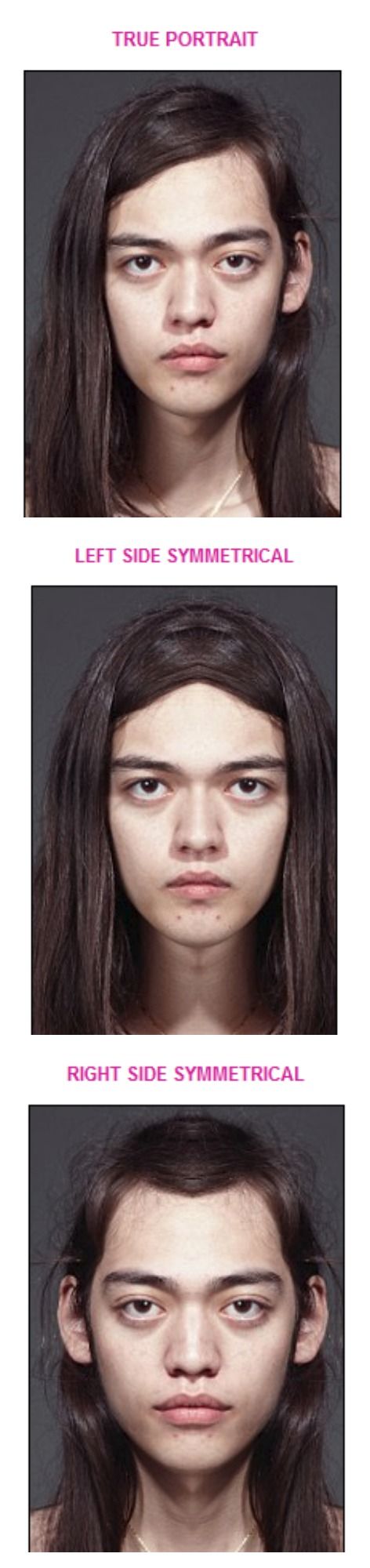
Symmetry: the golden standard of beauty, etched into the collective consciousness as an immutable law of attraction. But what if the science behind this venerated ideal is far more intricate—and provocative—than we dare admit? Enter the realm of infants, the untarnished arbiters of aesthetic judgment. Do babies truly gravitate toward symmetrical faces, or is this a myth perpetuated by society’s obsession with flawlessness? Exploring this question not only unsettles traditional notions of beauty but also intersects with feminism, challenging the patriarchal frameworks that dictate how we value and perceive aesthetics.
The Allure of Symmetry: An Age-Old Fascination
For centuries, symmetrical faces have been exalted as the epitome of attractiveness. From classical art to Hollywood red carpets, perfect bilateral balance has been synonymous with health, genetic fitness, and desirability. This obsession is not merely cultural—it is purportedly biological. Evolutionary psychology proposes that the human brain, even in infancy, is wired to detect and favor symmetry as a cue of vitality and reproductive fitness. But this narrative, oft-repeated, glosses over complexities that prompt a reevaluation of the very metrics defining beauty.
Infant Preferences: Nature’s Unbiased Critics?
Infants, free from social conditioning and cultural bias, have been heralded as impartial judges of attractiveness. Studies suggest that babies show an initial preference for symmetrical faces, gazing longer at balanced visages rather than their asymmetric counterparts. Yet, this preference isn’t as unequivocal as it appears. Recent inquiries reveal that infants’ gaze patterns might be influenced by other facial attributes such as familiarity, emotional expressiveness, and contour novelty. The supposed innate preference for symmetry may be less an absolute truth and more a reflection of early cognitive mechanisms designed to recognize and engage with human faces in general.
Deconstructing ‘Pretty’: The Feminist Lens
The fixation on facial symmetry as a paramount indicator of beauty cannot be divorced from the socio-political construct of femininity. Feminism interrogates the standards imposed on women’s appearances by patriarchal societies, highlighting how such ideals enforce conformity and suppress individuality. The equation of symmetry with beauty perpetuates a narrow, homogenized standard that excludes diverse expressions of identity and attractiveness. By questioning the scientific claims about babies’ preferences, feminism invites us to dismantle the hierarchy that elevates symmetrical features while marginalizing asymmetry, thereby democratizing the notion of what is genuinely ‘pretty.’
Symmetry as a Socio-Cultural Construct
Alleged biological determinism notwithstanding, the reverence for symmetrical faces is deeply entangled with cultural narratives. Beauty standards fluctuate wildly across epochs and societies—what is deemed attractive in one culture may be sidelined in another. Babies, immersed subconsciously in their immediate environment, may develop preferences shaped by exposure rather than innate biological programming. For instance, infants exposed predominantly to certain facial types might show inclination toward those familiar features, over symmetry per se. This underlines that beauty is as much a socialized experience as it is a biological signal.
The Science of Pretty: Beyond Binary Symmetry
Perhaps the scientific obsession with symmetry simplifies the multifaceted nature of attractiveness. Faces are dynamic tapestries, animated by expressions, asymmetries, and quirks, each contributing to unique identity and emotional communication. The nascent science of aesthetics increasingly recognizes that slight irregularities—scars, dimples, distinctive contours—cultivate warmth and authenticity, challenging the cold, clinical perfection symmetry suggests. Infants’ engagement with faces may thus reflect a holistic processing of multifarious cues that transcend mere symmetry.
Implications for Feminism and Future Aesthetic Paradigms
Reckoning with the nuanced science of facial preference compels a paradigmatic shift in feminist discourse. It undermines reductive beauty standards that have historically marginalized countless women and non-binary individuals. Affirming diverse forms of beauty resists the imposition of homogeneity, advocating for a world where individuality is celebrated rather than erased. Moreover, acknowledging that even infants’ preferences are malleable and context-dependent disrupts the idea of immutable aesthetic truths, empowering a reclamation of beauty that is inclusive, complex, and ultimately human.
A New Narrative: Inviting Curiosity and Critical Reflection
The myth of symmetry as the definitive hallmark of pretty deserves scrutiny. Challenging this myth is more than academic—it’s a radical act of reclaiming autonomy over perception and value. By redirecting inquiry toward the fluid interplay of biology, culture, and cognition, we open a window to a richer understanding of what captivates the human eye and heart. This new narrative invites us to question, to explore, and to embrace the imperfectly perfect. It destabilizes age-old assumptions and beckons a future where beauty is not dictated by symmetry’s cold calculus but by the vibrant diversity that defines humanity.