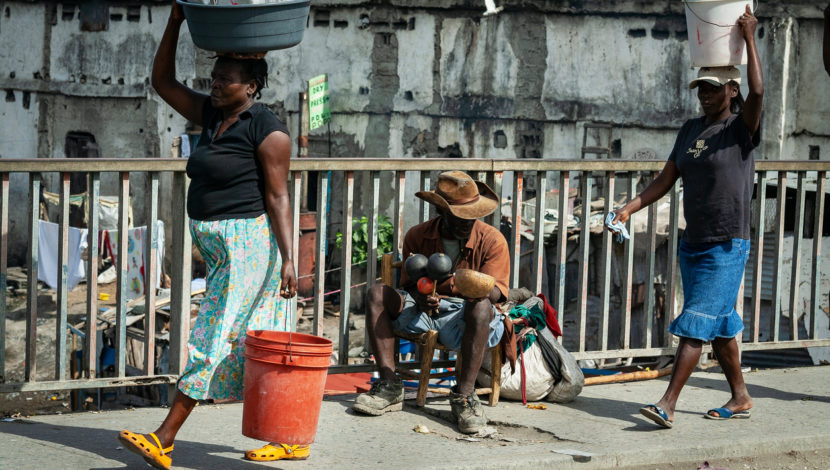
Natural disasters are often framed as indiscriminate calamities—blind to gender, ability, or social standing. Yet, beneath this veneer of impartiality lies a grim truth: the devastation wrought by these catastrophes disproportionately imperils marginalized communities, particularly women with disabilities. This revelation demands a radical rethinking of relief frameworks, abandoning monolithic approaches in favor of an intersectional lens that exposes the nuanced interplay of oppression. Feminism, in its most potent and revolutionary form, challenges us to not merely respond to disasters but to recalibrate relief paradigms altogether—ushering in an era where compassion acknowledges complexity and resolute justice is non-negotiable.
Unveiling the Overlooked: Women with Disabilities in Disaster Zones
In the chaos of collapsed infrastructures and overwhelmed aid mechanisms, women with disabilities become invisible casualties. They navigate a labyrinth of inaccessible evacuation routes, communication barriers, and exclusion from critical information streams. The intersectionality of their identity—combining gender-based vulnerabilities with disability discrimination—renders them perilously marginalized. Traditional disaster response strategies often neglect mobility impairments, communication challenges, and tailored healthcare needs, thereby perpetuating cycles of neglect.
Imagine a woman forced to flee flooding with a prosthetic limb, yet assisted evacuation points lack ramps. Or consider those with sensory impairments oblivious to sirens and alarms designed without visual or tactile cues. These are not hypothetical scenarios but lived experiences. The feminist imperative to dismantle systemic inequalities compels relief efforts to transcend generic prescriptions and embrace intricate, person-centered frameworks.
Intersectionality: The Imperative Compass for Equitable Relief
Kimberlé Crenshaw’s concept of intersectionality provides more than just vocabulary; it offers a critical heuristic tool to dissect overlapping oppressions. Applying this lens to disaster relief unveils the compounded marginalization women with disabilities endure. Feminism’s promise lies in its capacity to integrate intersectional consciousness into policy and praxis, ensuring that relief interventions don’t merely check boxes but holistically serve diverse bodily realities.
Intersectional relief transcends the one-size-fits-all model by embedding nuanced needs assessments, adaptive communication methods, and decentralized resource distribution. It challenges patriarchal and ableist paradigms that prioritize able-bodied men as the default victims or survivors. Instead, it emphatically centers those rendered peripheral—illuminating their lived realities and legitimizing their claims to aid.
Barriers Beyond the Physical: Social and Institutional Exclusions
Barriers faced by women with disabilities are labyrinthine, extending far beyond physical constraints. Social stigma and entrenched patriarchal attitudes amplify vulnerability during disasters. Often relegated to caregiving roles or economic dependence, these women confront heightened risks of violence, neglect, and exploitation in emergency shelters and recovery sites.
Institutional structures compound these challenges. Disaster management agencies frequently lack disability-inclusive protocols or gender-sensitive training, resulting in fragmented responses. Data collection seldom disaggregates by gender and disability, rendering invisible the scale and nature of hardship faced. Thus, suffering goes unquantified and unmet. Feminism insists on dismantling these institutional blind spots, demanding accountability and inclusivity from the highest levels of relief governance.
Redefining Resilience: From Survivor to Agent of Change
Too often, relief paradigms cast women with disabilities solely as passive victims. This narrative not only strips agency but also ignores the wealth of knowledge and resilience embedded within these communities. Feminism reorients this storyline, empowering women with disabilities as architects of their recovery and pivotal actors in disaster preparedness.
Programs that harness the leadership and expertise of women with disabilities unleash transformative potential. Whether through participatory planning, peer support networks, or advocacy platforms, their involvement ensures that relief measures are calibrated to real-world complexities. This shift from tokenistic inclusion to meaningful empowerment redefines resilience as a collective, intersectional project.
Innovative Approaches and Models: Charting New Pathways
Several pioneering initiatives exemplify intersectional relief in practice. Community-based inclusive disaster risk reduction (CBDRR) frameworks prioritize marginalized voices from the outset, integrating gender and disability considerations in hazard mapping, evacuation drills, and resource allocation. Assistive technologies are being innovatively deployed—from tactile maps to accessible warning systems—bridging gaps in communication and mobility.
These initiatives break traditional silos, fostering collaboration between feminist organizations, disability rights groups, and humanitarian actors. They embody a maverick spirit that insists on structural transformation rather than superficial fixes, promising more equitable and just disaster responses.
The Political Economy of Aid: Challenging Structural Inequities
Relief aid is not divorced from power dynamics—it is deeply entangled in geopolitical, economic, and social structures that often perpetuate inequality. Feminism demands a critical interrogation of how resources flow and who controls them. Women with disabilities often find themselves excluded from decision-making tables where aid priorities are set, resulting in misaligned allocations that fail to address intersectional needs.
This political economy begs for democratization of aid governance, transparency, and redistribution. Incorporating intersectional feminist principles into funding criteria and program design can disrupt entrenched hierarchies and redistribute power towards the most affected. Such transformations are not mere ideals; they are prerequisites for justice in disaster relief.
Conclusion: Toward a Radical Reimagining of Relief Efforts
Natural disasters underscore human vulnerability, but they also illuminate entrenched inequalities. Women with disabilities stand at the nexus of these disproportionate hardships, demanding relief frameworks imbued with intersectional feminism’s radical clarity. This is not about incremental improvements—it is about revolutionizing how we conceptualize, design, and implement aid. An intersectional approach exposes the invisibility cloaking marginalized experiences and promises a future where no one is left behind, regardless of gender, ability, or social standing.
Embracing this shift requires courage to confront uncomfortable truths and dismantle facile assumptions. The feminist call to action is clear: disaster relief must evolve beyond bland universality toward an empathetic, nuanced, and justice-driven praxis. Only then can relief truly be relief for all.