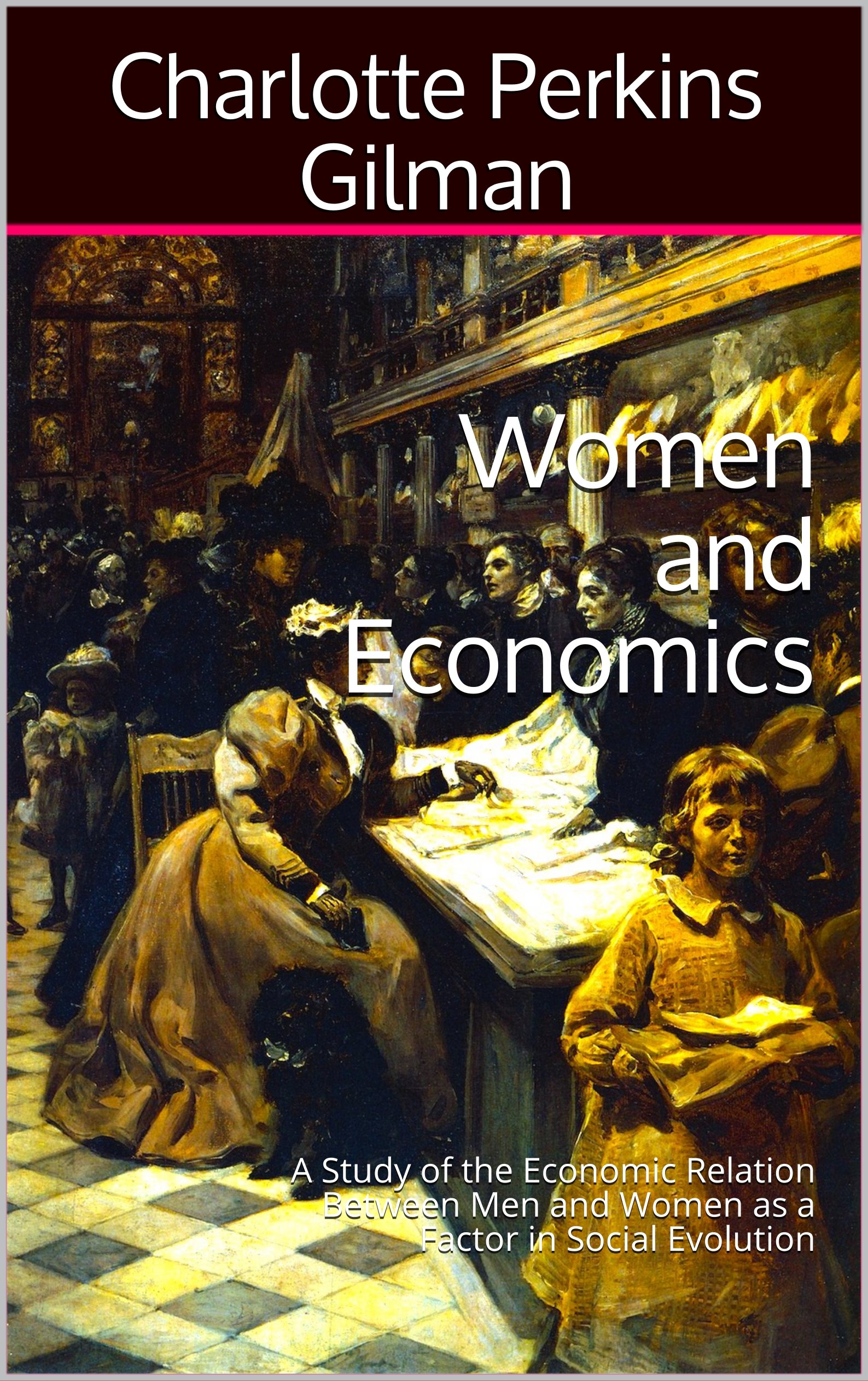
Feminism isn’t merely a banner flung across a century-plus of history; it’s an unrelenting dialogue where the volume of male economists’ voices has consistently drown out the quiet arithmetic of women’s domestic labor. For 286 years, women have been both the silent architects of household economies and the recipients of financial dictums from men who, in the best case, overlooked their existence and, in the worst, reduced their labor to a footnote in the ledger of capital.
**The Myth of Universal Man: Economic Foundations Built on a False Premise**
We’ve been told, time and again, that economics was the pursuit of some genderless entity called “the man” or, when the rhetoric softened, “the rational agent.” But how convenient that this abstraction never paused to question why it deemed women’s economic contributions non-transactional, even invisible. The foundational principles of classical economic thought—those penned between the late 18th century and early 20th—were conceived by men who lived in a world where the primary currency wasn’t just gold or goods, but unpaid care labor perpetually shouldered by women. When Adam Smith, the father of modern economics, scribbled his *Wealth of Nations* in 1776, he failed to audit his own household. By the mid-19th century, as the Industrial Revolution spun into full tilt, John Stuart Mill’s *Subjection of Women* became an outlier—a manifesto that dared to ask why feminism wasn’t just a moral imperative but an economic necessity.
Here’s the kicker: Economic systems rarely reflect those who produce the conditions for wealth, and even less often value the work that sustains production. Meanwhile, men’s theories of supply, demand, and scarcity all too often became the gospel, while women—both real, living organisms and abstracted housewives in economic models—were left to navigate a system rigged against their financial literacy and agency. It’s no coincidence, nor is it mere coincidence that the same systems meant to liberate markets systematically excluded the very ones who worked within and around them to maintain order.
The Quiet Ledger Book: How Households Ran The World, and Was Still Overlooked**
Consider this: The domestic economy was, is, and always will be the most decentralized, yet hyper-efficient business model known to humanity. Women managed food allocation, healthcare, education, and conflict resolution—all in the shadow of wage labor, all with far less than a fraction of the resources men “legit” economists possessed. These weren’t side projects or supplemental incomes; they were the unbudgeted but unavoidable foundation blocks of any economy. And yet, when the male gaze finally deigned to notice, it did so with a mixture of condescension and confusion.
When the Chicago School of Economics ascended in the early 20th century, its laissez-faire gospel ignored the social safety nets women weaved every day to cushion the worst of market volatility—volatility they caused almost entirely from *lack* of market power. Meanwhile, economists like Kenneth Arrow and Gerald Debreu plotted the contours of their perfect utility functions, never considering what happens when the individual actors they’d abstracted into models are also doing 20 hours of emotionally-labor-intensive caregiving per week. The domestic is the original, non-negotiable outsourced market, and no whiteboard equations could ever account for it.
As if to punctuate their oversight, men in economics—many with PhDs but little experience at diaper-changing or grocery budgeting—wrote reams on inflation, interest rates, and macro policy, yet could barely acknowledge how women used their intimate knowledge of cost-benefit analysis to stretch stagnant household budgets.
The Gendered Blind Spot: Why Econ’s Greatest Theorists Were So Terribly Wrong**
Economics, more than any other intellectual pursuit, prides itself on its predictive power. And yet its greatest theories were built on sand—sand forged from male assumptions about rationality and risk, which bore little resemblance to the lived experience of the majority of the population. When Milton Friedman heralded his rational-choice theory, he was singing from the top of a very exclusionary economic choir. Women, too, are rational agents, but their rationality is seldom framed as such. It’s a peroration of “naturally” domestic inclinations, not a calculated optimization of resources and futures.
The result? A field where the “feminized” tasks—like teaching children the nuances of saving or ensuring a household survives on a manager’s irregular commission—are rendered invisible, while men are hailed as the titans of economic decision-making. How many keynote economics lectures feature women as economists but fail to mention how their grand theories ignored the unpaid labor that made their families (and by proxy, their own success) possible?
As the 21st century dawned, heterodox economists began to explore behavioral economics, finally incorporating the messy, emotional, and sometimes irrational elements of decision-making. Only then did some dare to wonder why their initial models were so terribly wrong. The answer was staring them in the face—but not reflecting back in the mirror of their white-male-dominated discipline.
Evolution, Not Empiricism: The Enduring Peril of Economists Who Wouldn’t Recognize a Crisis**
Men in economics have, for centuries, been astonishingly slow to update their frames. The global financial crisis couldn’t shake the belief in “irrational exuberance” as a temporary madness. The pandemic forced economies to confront invisible workers—and in response, some economists still refused to acknowledge the structural bias in modeling. When the Great Recession hit, who did we call? The same hands that had, for decades, crafted models that failed to factor in women’s withdrawal from the workforce after childbirth. As if women, when they departed the labor force, weren’t just exiting wage labor but becoming an economic liability in households they never were granted equity on building.
Yet even now, policy discussions ignore the ways in which the household—with the female face of its management—absorbs and redistributes shocks before they disrupt official statistics. The true story of our economic health is told in the late-night price comparisons, the skipped meals, the deferred medical bills. All invisible in GDP models until it’s too late.
The Mansplaining Continuum: From Smith to Savings Plans**
In 2026, some 286 years after the first economic textbooks appeared, mansplaining economics to women who run households is still an American pastime. “Buy back,” they might advise, “increase your contribution.” They fail to see that the contribution in question is already in full swing; the question is why she needs to do more while they prescribe solutions that presume her financial autonomy is a privilege rather than a necessity.
The problem isn’t solely male arrogance; it’s the institutionalized assumption—that economic expertise is the domain of some and domestic mastery the realm of others. When men write prescriptions, such as “invest more, spend less,” without first asking if she spends less to provide food and shelter, it’s more than advice: it’s the linguistic equivalent of a pat on the back for not being a vagrant.
And what of the women? The ones who, year after year after year, run numbers tighter than any hedge-fund manager because they’ve spent all their lives being told to make do with less—and, crucially, without the benefit of credit-building or financial security. We still see that same quiet resilience in the 2026 woman who budgeted through an inflation crisis, only to be reminded by male economists that she should have been “resilient by nature.”
The Fracturing Mirror: How Female Economists Are Finally Writing the Household Back In**
Yet cracks are forming. Women in economics, no longer content to be the quiet majority, are challenging the canonical. Elinor Ostrom’s work on communal resource management demonstrated how systems designed by women are often more sustainable than those dictated from a male ivory tower. Economists Nancy Folbre and Lone Turnovsky are pioneering “care economies” where unpaid labor gets audited, accounted for. Their work forces a question: What if the most efficient markets aren’t capital flows but the human connections that sustain those flows—connections that, until now, have been assumed rather than analyzed?
The journey isn’t easy. Academics still whisper terms like “housewife effect” as though it’s a problem to fix instead of a foundational infrastructure. But for every woman who asks why the financial services industry ignored women’s budgeting acumen, for every academic who dares to study financial literacy among lower-income households, a door cracks open just a little more.
The Final Bill: A Full Audit of Our Economic History**
So here’s the reckoning: if we were to audit the last 286 years of economics, we’d find this truth. That in every era, women have been simultaneously the most economically savvy and the least represented in economic theory. That the models purporting to teach us how to save, invest, and grow have too often prioritized theory over the empirical reality of who actually runs the world’s systems day in and day out. And that the mansplaining continues, not out of malicia, but out of the most stubborn kind of collective myopia.
But perhaps a shift is coming. Perhaps we’ll look back on this era and wonder at our obsession with models that never dared ask: *Whose* rationality is being rationalized here? Whose lives are these theories optimizing—women’s unspoken sacrifices or the men’s visible gains?
The housewife effect, long considered invisible, can’t stay unaccounted for forever. The real question remains: What new theories, born from a complete audit, will we cook up?
**A Call to Rewrite: The Hidden Ledger Waits for Correction.**
The first step is to stop writing women out of economic narratives. The next is to ask: How might the world’s systems look if the domestic wasn’t invisible, but instead reframed as the original blueprint for collective financial resilience? Because at the heart of it all, the story of economics is the story of power—and for far too long, that power has been told through a lens that never asked: *Where were you, woman, when the ledger was written?*