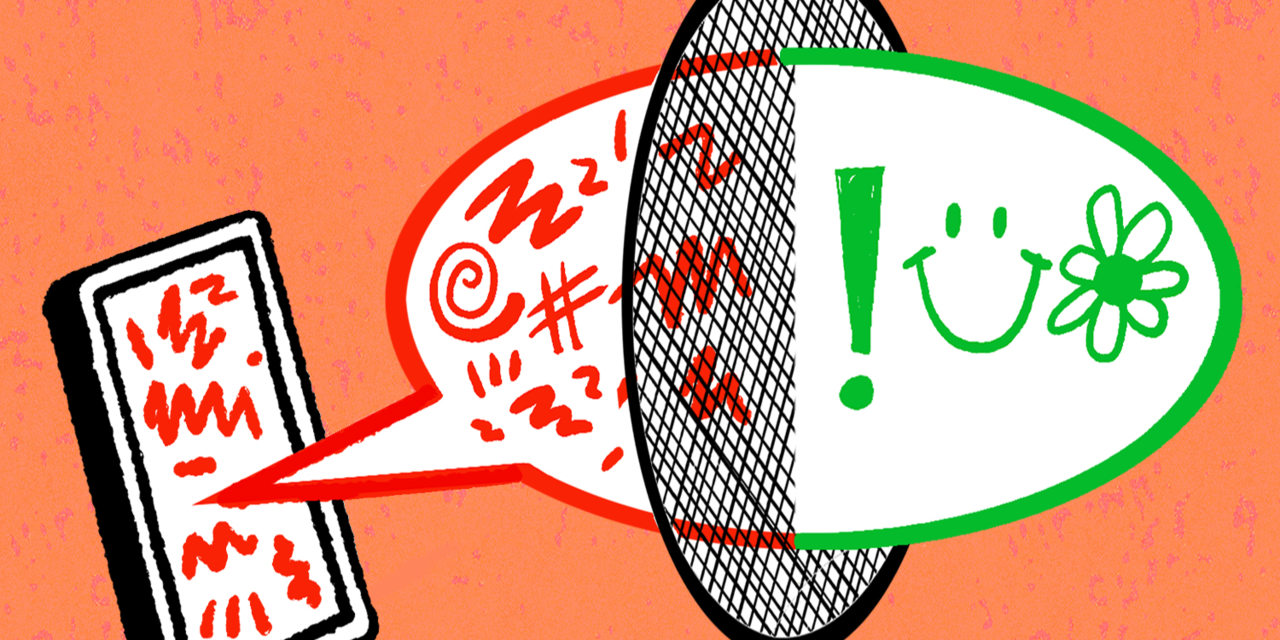
The internet has long been hailed as a great equalizer—a frontier where women and men alike could carve out their voices, challenge norms, and reshape cultural landscapes. Yet, beneath this utopian cloak lies a fraught reality: the labor of sustaining this virtual domain falls heavily on women’s shoulders. Today, in an age where algorithms promise to rewrite fairness, we sit at an ideological crossroads. Can artificial intelligence, a system of cold logic devoid of lived experience, handle the delicate, often brutal intricacies of content moderation? Or is this task, steeped in gendered histories of care and consequence, intrinsically feminist labor—work that no code, no matter how sophisticated, can usurp?
Ads
The questions demand more than binary answers. They stir the pot of what we value, why we value it, and where the line between machine and humanity is, or should, be drawn.
The Unseen Labor of Digital Feminism
Content moderation is not a neutral job; it is a site of relentless emotional labor, where the personal intersects with the political. Women—overwhelmingly—in these roles bear the weight of decisions that shape public discourse, safety, and culture. The “digital feminist” emerges not as a label but as a lived reality: individuals who navigate the tension between enforcing rules and preserving the humanity of those behind the screens. Their work involves more than flagging hate speech; it requires an intimate understanding of power imbalances, nuanced cultural contexts, and the fragility of online dignity.
Yet this essential labor is often dismissed as “low-skill” when in fact, it is a masterclass in ethical reasoning. Moderators must gauge intent amid ambiguity—deciding whether a joke crosses into harassment while accounting for privilege, context, and regional norms. Can a model trained on biased datasets recognize these subtleties? The answer is revealing and unsettling: systems designed to solve complex human dilemmas often default to the logical but inhuman.
And why, one must wonder, is this care so intimately linked to gender? The rise of female-led moderation teams predates algorithmic interventions and persists despite them. This is not merely coincidence but a natural outgrowth of historical feminisms, where care, justice, and emotional intelligence have long been undervalued—yet indispensable—work.
—
Where Machines Fail: The Limits of Neutral Moderation
Artificial intelligence, in theory, promises impartiality. Its decision-making, so the logic goes, is free from the biases that plague human moderators. But neutrality is a mythos, particularly when grappling with content moderation. Algorithms encode the prejudices of their creators; they prioritize patterns over purpose. In the delicate dance between inclusivity and harm, AI struggles to weigh the cost imposed on individuals who challenge, offend, or disturb.
Take, for instance, the persistent struggle against misogyny: a system trained to detect abuse often flags “banter” or even feminist critique as harassment—mistaking power dynamics for mere words. How does a model account for intersectional identities? For regional connotations that twist insult into liberation? The fallacy of objectivity in content moderation exposes the inherent subjectivity of code itself.
There’s a gap between the rulebooks moderation teams must consult and the real-time improvisation required to uphold dignity on a scale no spreadsheet can account for. Human moderators, however flawed, at least make mistakes with faces, voices, and lived stories to remind them that their decisions matter more than they might at first appear. Machines lack this visceral knowing.
—
The Hidden Feminist Architecture of Moderation
The idea that AI could liberate moderation from feminist labor is a contradiction in terms. While male-dominated spaces might see moderation as a mechanical task, women in these roles have historically woven feminist principles into the architecture of decision-making. They navigate censorship while fostering spaces for marginalized voices, protecting survivors of trauma while preventing false security, and balancing accountability with compassion.
Take the paradox at the heart of many online platforms: the demand for “authenticity” clashes with the need to erase threats. Moderators often must decide whether to privilege the right of a speech act to exist or to silence harm. Feminist moderation does not reduce itself to “feelings”; it is a framework that integrates historical awareness, systemic understanding, and a refusal to let harm fester unseen. When AI moderators fail to recognize the difference between a slur and a critique, they betray the fragility of these frameworks.
This feminist architecture isn’t new—it’s the bedrock of movements long before digital culture emerged. It was Black women’s clubs in the segregationist South that demanded dignity, the Suffragists who protected female journalists from mobs, and the online “internet girls” of the 90s carving out spaces for female creators against harassment. Each iteration has required, at its core, the same qualities that make moderation an inexact, human science: intuition, justice, and an almost tactile recognition of whose lives are valued most.
—
Can There Be Collaboration—or Must Feminism Be a Forbidden Frontier?
The debate over whether AI can replace female moderators is not just about efficiency; it is an ideological reckoning. On one side, technocrats insist that machines will eventually master ethical consistency—freeing up women from the mundanities of content review. On the other, feminist critics argue that such transfer will leave the internet adrift in a sea of arbitrary enforcement, with harm either amplified or minimized as data trends dictate.
A middle path might exist—but it cannot replicate true collaboration. To work effectively, AI and human moderators must exist in dialectical tension rather than isolation. Machines could assist by flagging obvious patterns of abuse; humans would retain the final say on edge cases. However, even this hybrid model risks falling into technocratic hubris if the feminist experience is reduced to raw statistics.
Yet here lies the opportunity: to treat the knowledge of moderators as an asset, not a bug waiting to be erased. If we acknowledge that moderation is inherently feminist—that it requires understanding not merely of policy but the weight of historical oppression—we can push AI toward something more thoughtful: a tool that amplifies care rather than eradicating the very qualities that have allowed online spaces to endure.
—
The Unspoken Consequence: Who Decides Who Matters
The most chilling critique of AI moderation—one that few acknowledge—lies in its assumption: that a machine should decide what discourse is valuable or harmful. Who determines who matters in determining how these judgments are made? The algorithm itself is not value-neutral; it is the result of corporate profit motives, media monopolies, and cultural biases shaped by the same patriarchies that have historically sidelined women.
Feminist moderation, in contrast, forces us to confront the question: Who benefits from enforcement? Who wins, and who gets silenced, in the cold arithmetic of moderation algorithms? These questions are not technical; they are political. They demand answers from us as both citizens and architects of the culture we inhabit.
Algorithmic moderation, in its most unbridled form, seeks the lowest common denominator of “acceptable” speech. Feminist moderation, however unstructured, at least strives to recognize the cost of the words we allow—and the voices we refuse. To surrender this responsibility to machines is to cede autonomy to systems that have never had to explain themselves, nor should they be expected to.
—
Reclaiming the Digital Feminist Imagination
If content moderation is fundamentally feminist labor, the question is not how to remove this work from women but how to expand, dignify, and democratize it. We must envision moderation that is not a prison warden’s post but a communal act—one that involves affected communities in shaping, rather than just executing, rules.
Can we, for instance, build platforms where algorithmic tools serve as advisory rather than commanding voices? Where the voices of women of color, trans women, and disabled moderators are at the forefront—not as data points, but as stewards? The solutions do exist in the stories of communities that have long resisted marginalization with creativity and care.
We must also confront the lie that feminist labor is somehow “secondary.” To do otherwise is to accept that the most vulnerable among us remain invisible, until the price—of their safety, their sanity, their very dignity—becomes too great to ignore. The answer, then, lies not in replacing these moderators with code but in amplifying their expertise while demanding that technology be reshaped—not to replace them, but to stand beside them.
Ultimately, the question of who moderates is a moral one. It’s an invitation to either surrender to the impersonality of the algorithm—or to claim feminist labor as the necessary foundation for any digital culture worth fighting for.