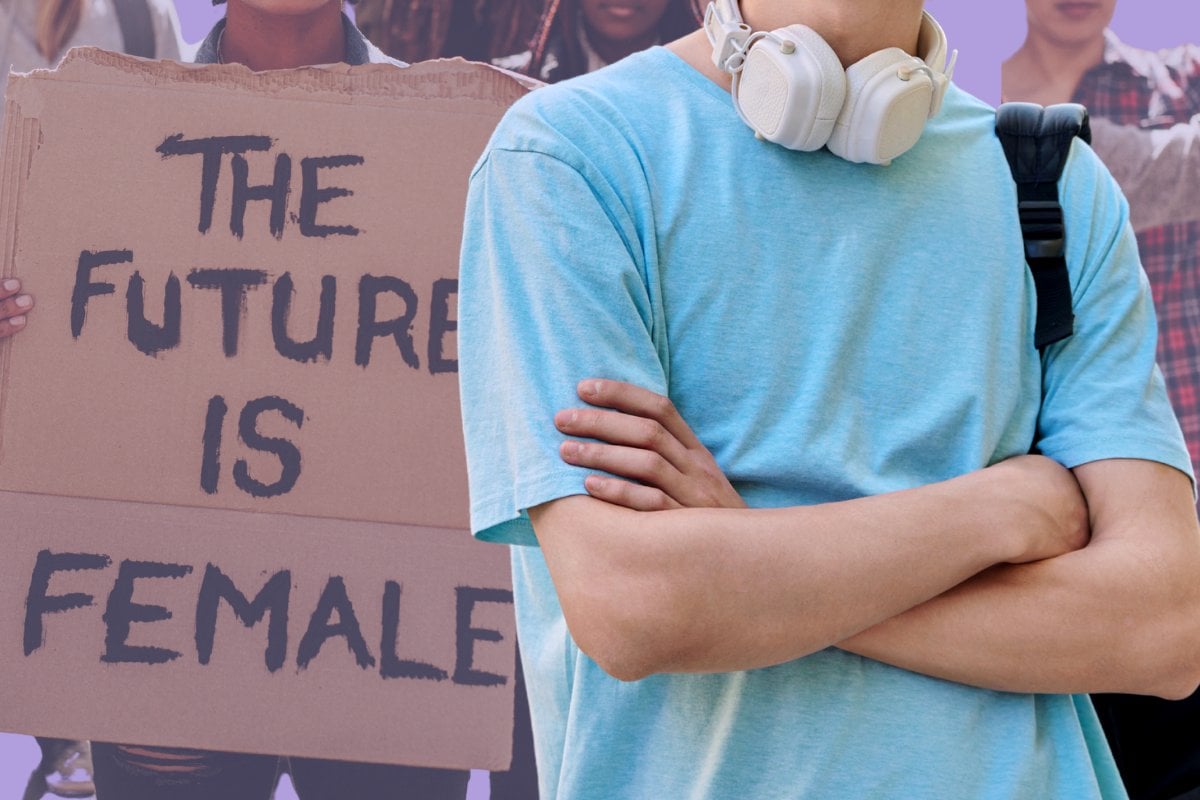
In recent years, a notable and somewhat unexpected cultural phenomenon has emerged: Gen Z women are distinctly redefining their relationship with men, often choosing to forge ahead without traditional attachments. This movement is not merely a reflection of shifting social trends, but rather a profound evolution in gender dynamics and feminist ideology. At first glance, it may appear that women of this generation are “leaving men behind” literally and metaphorically. Yet beneath the surface lies a deeper narrative—one that promises a reimagined future driven by autonomy, empowerment, and a recalibration of partnership paradigms.
A Generational Reassessment of Feminism
Feminism has long been associated with ideals of equality and liberation. However, Gen Z’s approach to feminism introduces an unprecedented level of introspection and critical examination of patriarchal structures. For many young women, traditional gender roles and heteronormative expectations no longer suffice as frameworks for identity and interaction. The promises of feminism—equality, respect, self-determination—are being re-interpreted as calls for radical independence rather than mere inclusion within existing societal systems.
This reassessment manifests in choices that once seemed unlikely: delaying or forgoing romantic relationships with men, prioritizing career and personal growth over conventional milestones, or forming communities that operate independently of male influence. In doing so, Gen Z women are signaling a seismic shift; the emphasis is now on self-possession and collective female agency rather than coexistence with traditional masculinity as a given.
The Ambivalence of Gen Z Men Towards Feminism
Concurrently, many young men exhibit a palpable wariness toward feminist discourse. This is not merely a resistance but often an uncertainty regarding their role in the changing social order. The generational zeitgeist conveys a tension: men recognize feminism’s necessity yet grapple with feelings of alienation or diminished identity within it.
For Gen Z men, the promise of mutual partnership feels elusive when confronted with redefined gender expectations. Some perceive feminism as a zero-sum game where male privilege is systematically dismantled without clear pathways for male inclusion. This skepticism contributes to a growing rift—men hesitant or wary, women confidently stepping forward. The resulting demographic shifts in dating, social interaction, and even workplace dynamics reflect this underlying discord.
Redefining Relationships: Beyond Romance and Reproduction
Perhaps the most tangible evidence of Gen Z women “leaving men behind” is found in the transformation of intimate and social relationships. Dating patterns reveal an increased prevalence of solo living, alternative family structures, and communities centered around female solidarity. Women are questioning the necessity of traditional romantic relationships with men as implicit components of adulthood.
This reevaluation extends to biological decisions as well. The rise in conversations around reproductive autonomy—including elective single motherhood and access to reproductive technologies—signals a detachment from dependency on male partners. These choices underscore a paradigm shift where women’s futures are imagined independently, unbound by societal injunctions to marry or bear children within heteronormative frameworks.
Empowerment Through Economic and Emotional Independence
Economic self-sufficiency is a cornerstone of this cultural movement. With greater access to education and career opportunities than any prior generation, Gen Z women pursue financial independence as a form of empowerment that transcends gender binaries. This autonomy enables more deliberate choices around personal relationships—or the conscious rejection thereof.
Emotionally, there is also a marked emphasis on wellness, self-care, and mental health. Gen Z women openly prioritize their psychological wellbeing, seeking connections grounded in mutual respect rather than obligation. This holistic empowerment is both a cause and consequence of distancing from conventional gender scripts that often place women in subservient or caretaking roles.
Implications for Society: Challenges and Opportunities
This demographic and ideological shift carries wide-ranging implications for society at large. Traditional institutions—marriage, family structures, even the workforce—are being renegotiated in real time. The movement promises new social contracts that emphasize equity and authenticity, yet it also engenders friction and uncertainty in the intergenerational and interpersonal spheres.
Challenges arise around communication breakdowns, heightened polarization, and the need to cultivate new models of masculinity that coexist with evolving feminist ideals. At the same time, there is palpable optimism in the potential for richer, more nuanced human connections and societal frameworks that honor individual choice and collective advancement.
The Road Ahead: A Call for Mutual Understanding
As Gen Z women increasingly chart autonomous paths, the future of gender relations hangs in a delicate balance. The promise that once tinged early feminist waves—that equality and partnership would harmoniously coexist—now contends with pragmatic complexities of identity, power, and belonging.
Bridging the divide necessitates unprecedented dialogue, vulnerability, and an openness to redefining masculinity alongside feminism’s evolving ethos. The question remains: can men and women recalibrate their relational dynamics to create an inclusive paradigm? Or will the divergence widen further, as women continue to move forward on trajectories that prioritize emancipation from traditional male-centered constructs?
Ultimately, this epoch heralds a transformative moment, inviting society to rethink not only feminism but the very foundations of gendered human connection. It is a call to embrace complexity, challenge inherited norms, and envision new futures—where empowerment is not a zero-sum pursuit, but a shared horizon.