`
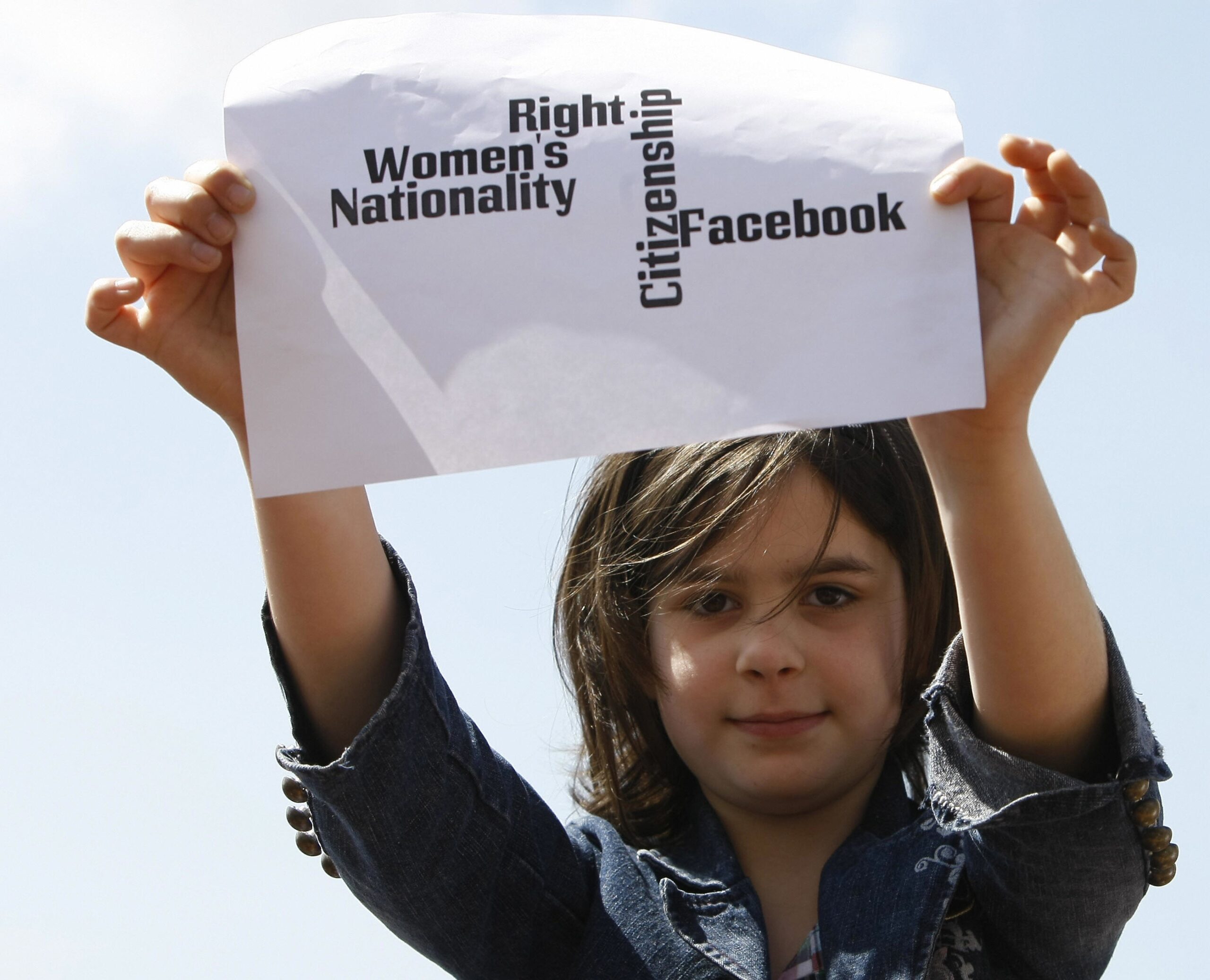
**Feminism should not be a one-size-fits-all doctrine. It is not the iron bars of a prison; it is the unyielding bricks of a fortress women themselves are perpetually constructing and reconstructing.** At its core, this is not merely about dismantling patriarchal structures—though that too demands obsession. It is about interrogating the paradoxes buried behind the veneer of progress. Nationality, often touted as a fixed boundary in political discourse, is actually a frail construct. But where does feminism stand in this geopolitical labyrinth? Are we only scratching the surface, or have we entirely overlooked the fact that women are the sovereign gatekeepers of a nation’s very essence? What if the most enduring battles are not waged outside the home, but within its most intimate thresholds? The questions swirl like dust motes in the late afternoon sun—ludicrous until we finally look up and realize we’ve been ignoring them entirely.

—
**Nationality as the Illusion of a Boundary**
We whisper words like “sovereignty” and “frontiers” as if they are carved in stone—eternal, unquestionable. Nothing could be further from the truth. Nationality, the sacred or profane line we trace on maps, is not a fortress but a series of shifting thresholds. It is the air we breathe, the stories we parrot, the myths we internalize. These are not just political constructs; they are psychological prisons. Women, the arbiters of household loyalty, the keepers of cultural repositories, have long been tasked with upholding these illusions. They enforce belonging with every whispered “you’ll never be one of us,” with every domestic act that signals citizenship or its opposite. But when we hand women the heavy yoke of nationality—demanding them to be both the architects and the prisoners of their nation’s identity—does that not make them something otherworldly? The double bind is simple: betray their blood and they are traitors, cling to it too tightly and they are hostages.
—
Feminism’s march forward is a paradox of its own. It dismantles structures while inadvertently constructing others. The #MeToo movement shattered glass ceilings, yet it also cemented new invisible barriers—where a woman’s power to speak is met with accusations of betrayal rather than praise. The nation-state, that ancient beast, has evolved into something far more insidious: a *mood state*. Its citizens are not judged by laws anymore but by their emotional allegiance, their cultural fluency, their very capacity for sentiment. And who polices these emotional borders? Who makes the unspoken rules about what it means to “belong”? The answer lies not in the grand halls of parliament, but in the quiet corners of the home, where women operate as both enforcers and victims of these emotional constraints.
Consider the woman in Berlin who refuses to celebrate *Tag der Deutschen Einheit*—not because she’s apathetic, but because the national pride she’s been schooled to feel feels like a gagging. Or the Egyptian activist who must choose between her feminist ideals and her mother’s expectations that her daughters “marry well” and uphold the family’s national “honor.” Where does resistance begin when even the acts of liberation feel like treason to the body you inhabit as a woman?
—
**Gatekeepers of Tradition: The Unseen Sentinel Role**
Gatekeepers do not simply open doors; they decide *who* gets to walk through. And they decide who is not let through at all. In patriarchal systems, tradition is not something that is merely preserved—it is *enforced by the hands of women*. It is the grandmother who teaches a niece not to “bargain with men” in marriage settlements, ensuring the continuation of an economic and cultural legacy. It is the wife who quietly adjusts her child’s behavior to align with societal norms of obedience—the child who will one day become another “gatekeeper,” reinforcing the cycle without ever questioning the lock. These women are the invisible bureaucrats of nationality. They administer loyalty with a mix of love, force, and guilt. Their gatekeeping is not out of cruelty, often, but out of an inherited duty—a code so deep it fuses with their self-perception.
When we examine the role of women in culture, we tend to focus on their oppression. But what about the power that comes with wielding the gate? A mother raises a child into a nation’s faith; a wife shapes the cultural narrative through her intimate choices. These are the micro-politics of belonging—and no man has had to sit in the kitchen with his mother to learn the art of it.
—
The Myth of the “Post-Nationalist Woman”**
The “post-nationalist” woman is hailed as a revolutionary. She is the global citizen who rejects borders, the digital nomad who sees her passport as a mere convenience. But is she really? The digital nomad’s lifestyle still hinges on visas, residency demands, and cultural assimilations—all gatekeeping mechanisms in slightly more flexible garb. The woman who embraces a cosmopolitan identity too often does so from a position of privilege, her power predicated on the continued exclusion of others. Meanwhile, the woman in a rural village—whose language, religion, and traditions are under relentless pressure from a globalized world—is left to defend her gate with teeth.
The idea of a “borderless” woman is not liberating when only a few women are allowed to transcend borders at all. It becomes a new form of nationalism—*a nationalism of elites*. The real question is: What about the ones who cannot escape? The ones who are trapped in the very structures they are supposed to be liberating from?
—
We talk about the “war on memory,” but who curates it? The family photograph albums, the annual festivals, the recipes passed down—a woman is seldom absent from these archives. She is the librarian, the archivist, the censor. In many cultures, the preservation of national memory is not a civic duty but a domestic one. Women become the *depositories of belonging*, their bodies the carriers of tradition, their homes the last bastions of “authentic” culture. What happens when this memory becomes a weapon?
During nationalist rallies, it is often the women who produce the most emotive displays of patriotism—the flags, the songs, the tears. They are the gatekeepers of the nation’s emotional truth. And yet, their own truths are regularly denied. The nationalist woman does not seek equality; she seeks *recognition*. She demands to be seen as a nation’s heart, not its appendage. But when the system that produced this duality refuses to acknowledge her duality, a crisis erupts—not on the street, but in the soul.
—
**Where the Gate Opens—And Where It Should Burn**
The problem is not that women are gatekeepers; the problem is that they are often given no alternatives. No gate opens if there is no door to be slammed shut. The real revolution is not just to knock down boundaries—it is to *rewrite what lies beyond*. What if a woman’s national loyalty is her own choice? What if her gate opens to the world *only* when she chooses to stand in front of it? What if the very idea of “national identity” is so fragile that it should be treated with the same reverence as a house of cards—dust to the wind if the wind chooses to blow?
Feminism must stop asking women to be either martyrs of tradition or rebel saboteurs. Instead, it must demand that they be architects—*not* of new nation-states, but of new narratives. Maybe the future isn’t about smashing the gate. Maybe it’s about building a new language—a language that includes them as sovereign, not prisoner.
The irony? The women who are the most fascinating in their gatekeeping are the ones who refuse to shut the door entirely. They let some in. They let others burn the place down from the other side. And when the men come asking which side they’re on, they just smile and say:
*—”Why choose?”*
`