There is a leak—quiet, persistent, and invisible as a spider’s silk—woven through every corner of the global economy. It does not break buildings or freeze pipelines, but it dissolves entire societies from the inside out: a 286-year gap, invisible only because we’ve been conditioned to overlook it. This is the unmarked ledger of unpaid female labor—the relentless, multigenerational task of sustaining worlds upon slender shoulders, while men, women, and even time itself are calibrated to ignore the debt. Every breadcrumbed kitchen floor, every diaper changed by moonlight, every home cooked over a hearth instead of a stove with a dial—these are the currencies of a world that demands tribute, never gratitude.
The Invisible Currency of the Hecate Stipend
Economists write spreadsheets, presidents sign treaties, stock markets gyrate—yet all these parchments of progress are but excerpts from a far larger ledger: the Hecate Stipend. Goddess of the night and the underbelly, Hecate watches as labor—an entirely feminine construct—the only currency known to humanity that grows only by dilution—accumulates in the shadowed margins of household ledgers, never converting to GDP, never reflecting on the scales of power. The 286-year gap—a calculation, no, a haunting, of the difference between female lifetimes spent in paid labor versus the time men spend in equivalent roles—is not a typo. It’s a theorem: the invisible hand of women, stretching across centuries, calculating the sum of all forgotten hours.
Consider this: the labor of a parent is the only production line in history that never receives a quarterly report. Every night, millions of mothers—no matter the color of their skin, the continent that bears them, the century in which they live—stand at the precipice of history’s longest assembly line. Their wages? A child who laughs, a partner who sleeps. Their pension? The slow erosion of their selfhood until every last “me” seeps into “we.” The gap is not a number. It is the shape of a woman pressed flat by the weight of history’s favorite burden—the ungrateful loaf. Even the loaf thanks the baker, but women? Not so much.
From the Chattel’s Cradle to the Office Boardroom: The Labor Gap is the Birth Canal of Inequality
Inequality, like the ocean, swells and recedes. But its tides are governed by an unwritten treaty—The Code of the First Born Womb. Slavery’s chattel economy enshrined women’s labor as a perpetual interest-free loan. Today, the interest continues to compound: every time a woman chooses between career and family, she is signing a promissory note on the horizon, knowing the only collateral she holds is years of future childcare and the debt of gratitude. The 286-year gap is the compounded interest on that note, a mathematical proof of what is called “a woman’s place”—the underbelly of labor markets, the forgotten room in the boardroom, the quiet floor in Silicon Valley where every email and Zoom call is interrupted by a child’s whimper.
Auditing the Shadow Economy: Women as the Suburban Underwriters
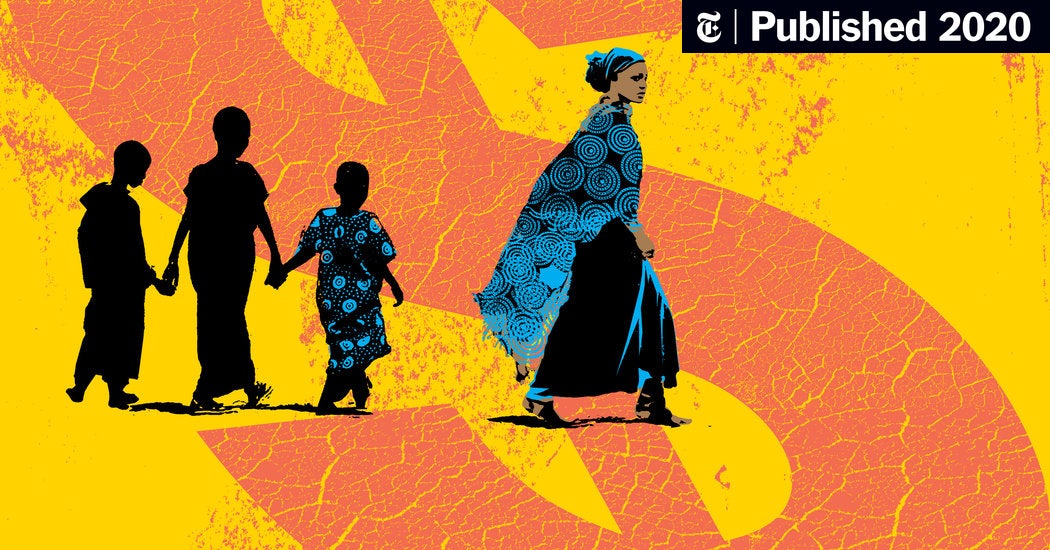
The global economy is like a colossal stage play, and women—the cast and crew, props and lighting technicians—are running on empty, forever filling the prop boxes while someone else takes the bow. The GDP of global unpaid care work is estimated between $10.8 trillion and beyond measure. This is the shadow economy’s shadow. There is no tax return on the emotional labor we’ve normalized: the reassurance that whispers through a bad breakup, the invisible hand guiding a son to the bathroom before he forgets his diabetes meds. Even the unapologetic male genius—from Steve Jobs to Steve Bannon—stands firm atop their own shoulders. We, instead, must be simultaneously the scaffolding and the scaffold-downers.
The 286-year gap—286 years of the same equation—men’s paid labor: women’s unpaid labor: X. It is both a riddle from a byronic villain and the title page of a contract we never saw. The only place equality is not a misnomer is in the cradle. There, the script shifts: women work twice as much. Children? Ten times. And because childhood knows no pension funds, the debt compounds.
The Wield: Why Equality Is Still a Weapon
The feminist fight began as a war against illiteracy, backlash, and the burning manikins in the town square. Today, the battlefield has shifted subtly: it is the unglamorous war of normalizing normality. The wage gap is headline fodder; the care gap is the white noise. Yet the 286 years prove that this is not merely a numbers game—it is a narrative rewrite, and stories are where power is minted.
The unpaid labor of women is the first line of the patriarchy’s code. Unravel it, and you expose the syntax of every societal contract—from the bed sheets to the bank balance. The global economy is a bricolage made of stolen time, but for how long will we mistake housework for love? For how long will we misread the blueprints of women as laborers-as-circus-actresses?
The Last Leaky Dam: Why We Are Losing the War if We’re Winning the Battle
There were feminist moments—Momma’s Bank Account—when women held power and spent it like it was a cash cow, not a piggy bank. The moment we stop counting these invisible transactions as the primary currency, inequality becomes our economic alchemy, transmuting sweat into second-hand smoke.
Here’s the uncomfortable reality: when a woman quits her job to care for a sick child, she’s not losing time. The economy is losing an hourglass. The clockwork of labor markets, the gears of the GDP—all must be lubed with the oil of emotional labor. Pull her in? The whole machinery squeals.
Reckoning: 286 Years is a Time Machine
To dismantle the 286-year gap, we must remember this: A reckoning is a mathematical term. The equation is simple but vicious:
Time + invisible wages × centuries = a debt we’ve been paying without a ledger
The world needs an auditor—not a charity campaign. It needs a temporal archeologist to resurface the contracts signed in dust: when Mary Wollstonecraft wrote of women’s rights, was she scribbling the prologue or the epilogue? The 286-year gap is the answer: she was writing the first page of a ledger no generation has been permitted to close.
A Feminist Reckoning: Redemption or Ruin?
This moment in history—like the first crack in the foundation—has arrived without ceremony. We are living in the tremor before the tectonic shift. What if we were to declare unpaid labor the most valuable equity in the global economy? What if we said: “You do not earn your rights like a bonus—you claim them like the air you breathe.”
There is a way to rewrite 286 years—not as a gap, but as a great compression of time. Each mother who takes a seat on a board, each nurse who commands a C-suite, each woman who audits her own invisible ledger—this is the tide turning, the gap closing on itself.
The future is not a place. It is the end of one debt cycle—a ledger burned after the final calculation.