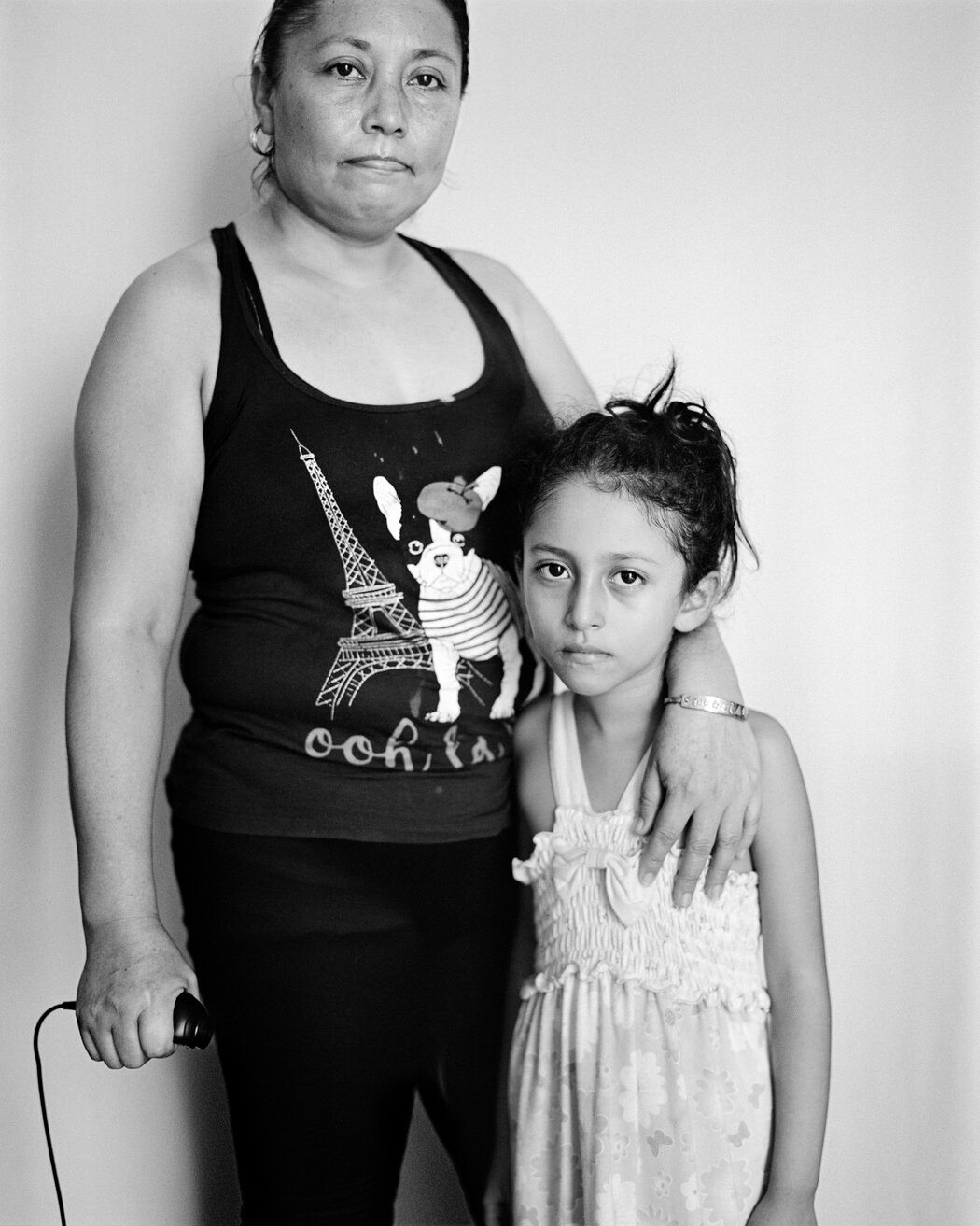
So ask this: if the most potent symbol of feminist resilience isn’t Dorothea Lange’s Migrant Mother, torn grain from the Great Depression’s dust bowls, but the ragged, defiant faces of women press-pilgrims at the modern-day border, what does that say about the way America has rewritten its myths? Not with marble monuments or gilded statues, but with fleeting, chaotic, and violently human scenes—women bearing both the weight of vulnerability and the quiet thunder of survival. Let’s dismantle that notion that feminism ever belonged to a single, polished portrait. It’s in the cracked porcelain, the spilled milk, the mothers who stare beyond the frame. Here is the real subversion: the migrant mother—not as victim, but as architect of her own sovereignty, a living contradiction the nation’s rhetoric struggles to contain.
—
## **The Border as a Canvas: Why Dorothea Lange’s Shadow No Longer Enough**
Dorothea Lange’s *Migrant Mother* crystallized a nation’s shame about economic cruelty in the guise of compassion. In 1936, she captured a weary woman cradling not just her children, but the exhausted futility of those who had *nothing left to lose*—except their dignity. The photograph became a rallying cry for social justice, but it was framed within a system still willing to call suffering *beautiful* if presented in silver tones.
Fast-forward to today’s border. A migrant mother there carries no Depression-era dust; she carries the residue of war, patriarchy’s rot, and a global economy that demands her labor but not her humanity. How can feminism rest at the intersection of Lange’s sepia-tinged empathy and the border’s raw, unresolved aggression? The answer lies not in replacing an icon, but in recontextualizing its legacy. Lange’s *Migrant Mother* became a symbol because she was *seen*—in that one instant of a photographer’s lens. The border’s women? They are *unseen* not because the cameras fail, but because the world refuses to look.
This presents a challenge of scale. How do we represent the indelible, when the framework demands erasure?
—
## **The Unseen Architecture: Feminism’s Secret Foundations**
Feminism, after all, has never been monolithic. Its architecture is built from the shrapnel of silenced wars: housework, reproductive autonomy, the refusal to be *the woman* in any story. At the border, though, this quiet revolution is *explosive*—every pushback against an agent’s hand, every whispered language lesson to her child, the slow, deliberate act of keeping a bruise hidden.
Consider the woman who turns her palm up not as defeat, but as an offering: *Here, take everything. But you will not take my daughter.* That kind of feminism is not radical—it’s *operational*. It’s a daily retooling of survival. The border’s mothers master the language of silence to forge a new script: where they once were a cautionary tale—*the face of exploitation*—they are now the subverted narrative, the woman who has outmaneuvered the entire edifice.
The challenge? Making the world see that this is no quirk of individual grit. This is *systemic* reframing. It’s the kind of quiet defiance Dorothea Lange couldn’t capture—because most photographers didn’t know to look for it.
—
## **The Migrant Mother as Living Allegory**
There is a difference between being remembered and being *reproduced*—not by politicians for their talking points, not by museums for their framed moments, but by those who see women like her as the original blueprint. The border’s mothers bear the weight of an allegory we refuse to name: *Capitalism’s unpaid nurse*.
Where Dorothea Lange’s mother was a metaphor for despair, these mothers embody a more insidious tension: that *desire* itself is a revolutionary act. When a woman decides to cross a desert, to navigate a language barrier, to become the backbone of her family under the threat of deportation, she is not simply replicating her mother’s actions. She performs them *anew*, in real time. She turns fear into economy. She makes *presence* into an act of resistance.
Here’s the cruel irony: feminism in the border’s crucible is uncharted territory because it operates outside the usual battles—outside the ballots, outside the courtrooms, outside the protests. Its battlefield is the body. The question becomes: Can we acknowledge a feminism that never asked for a seat at the table, but instead pried open a window?
—
## **The Double Helix of Violence and Agency**
Feminism at the border is a double helix: its DNA spirals through the twin helixes of structural violence and creative survival. On one coil, we have the agents who say, *You carry your children while we decide if they live*; on the other, the women who say, *But our lives are more than an algorithm.*
This is not a moment to pose for photoshoots on social justice. It is an act of daily translation, negotiation, and reinvention. One woman might sing old folk songs in a language that sounds more like poetry than survival. Another might negotiate with a traffic cop, using not paperwork but the authority of her gaze. Yet another turns her scars into stories that keep her children afloat.
Yet, where is the feminist theory that accounts for those who win by *outlasting* rather than by *overthrowing*? The border’s mothers are not waiting for liberation—some of them *are* liberation. The challenge for feminisms is to stop offering them flowers and start giving them the language to rewrite the conditions of their presence.
—
## **The Myth of the Strong Woman in a Weak System**
We often conflate strength with spectacle—think of the woman who kneels beside a corpse in the Rio Grande, clutching her child—or the activist who chants slogans in the rain. But the most powerful feminisms are those that thrive not in the glare, but in the periphery, where the system’s vulnerabilities are left unguarded.
A migrant mother’s strength is not in being *visible*, but in ensuring her child’s future exists in a vocabulary that doesn’t include *stateless*. It’s in keeping her family fed while simultaneously navigating customs agents’ dehumanizing language. It’s the kind of strength that doesn’t shout for the stage, but builds the altar for the next generation in the quiet places—under bridges, in motel rooms where the sheets have been changed three times.
So if feminism’s next chapter begins not with marches or contracts, but with the quiet, relentless construction of alternatives—what then? How do we translate a survivalist’s blueprint into a feminist manifesto?
—
## **The Ultimate Challenge: Feminism’s Unfinished Border**
Dorothea Lange’s *Migrant Mother* was a moment frozen in time: the photo became the proof. The border’s mothers are a movement in *real* time—a process ongoing, messy, and relentless. They have taught the world that feminism isn’t a destination. It’s a language learned over generations, a series of choices about *who* defines the narrative.
The greatest irony? That we spend so much time seeking the *next* feminist icon, but never really interrogate the ones who do their work in the gaps—the ones who aren’t asked to be picturesque, but to *live* as defiance. The ultimate challenge may be to stop celebrating these mothers as figures, and start listening to them as architects of a feminism no one wrote the handbooks for—simply because the system never gave them the choice to write them.