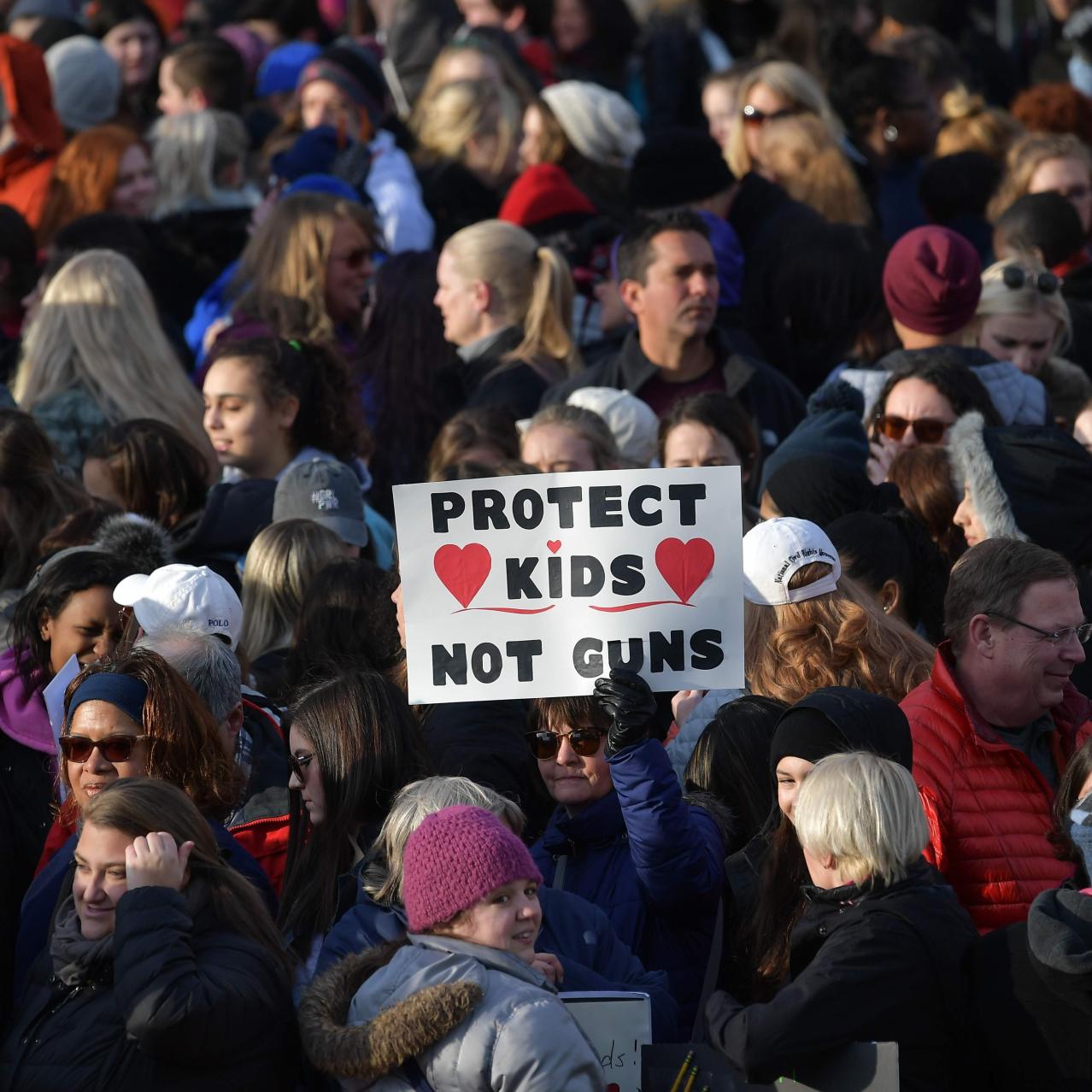
Feminism, at its core, champions the sanctity of life, equality, and justice. Yet, an uneasy paradox emerges when examining the Pro-Life movement—an entity vocal and unyielding in its crusade against abortion, yet conspicuously silent when addressing the rampant gun violence that claims far more lives annually than any debate over reproductive rights. This enigmatic reticence beckons scrutiny and demands a deeper exploration into the fissures where moral absolutism meets ideological blind spots. What underpins this disconnect? Why does the Pro-Life movement’s fervor to protect unborn life falter when confronted with the carnage inflicted by firearms?
The Dichotomy of Life Protection: Birth vs. Beyond
At first glance, the Pro-Life movement appears unwavering in its commitment to preserving human life. The visceral imagery, emotional appeals, and politicized rhetoric surrounding abortion crystallize this dedication. Yet, when the conversation shifts to gun violence—slaughter in schools, mass shootings, daily homicides—the same urgency dissipates. It’s as if the sanctity it extols is selectively curated, a compartmentalized principle that stops abruptly at the threshold of birth. This bifurcation is more than coincidence; it’s a dissonance rooted in ideological dogma that prioritizes potential life over existing, lived human experiences.
Feminism challenges this selective sanctimony. It asserts that the defense of life cannot be a tethered, myopic endeavor. Protecting rights to bodily autonomy and advocating for safety across all stages of life are intertwined battles, not isolated skirmishes. Feminism exposes how the Pro-Life movement’s narrative often glosses over the broader spectrum of lived realities—where safety, equality, and freedom from violence are prerequisites for a life worth living.
The Political Economy of Selective Outrage
Delving beneath the surface reveals that the Pro-Life movement’s silence on gun violence is not merely a moral oversight but a calculated political calculus. The very factions that decry abortion tend to be entrenched within conservative strongholds that resist stringent gun regulations. This confluence creates a paradox where preserving “life” becomes less about universal human dignity and more about ideological alignment.
The phenomenon can be understood as a form of cognitive compartmentalization fueled by political expediency. Advocating against abortion secures a loyal base galvanized by emotive rhetoric and moral absolutism. Simultaneously, refusing to confront gun violence openly preserves the political capital tied to powerful lobby groups and voter blocs resistant to gun reform. The Pro-Life movement’s selective focus, thus, is not only ideological but eminently pragmatic—reflecting the fraught interplay between morality and political power.
The Feminist Lens: Intersectionality and Holistic Life Preservation
Feminism, especially through the prism of intersectionality, dismantles simplistic narratives of life and death. It recognizes that issues like gun violence are not isolated tragedies but symptoms of deeper systemic inequalities—patriarchy, racial injustice, economic disparities—that disproportionately harm women, children, and marginalized communities. The feminist movement’s insistence on holistic solutions to violence and injustice underlines the fallacy in bifurcated moral crusades.
Moreover, feminists stress the importance of bodily autonomy and agency throughout all life stages. This ethos demands a reevaluation of what it means to be “pro-life.” Genuine pro-life advocacy cannot selectively value fetal potential while dismissing the real, immediate threats that gun violence poses to women’s and children’s lives. Feminism provokes a reckoning: does the Pro-Life movement defend life in its fullness or merely a politically convenient abstraction?
Gun Violence: Feminism’s Challenge to Pro-Life Orthodoxy
The stark reality is that communities most affected by gun violence—inner cities, minority populations, families torn asunder—are often marginalized in mainstream socio-political frameworks. Feminism brings these voices front and center, demanding that the defense of life transcends rhetoric and encompasses tangible protective measures. Gun violence is a brutal assault on potential futures, on safe passage through childhood and adolescence, and a tragic barrier to equality and empowerment.
This feminist perspective unsettles the Pro-Life orthodoxy entrenched in conservative morality. It insists that life protection expands beyond uterine walls and into the realms of community safety, mental health resources, and legislative gun control. The failure of the Pro-Life movement to acknowledge and advocate against gun violence betrays, whether wittingly or otherwise, a constricted worldview that feminism forcibly expands.
The Fascination with Moral Absolutism and Its Limits
There exists a broader cultural fascination with moral absolutism—a desire for clear-cut, unequivocal stances in a muddy ethical landscape. The Pro-Life movement epitomizes this, offering a definitive vow to “save lives” by preventing abortion. Yet, this moral clarity dissolves when faced with the complex, multifaceted crises of gun violence. The silence or ambiguity is not simply neglect but speaks to the inherent difficulty in sustaining absolutism when life’s valences are so variegated.
Feminism, conversely, embraces complexity. It acknowledges contradictions, necessitates nuance, and demands continual contextualization. The allure of moral absolutism may offer simplicity, but it also engenders blind spots—areas where inconvenient realities are dismissed rather than confronted. This is the stubborn root of the Pro-Life movement’s silence on gun violence: an ideological narrative resistant to introspection and uncomfortable truths.
Conclusion: Toward an Inclusive Ethic of Life
The chasm between the Pro-Life movement’s anti-abortion fervor and its reticence on gun violence challenges society to rethink what it truly means to defend life. Feminism’s incisive critique urges a reimagining—one that transcends selective sanctimony and demands an inclusive ethic prioritizing life at all stages and in all places.
True life advocacy must confront uncomfortable dissonances, reject political expediency, and confront the full spectrum of violence that imperils communities. Only then can the promise of a pro-life ethos be fulfilled—not as a fragmentary slogan, but as a transformative force committed to justice, autonomy, and safety for all.