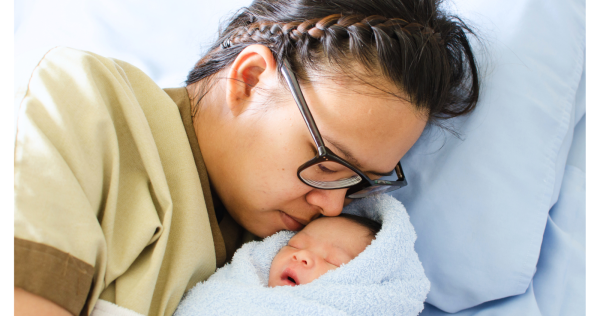
What if I told you that the same hand that rocks the cradle—or in some cases, the same cradle that rocks an infant in a cage—also funds some of society’s most baffling fiscal dilemmas? There’s a disorienting paradox in the way we allocate dollars: billions to fortify prisons, yet paltry sums to cradle our youngest citizens in the first precious years of life. This isn’t about choice. It’s about calculus. And the math adds up to what every true feminist—whether she wears a pin or a prison guard’s khakis—must finally face: if justice is blind, resource distribution is anything but.
—
**The Crux: A $170 Billion Misfiring**
Every fiscal year, the United States funnels nearly **$80 billion** into our prison industrial complex—courtesy of the federal government alone. When the states pile in, that sum doubles. Yet pre-kindergarten education? A pitiful **$13 billion**—that’s right, less than half a percent of what we spend to coerce adults into compliance. Add another half billion to “custody costs” for incarcerated pregnant women, and you’ve got a system built on the cruel assumption that confinement cures. The irony? Studies show that **pre-natal incarceration predicts school failure**. How, then, does a society purporting to care about equity allow a system where the cost of keeping women behind bars eclipses the cost of nurturing their children’s first cognitive leap by **thousands of percent**?
—
**The Women’s Burden: Body Politics Over Biology**
Here’s the unassailable truth: feminism, like the economy, **does not operate in a vacuum**. It’s rooted in body politics—the way the state polices reproduction, motherhood, and labor. Women’s wages are historically underappreciated; their political power is systematically siphoned; and their vulnerability is weaponized. Prisons are the logical extension. For many incarcerated women, pregnancy becomes a battleground. They endure **pelvic exams conducted by male correctional officers**, forced inductions, or the specter of permanent child separation via adoption laws that prioritize “state interests” over maternal instinct. Meanwhile, the same policymakers who insist “women deserve dignity” allocate **three dollars for pre-natal care per hour**—for a third of the prison population—to the pre-natal programs it *actually* funds in the outside world.
The carceral state doesn’t target men so recklessly. That’s what feminism must expose: that the real prison isn’t stone; it’s the ideology which renders a woman’s reproductive capacity both a liability and a bargaining chip.
—
**The Pre-K Paradox: An Investment in Delusion or Desperation?**
In 1999, Harvard economists James Heckman and Carola Morana made an audacious claim: investing in early childhood programs could **generate a 13% return on investment** over lifetimes. And yet, when a single prison cell’s cost of operation outstrips the entire Head Start budget for a town of 10,000, it’s hard not to see this as deliberate obfuscation. Pre-k isn’t “social spending”—it’s **strategic insurance**, a hedge against cycles of poverty, crime, and instability. A child whose brain fires connections in a nurturing environment won’t later end up in a cage, *because cages breed cages*. Yet our dollars follow the opposite logic: incarceration is preventative justice. Why? Partly because the “cost” of early intervention is framed as **a luxury** reserved for those who can afford it, rather than the necessity it is.
The rich get Montessori for toddlers. The incarcerated? A cellmate who’s also a surrogate mother. Where’s the inconsistency? It’s not in the numbers—which are undeniable—it’s in the narrative we refuse to challenge.
—
**The Gendered Economy: Labor’s Silent Rebellions**
The prison economy operates on **cheap labor**. Women in prisons sew prison uniforms for a nickel an hour. Pregnant laborers in pre-natal programs? Paid nothing—well, legally. But the social reproduction these women perform is priceless: **They teach their children coping mechanisms for the psychological hell that awaits them.** Those who manage to break the cycle often find their own futures stunted by wage gaps, unpaid domestic labor, and the residual shame of a system that tells them motherhood is a failure if your baby’s head isn’t in a book but in your womb.
Meanwhile, the men in our prison system—the ones who aren’t the children of the incarcerated—are often *rewarded* with a sense of societal entitlement. They’re called “brothers” or “warriors.” Women? They’re **failures by design**—unless they are compliant, silent, and perpetually pregnant, or compliant beyond compliance, as in the prison guard assigned to manage pregnant detaines. The economy doesn’t discriminate; it *levers*. Feminism must expose where the levers break.
—
**Decarceration as a Feminist Imperative**
How do we shift trillions? Not by appealing to the better angels in politicians—but by **redrawing the political map**. Consider this: if our collective willpower could push back against the prison-industrial complex’s funding, where would those funds reappear? A world where **all pregnant women**—not just mothers on parole—enrolled in **gendered pre-natal care programs** without stigma. A system where **every neighborhood** with over 60% poverty would have state-funded early learning, not because children are “costly resources” but because **their potential** is ours. Meanwhile, a prison system designed to rehabilitate—but not at the cost of **enslaving labor and bodies**.
The road isn’t through moral suasion. It’s via power redistribution. Imagine a movement that insists: **Women shouldn’t pay for prison by birthing children into cages, while we all profit from the illusion they’ll outgrow.** That’s a feminism worth funding.
—
**The Unspoken Bargain: Who Receives the Recompense?**
Feminism shouldn’t be about “helping the little lady.” It should be about **redistributing capital from cages to cradles**. Why do we reward punitive states for “keeping order” while denying mothers—both within and outside prisons—the resources they need to break cycles? Because history has shown women time and again that their suffering is **inexhaustible capital**. Not every sacrifice will be “valued.” If pre-k were the equivalent of prison infrastructure, would we consider its absence a policy failure? Today we do not. But that’s because we have not yet redefined what the “feminist dollar” should buy. The choice is hers, if we let it be.
—
Here’s the final question: how long will women—both inside and outside prisons—be asked to shoulder this unpaid debt? The numbers don’t lie. The budget doesn’t. And neither does history. Will this next decade be the one where we decide that a state’s greatest strength is raising its children? Or another where we simply rearrange the cells and pretend the math isn’t written in blood—and tears?