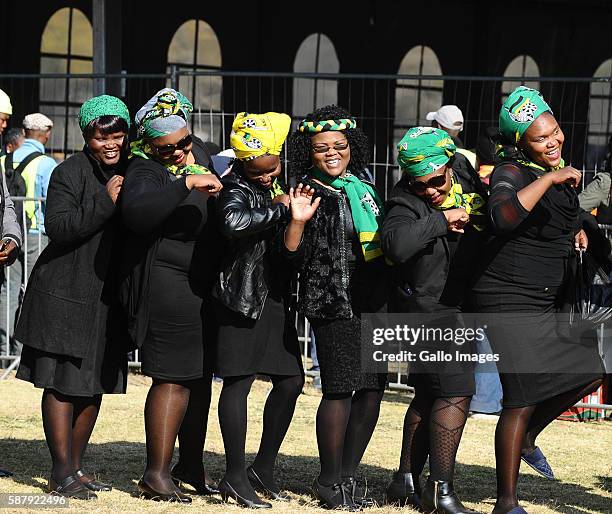
The historical impetus of National Women’s Day in South Africa transcends mere ritual celebration; it is a clarion call for emancipation and empowerment amid systemic inequality. The annual observance, anchored in the legacy of the 1956 women’s march against apartheid laws, encapsulates the broader feminist struggle that continues to manifest in diverse forms across the nation and indeed, the globe. As South Africa commemorates this significant day, the public events serve not only as a tribute to past heroines but also as a platform for current challenges that must be confronted with urgency.
In an epoch marked by renewed discussions surrounding gender and social justice, the recent public events assert the relevance of feminist discourse in contemporary South Africa. With a burgeoning movement advocating for women’s rights, this year’s celebrations highlighted a mélange of voices, intersecting identities, and communal mobilization that underscored the evolutive nature of feminism in the nation.
The recent rhetoric surrounding National Women’s Day has gained momentum, penetrating the public sphere through various events emphasizing awareness, inclusivity, and resilience. The emergence of a diverse coalition of organizations, activists, and everyday women, each contributing unique narratives, reflects an urgent imperative for solidarity across varying socio-economic strata. This year, themes such as gender-based violence, reproductive rights, and economic empowerment were painted vividly against the backdrop of public gatherings, marches, and discussions, igniting much-needed dialogue around these pivotal issues.
Navigating the Terrain of Gender-Based Violence: A Call for Action
One of the most pressing topics that reverberated through the celebrations was the pervasive issue of gender-based violence (GBV). A glaring reality in South Africa, GBV emerges as both a personal and societal epidemic that ravages communities. The statistics are staggering; countless women and girls endure horrifying abuses that stifle their potential and impede societal progress. Public events marked by emotional speeches and testimonies resonated with the painful reality faced by many, serving as a poignant reminder that the fight against GBV must remain at the forefront of feminist activism.
Activists utilized this platform to demand systemic reform, advocating for heightened accountability within the justice system, and a paradigm shift in community attitudes toward violence against women. The urgent plea for comprehensive support services to assist survivors was a recurrent theme that underscored the necessity for collective action. It begs the question: how can we cultivate an environment that safeguards women rather than places them at risk? The solutions lie not only in legislation but also in eradicating the insidious societal norms that condone violence.
Moreover, the emotional weight carried by the testimonies shared during public events underscored the urgent need for introspection. This community engagement, galvanizing diverse groups, seeks to challenge the systemic status quo. Feminism is not a monolith; it is multiplicative in nature, accommodating various identities and lived experiences. The show of solidarity on National Women’s Day exemplified the strength that lies in unity, even amidst diversity. Women’s rights are inherently intertwined with human rights, challenging injustices across intersecting lines of race, class, and sexual orientation.
Reproductive Rights: Autonomy Under Siege
Additionally, National Women’s Day serves as a reminder of the ongoing struggle for reproductive rights, a fundamental issue that incites heated debate in every socio-political landscape. In South Africa, the fight for reproductive autonomy is deeply entwined with the feminist movement; it challenges patriarchal structures that seek to control women’s bodies. The public discussions held during the events illuminated the myriad of challenges faced in accessing reproductive health services, spotlighting issues such as stigmatization, misinformation, and bureaucratic obstacles that women must navigate.
Activists passionately articulated the necessity for comprehensive sexual education and equitable access to contraceptives and healthcare services as critical components of reproductive justice. They argued that reproductive rights are inherently linked to women’s empowerment, as autonomy over one’s body directly influences one’s ability to participate meaningfully in society. As the mantra of “My Body, My Choice” reverberated through the crowds, it illustrated a collective demand for respect, recognition, and rights.
This year’s celebrations also accentuated the intersectionality of reproductive rights, showcasing the experiences of women from marginalized communities who often bear the brunt of systemic inequities. Their voices resonated as a sobering reminder that the fight for reproductive rights cannot be isolated; it must encompass the struggles related to race, class, and economic status. True empowerment acknowledges these complexities and strives for holistic solutions that uplift marginalized women and ensure their voices are an integral part of the dialogue.
Economic Empowerment: Bridging the Gender Gap
The economic disparity between men and women in South Africa remains a formidable barrier to equality. National Women’s Day not only serves as a platform to honor women’s contributions but also to galvanize momentum for actionable change towards economic empowerment. During recent events, discussions probed at themes of entrepreneurship, access to education, and the urgency of equitable employment opportunities for women, especially in sectors traditionally dominated by men.
As women’s participation in the workforce continues to rise, the events witnessed an encouraging display of emerging female entrepreneurs, innovators, and leaders who are challenging the status quo. The palpable energy within these gatherings indicated a burgeoning recognition of the necessity for women to occupy spaces of influence across varying sectors. However, the path toward full economic inclusion is fraught with challenges; institutional barriers, gender biases, and societal expectations often inhibit this trajectory.
By advocating for policies that nurture female entrepreneurship, support for women-led businesses, and education initiatives focused on girls’ empowerment, the framework for economic equity must evolve. The dialogues initiated during this year’s National Women’s Day events set a blueprint for a collaborative approach involving government, private sector, and civil society to dismantle the barriers stifling women’s economic progress.
Conclusion: The Imperative of Continual Advocacy
South Africa’s National Women’s Day acts as both a celebration and a reminder of the long journey ahead in the quest for gender equality. Beyond the festivities, it is a potent reminder of the resilience and strength of women, past and present. Engaging public events, with robust discussions surrounding GBV, reproductive rights, and economic empowerment, illuminate the path forward but also reflect the myriad challenges that must be addressed.
Feminism in South Africa is evolving, yet its core tenets remain grounded in the pursuit of equity and justice. The call to action resonates profoundly; the onus lies on society to coalesce around the fundamental rights of women. As activism continues to exert influence, it beckons the entire populace to rethink conditions, deconstruct injustices, and cultivate an inclusive future where women’s dignity and rights are universally upheld. National Women’s Day is not merely a fleeting commemoration but an ongoing catalyst for change—a reminder of the enduring struggle for equality that hinges upon collective responsibility, advocacy, and unwavering resolve.