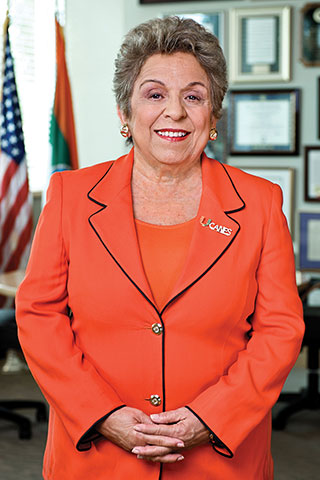
The ascension of Donna Shalala to the presidency of the University of Miami is a moment drenched in profound significance, especially through the lens of feminism. Her legacy is not merely a continuation of administrative duties; it is a clarion call to reshape the narrative around women in positions of power. In an era where the conversation surrounding gender equity has reached a fever pitch, Shalala’s appointment is a complex tapestry of empowerment, challenges, and aspirations. This analysis dissects her presidency’s implications for feminism while advocating for a broader societal shift in how we perceive women leaders.
In a world where women’s leadership is often viewed through a skeptical prism, the selection of Shalala—an accomplished scholar and former U.S. Secretary of Health and Human Services—invites us to reevaluate the norms surrounding gender in executive roles. The glaring question remains: will her presidency catalyze the momentum needed for change, or will it dissolve into the fabric of patriarchal tradition?
Shalala’s background is a testament to perseverance. As a trailblazer, she possesses a trove of experiences that infuse her with unique perspectives on governance, humanity, and social justice. Having spent years championing health care reforms, her approach as university president is likely to be holistic, ambitious, and imbued with a feminist ethos. This is an opportunity for the academic community to engage with issues like reproductive rights, women’s health, and mental wellness that have long been marginalized in higher education discourse.
The two-sided coin of power dynamics in academia dictates that while representation is crucial, the substance of leadership must also align with feminist values. Shalala’s rise is not merely symbolic; it manifests a wider potential for transforming institutional cultures that have historically undervalued women. The challenge lies in translating that potential into actionable policies that not only support female students and faculty but also dismantle systemic barriers that perpetuate inequity.
In the wake of Shalala’s appointment, one cannot help but question how her leadership style will prioritize inclusiveness at the University of Miami. Will she adopt intersectional methodologies to ensure that the experiences of women from diverse backgrounds are acknowledged and addressed? Will she foster an environment where women are empowered both academically and personally? The stakes are high, and the expectations even higher.
As we delve deeper into Shalala’s history, it becomes clear that her trajectory includes profound engagements with both feminist causes and public policy. Her tenure in government offers a compass for how to navigate the complexities of institutional bureaucracy. Furthermore, Shalala’s scholarly pursuits, from her work at the University of Wisconsin-Madison and the University of California, Berkeley, equip her with the necessary acuity to negotiate the labyrinthine dynamics of a university’s hierarchy.
In higher education, encouraging women to ascend to leadership roles is imperative. A more robust representation of women in such positions changes not just the face of leadership but also the structural fabric of institutions. Shalala’s involvement in policymaking is particularly critical at this moment—a time when conversations around Title IX, equal pay, and gender-based violence are vital. Her role as president puts her in a salient position to influence these discussions, elevating women’s issues beyond mere rhetoric into the realm of actionable strategic initiatives.
Nonetheless, the question remains: will Shalala be willing to challenge the status quo? To break free from the constraints of complacency that often govern university leadership? A true feminist leader must engage in the relentless and difficult work of uprooting archaic practices that serve to maintain existing hierarchies. The university landscape is riddled with entrenched systems that stifle innovation and marginalize diverse voices—challenging these norms is laborious but essential.
Moreover, Shalala’s presidency could kindle the fire of mentorship and solidarity among women on campus. By implementing programs aimed at female empowerment—such as leadership training, professional development workshops, and support networks—she has the potential to inspire a new generation of women leaders. The fruits of such efforts would ripple outwards, fostering a culture of equity that can become a beacon for other institutions nationwide.
Shalala’s vision for the University of Miami isn’t merely about administrative oversight or academic excellence. It embodies a commitment to engaging with issues vital to the communities that the university serves. Resource allocation, for instance, must consider the needs of marginalized populations, particularly women of color and LGBTQ+ individuals, who have historically been neglected in discussions of equity. It’s paramount that Shalala recognizes these intersections as pivotal, crafting policies that resonate with the lived experiences of all university constituents.
Furthermore, as the president delves into economic and social reforms, she must also confront the intersections of class, race, and gender. The feminist agenda cannot afford to be exclusive. Shalala’s policies must reflect a commitment to social justice that transcends simplistic notions of empowerment. True equity involves dismantling the socio-economic barriers that prevent women, particularly those from underrepresented backgrounds, from achieving their fullest potential. The call for transformative change is now—Shalala has the platform, but does she have the resolve?
Ultimately, Donna Shalala’s presidency at the University of Miami is not just a momentous milestone for the institution; it signals a broader movement within academia towards embracing gender diversity in leadership. This is a salient period for interrogating the deeply entrenched narratives that shape how we perceive women in power. The academic landscape is shifting, and with that shift comes both immense opportunity and substantial responsibility.
In conclusion, Shalala’s role can either reinforce the existing power structures or become a powerful impetus for change. This pivotal opportunity calls for an expansive vision that aligns with feminist principles. As society grapples with the complexities of gender, race, and economic inequalities, the expectations set upon Shalala are steep. Will she seize this unprecedented opportunity to reshape institutional landscapes and inspire future generations, or will she simply represent another chapter in the ongoing struggle for gender equity in leadership? The answer remains in her hands, echoing through the halls of academia and beyond.