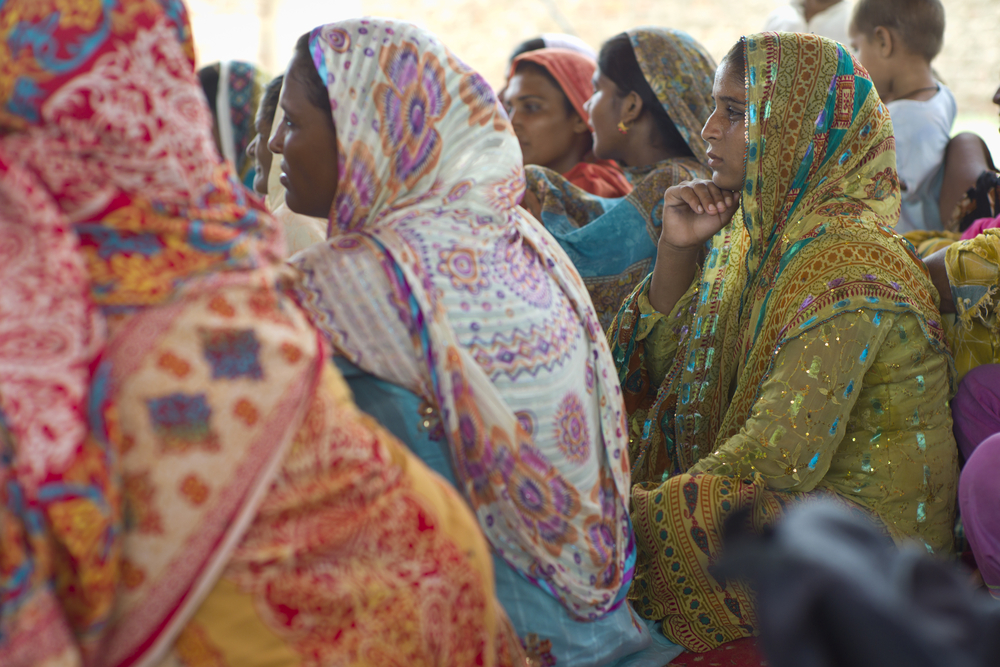
The emergence of an all-women Jirga in Pakistan marks a significant and audacious leap toward gender equality. This unprecedented assembly not only disrupts the normative patriarchal structures but also symbolizes the indomitable spirit of women who dare to craft an alternative narrative. Within the historical context of tribal systems traditionally dominated by men, this initiative is a clarion call for justice, one that resonates deeply in a society that often relegates women to the periphery.
In the face of systemic oppression, where gender discrimination is woven into the very fabric of societal norms, the establishment of an all-women Jirga exemplifies a radical shift. Women are reclaiming agency, seizing the reins of leadership, and redefining the parameters within which justice is served in their communities. This is not merely about who sits at the table; it’s about fundamentally rethinking how justice is conceptualized and delivered.
The traditional Jirga system, which has historically been a male-dominated council usually presiding over dispute resolution, has long been criticized for its antiquated views on gender issues. Female voices were often silenced or, worse, exploited within these gatherings. The introduction of an all-women Jirga injects a much-needed diversity of thought and perspective into a structure that has routinely sidelined women’s experiences. Now, finally, women can advocate for themselves, prioritize their issues, and address the grievances specific to them without the overbearing shadow of patriarchal oversight.
In this environment of male supremacy, women often find solutions tailored to societal comfort rather than effectiveness. An all-women Jirga is critical not only for its practical implications but also for the symbolic victory it represents. It dismantles the barriers that have perpetuated the cycle of gender-based injustices and encourages women to challenge the status quo. Each meeting transcends a mere gathering; it becomes a battlefield against deep-rooted patriarchal conventions.
The subtleties of gender-specific issues cannot be overstated. Women face healthcare disparities, unequal access to education, and pervasive violence, all entrenched within the legal frameworks that the male-dominated Jirga often fails to adequately address. Issues like domestic violence, forced marriages, and property rights are rarely taken seriously when viewed through a lens skewed by gender bias. By incorporating women’s voices into the discourse, these pressing problems can finally be analyzed through an equitable lens that recognizes the nuances of female lived experiences.
The all-women Jirga does not merely act as a substitute for the traditional councils, but rather it can redefine what justice means within communities. By prioritizing reconciliation over retribution, members of the Jirga can ensure that the resolutions they cultivate are rooted in restorative practices rather than punitive measures. This highlights a pivotal shift from a culture of blame to one of understanding and healing—a necessary transition if we are to envision a truly equitable society.
To fully appreciate the implications of this innovation, one must also consider the historical context in which these women operate. Women in Pakistan have not been passive victims; they have long fought for their rights, despite societal constraints. Revolutionaries and activists have paved the way, from Malala Yousafzai championing education rights to the tireless efforts of local organizations pushing back against patriarchal oppression. The all-women Jirga is an extension of this legacy, drawing on historical struggles and infusing them with contemporary urgency.
As the all-women Jirga champions local disputes, the global implications echo loudly. Internationally, the spotlight is on Pakistan—a nation often marred by reports of violence against women and systemic discrimination. The successful implementation of this Jirga could serve as a blueprint for similar initiatives across other regions entrenched in patriarchal systems. This could ignite a chain reaction where women worldwide are inspired to reclaim their seats at tables historically dominated by men.
Moreover, it is critical to recognize the unique challenges that all-women Jirgas face. Resistance is inevitable; traditions die hard, and entrenched power dynamics seldom yield without a fight. Skepticism from certain segments of society may arise, questioning the legitimacy and efficacy of an all-women council. However, the very act of establishing this Jirga acts as a catalyst for broader societal change. Women boldly stake their claim to their rights, fostering a communal dialogue that dismantles long-held misconceptions about female capabilities and leadership.
Crucially, it is not sufficient for the existence of an all-women Jirga to be celebrated without ensuring that it is adequately supported. Structural backing from both local and national governments is essential to legitimize the council’s endeavors. Policy frameworks must also be reexamined to offer comprehensive support for the operations of these assemblies, ensuring they have the power to enforce decisions made in their meetings.
Furthermore, fostering awareness around gender equality and women’s rights becomes imperative. An all-women Jirga cannot function in a vacuum; the societal mindset that upholds patriarchal norms must be challenged continuously. Educational initiatives, community dialogues, and awareness campaigns are crucial to shift perceptions and foster an environment where women’s contributions are recognized as invaluable rather than exceptionable.
In a world increasingly characterized by division and discrimination, the development of the all-women Jirga stands out as a beacon of hope. It serves as a constant reminder that societal transformations are possible, and they often start from within. The revolutionary rise of women taking charge of their destinies speaks volumes to the potential for equality not just in Pakistan, but worldwide. In this defiance, a new paradigm emerges—one where women no longer occupy the shadows but boldly emerge into the light as leaders, advocates, and agents of change.
The all-women Jirga is not just a moment of pride; it is a groundbreaking movement with far-reaching implications. As these women convene to assert their rights, they simultaneously carve out a space for understanding and revisioning justice. The legislative realm should take note—real change cannot be realized without fully integrating women’s voices into every avenue of governance. In this battle for equality, solidarity among women is paramount, and the all-women Jirga stands as an elegant testament to the power that lies within unity and resistance.