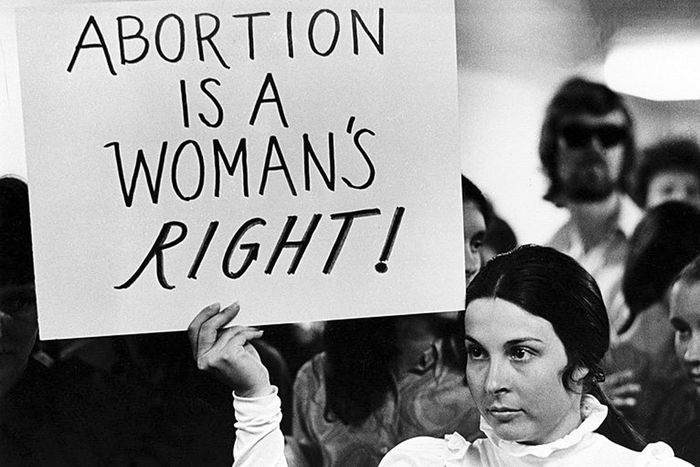
As Roe v. Wade enters its 40th year, the waves of change in the realm of reproductive rights have not simply ebbed and flowed, but have created turbulent currents that challenge the very essence of feminism. The core of this discussion transcends mere legalities; it delves into the heart of what it means to be a woman navigating a world still rife with patriarchal overreach. The fight for meaningful abortion access is not merely a fight for legality—it’s a fight for autonomy, dignity, and equality.
With every passing year, the dichotomy between those who champion reproductive rights and those who vehemently oppose them deepens. As recent developments unfold across states, it becomes increasingly clear: the legacy of Roe v. Wade is not just about the ruling itself; it is about how that ruling reverberates within the confines of women’s lives today. If we are to honor the spirit of Roe v. Wade, we must strive for a future where abortion access is meaningful—not just a legal footnote, but a genuine acknowledgment of a woman’s right to choose without constraints.
The austere reality is that women of diverse socioeconomic strata experience abortion access distinctively. Relying on legal phrases alone fails to address the qualitative aspects of access that are urgently at stake. As we grapple with this persistent issue, it’s evident that a feminist critique, rooted in intersectionality, is inextricably linked to the conversation.
In the ensuing exploration, we will dissect the multi-faceted landscape of abortion access, specifically in relation to the recent political climate, socioeconomic realities, and the imperative of dismantling stigma. Through these lenses, we challenge the status quo and embrace the radical necessity for reproductive justice.
The political arena has become a battleground where the sanctity of Roe v. Wade is tested. Politicians, influenced by moral posturing more often than actual concern for women’s well-being, have sought to impose restrictions that undermine women’s autonomy over their own bodies. The recent wave of legislation aimed at curtailing access to abortion—seen not only in Texas and Alabama but rippling across the nation—hints at an ominous return to a time when women faced insurmountable barriers to reproductive health care. These laws do not arise from a vacuum; they stem from a deeply-rooted patriarchal desire to regulate and control women’s bodies under the guise of morality.
Yet, a noteworthy contradiction arises: these same legislators often fail to support measures that ensure comprehensive healthcare, education, and support for women post-abortion. This paradox underscores a fundamental hypocrisy that feminist activists must dismantle. Abortion legislation that doesn’t consider the socioeconomic constraints women face is not merely inadequate; it’s a betrayal disguised in legislative language.
Women making the decision to terminate a pregnancy often do so in contexts that are laden with socio-economic complexities. The reality is that not all women have equal access to the chorus of support systems that could make the choice of becoming a parent or not a less daunting one. The intersection of race, class, and geographic location plays a significant role in shaping these experiences. For many, the choice comes wrapped in layers of stigma, fear, and often, overwhelming financial burden.
As such, the feminist approach to making abortion access meaningful necessitates a comprehensive understanding of these intersections, advocating not just for the right to choose, but for the existence of well-resourced options leading up to that choice. This means pushing for improved healthcare access, affordable contraception, comprehensive sex education, and support for women during their pregnancies—wanted or otherwise. Without such infrastructure, Roe v. Wade remains an abstract right, unattainable for those who need it most.
Moreover, the weight of societal stigma draped over the conversation surrounding abortion cannot be understated. The narratives surrounding abortion too often are steeped in shame and silence, a deliberate stratagem employed by anti-abortion advocates to further marginalize women who make that choice. Feminism’s role here is crucial. By reclaiming the conversation surrounding abortion and prioritizing women’s narratives, we disrupt the toxicity of guilt and shame that have dogged reproductive choices for decades.
Stories matter. They shape perceptions, influence policy, and foster empathy. Recognizing the validity of women’s experiences, regardless of their decisions regarding their pregnancies, is pivotal in cultivating a society that respects individuality and agency. It is within these personal narratives that we find the roots of empathy and solidarity, bridging the divides that separate us in our varied experiences of womanhood.
Moreover, the tools of technology and social media provide an unprecedented opportunity to illuminate these narratives, showcasing the vibrancy and diversity of experiences that women face when confronting the question of abortion. Grassroots movements flourish in this digital age, spawning dialogues that amplify voices often drowned out by legislative rhetoric. Feminism thus must harness these platforms to challenge existing norms and present a more nuanced view of abortion.
Furthermore, advocating for abortion access is inherently tied to broader social justice movements, whether they be struggles for racial equality, LGBTQ+ rights, or economic justice. Feminism must not be siloed into reproductive issues alone; it must intertwine with all forms of liberation. As women from varying walks of life unite, the push for abortions that are not merely legal but also accessible, affordable, and stigma-free becomes not just a feminist struggle but a movement for universal human rights.
Much remains to be done to convert legal protections into tangible access. Entire communities must mobilize to ensure that all women have the resources, information, and support necessary to make the choices that best suit their lives. This means pushing back against harmful policies, advocating for public funding for reproductive services, and fostering an environment of hope and support around the decision to have an abortion.
As we reflect on the legacy of Roe v. Wade today, we must pledge to bolster its spirit such that it resonates with every woman, irrespective of her socioeconomic status or background. The fight to make abortion access meaningful requires a collective indignation against the systemic forces seeking to undermine women’s autonomy. This is a call to action for feminists everywhere: to confront the status quo with ferocity, tear down barriers, and amplify the voices of the marginalized.
Roe v. Wade may stand as a landmark case, but our work is far from complete. We owe it to ourselves, and to future generations, to ensure that abortion access moves beyond legality into the realm of genuine, vibrant choice—a powerful declaration that every woman deserves the right to her own future. This is the essence of feminism; this is the fight worth engaging in. The call is clear: make abortion access meaningful for every woman, everywhere.