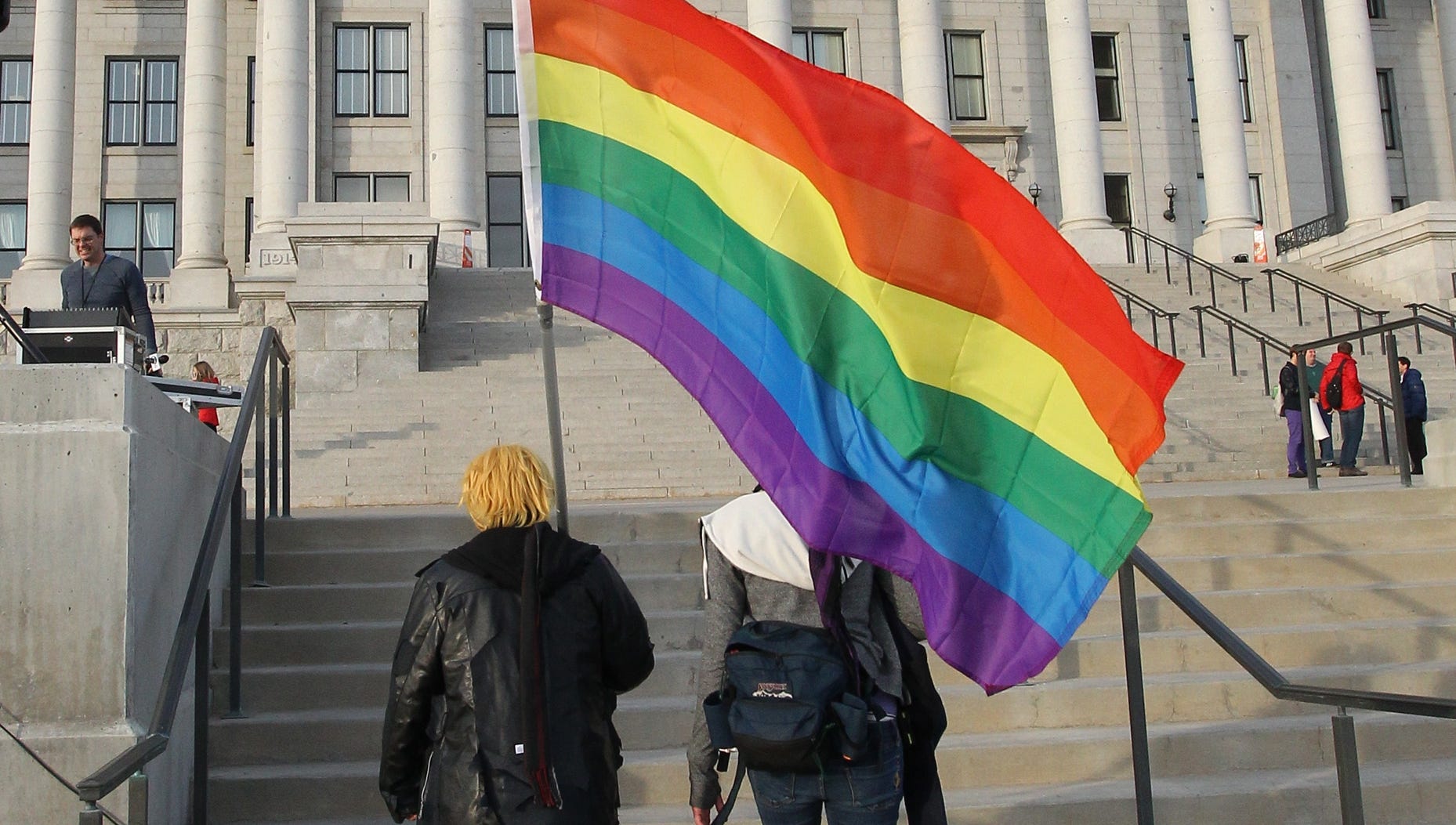
In a world that ought to be advancing towards equality, the recent decision by the Supreme Court to temporarily block same-sex marriages in Utah can only be described as a jarring regression. This ruling is not merely a legal footnote; it is a resounding statement about the political landscape and societal attitudes towards LGBTQ+ rights, particularly as they intersect with feminist discourse. Examining this phenomenon through a feminist lens reveals not just the implications for same-sex couples but also a broader commentary on the constantly evolving struggle for autonomy over one’s body, identity, and love.
The current political climate is revealing. It is enshrouded in a disquieting irony: as the mainstream feminist narrative pushes for the dismantling of patriarchal structures, simultaneously, the very frameworks of law that uphold individual freedoms are being gravely undermined by the same antiquated ideologies. This ruling poses critical questions about what it means to be a citizen and whom we consider worthy of fundamental rights. Let us unpack this odious veil that perpetuates discrimination under the guise of traditionalism.
At the crux of this ruling is an unintelligible level of hypocrisy exhibited by a society that purports to champion liberty, while implicitly relegating certain identities to the periphery. The Supreme Court’s decision to halt same-sex marriages in a state like Utah—where there is a burgeoning acceptance of LGBTQ+ rights—is a disheartening reminder of how fragile that acceptance truly is. It underscores the reality that legal recognition can be as transient as a summer breeze. Furthermore, the ruling occurs at a time when many women and marginalized communities already suffer under the weight of systemic inequities. It begs the question: Who makes the rules, and whose voices are muffled in the process?
It would be naive to separate the fight for same-sex marriage from feminism. The ethos of feminism is anchored in the belief that every individual deserves equal rights, recognition, and respect. It rebuffs the notion that love can be legislated or that partnerships can be caveated by gender. The feminist movement has long advocated for love—and relationships, more broadly—to be liberated from heteronormative confines. Thus, the Supreme Court decision becomes not just a barrier to marriage but a veil over sexual autonomy and the diverse expressions of human affection.
Gendered Discrimination at Play
It is imperative to highlight that the decision to block same-sex marriages profoundly impacts not only those in the LGBTQ+ community but also reverberates through the very fabric of gender relations. Legal recognition of same-sex partnerships has the potential to challenge and destabilize the ingrained gender norms that dominate our society. Marriage equality is not merely an issue of love; it demands a re-evaluation of power hierarchies embedded in the institution of marriage itself.
Such inequalities proliferate when one considers how traditional marriage has historically functioned to perpetuate patriarchy. Feminists have long argued that the conventional framework of marriage enshrines male dominance and female subservience, often leading to the eradication of woman’s agency within intimate relationships. Blocking same-sex marriages serves to uphold these antiquated norms, denying couples—regardless of gender—an opportunity to redefine partnership in an egalitarian context. This is not just about two people deciding to share their lives; this is about reshaping the narrative of love, power dynamics, and societal expectations.
The sheer irony that blocks are erected against same-sex marriage just as feminists push back against patriarchal constraints is almost maddening. These legal setbacks signal to women and sexual minorities alike that the state still holds sway over personal freedoms. The implications are profound, particularly when one considers how often the quest for recognition often entails a stripping away of the very identities one seeks to validate.
The Economy of Love: A Feminist Analysis
It is also worth delving deeper into the economic implications that arise from denying same-sex couples the right to marry legally. Economies thrive on mutual partnerships, and love is no exception. The denial of marriage rights for same-sex couples extends beyond a mere title; it wrapped around questions of economic stability, property rights, and familial rights. Denying these couples the same social and economic privileges granted to heterosexual couples by proxy curtails their financial agency. This is a point that should ignite fiery discussions amongst feminist activists who champion both women’s rights and LGBTQ+ rights.
By blocking same-sex marriages, the Court inherently perpetuates a schema where wealth is stratified by virtue of marital status. Consider the implications for women in same-sex relationships: they are often relegated to a position of economic vulnerability, unable to access benefits such as health care, tax benefits, or rights of inheritance that heterosexual couples routinely take for granted. The feminist agenda must position itself against such ingrained inequities and demand autonomy for all forms of love and partnerships.
Collective Action: A Road Forward
Our response to the Supreme Court’s ruling should not be one of defeat; rather, it is a call to arms. Feminists must extend their activism to encompass the spectrum of love, championing not just women’s rights but also the rights of those within the LGBTQ+ community. The road ahead is not easy, but solidarity is requisite. This is a time for activists across intersections—including race, gender, and sexuality—to unite in the shared pursuit of rights that should be universal.
In crafting a collective response, we are reminded that the personal is profoundly political. The struggle of same-sex couples for the right to marry is inexorably intertwined with the feminist movement’s core imperative: to secure equitable treatment for all. The time has come to dismantle the very structures that bind us to patriarchal values disguised as tradition. It necessitates a fervent, unapologetic advocacy for love in all its multifaceted expressions.
In conclusion, feminism must rise to this occasion. It is not simply about women fighting for their autonomy; it’s about confronting the historical legacies that seek to suppress love and agency. Each ruling that stifles the rights of those within the LGBTQ+ community serves as a stark reminder that the fight for equality is far from over. As we rally in support of love in its myriad forms, we assert our right to exist—to love—and to build families according to our own values, free from the shackles of antiquated norms. The narrative must shift: love is love, and it demands recognition. Only then can we hope to achieve the equality that is the birthright of every human being.