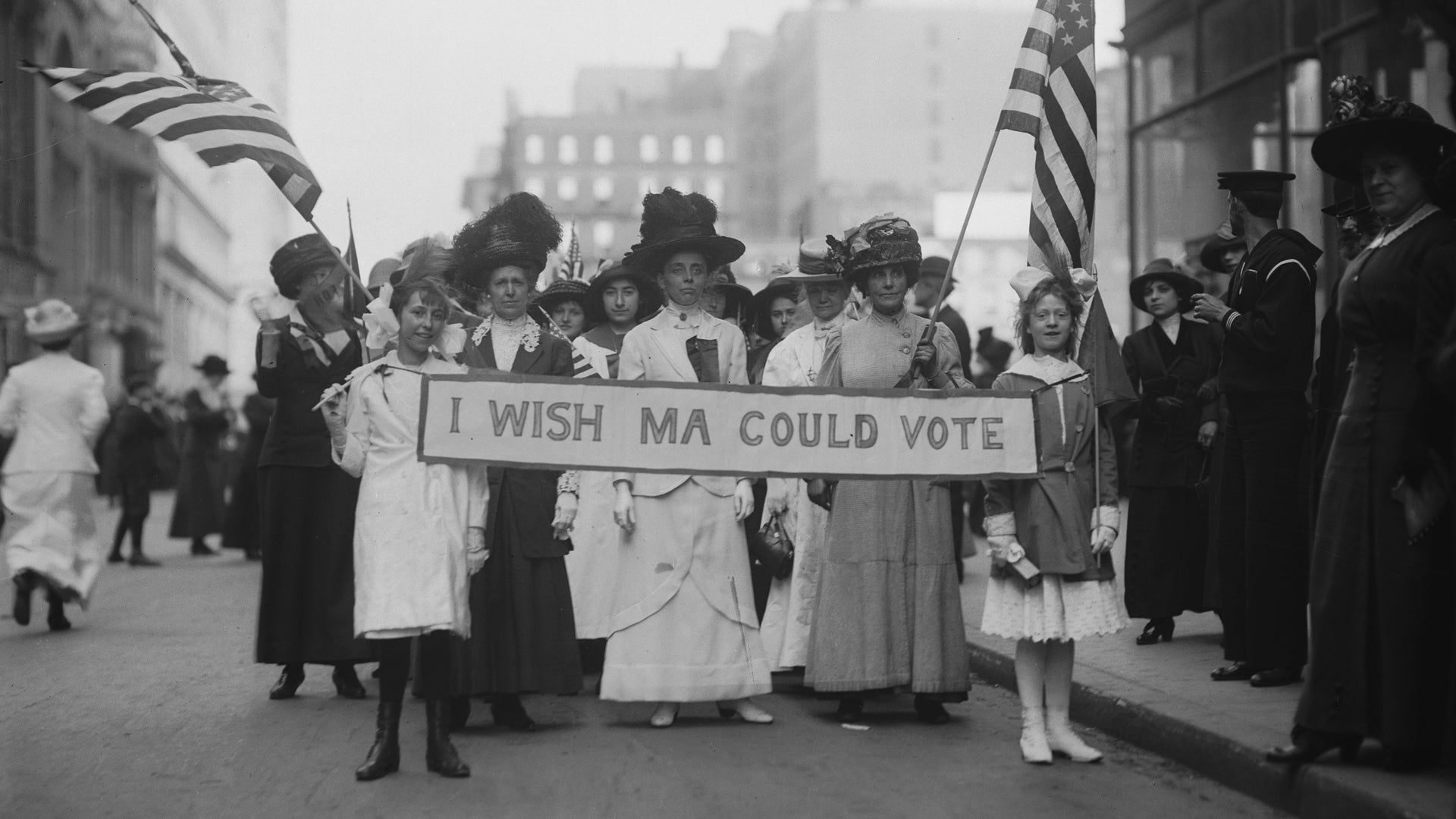
On April 17, 1894, a seismic shift rippled through the nascent but fervent women’s rights movement in the United States. The Empire State Suffragists staged a monumental event that went beyond the confines of a mere gathering; it was a clarion call for justice, equality, and the right to vote. These women, clad in determination and unwavering spirit, galvanized a national momentum that would indelibly mark the feminist landscape. But why does this moment deserve our attention today? What can we learn from the trials and triumphs of these fierce advocates as they stand unwavering against the tides of patriarchy?
Let us traverse the annals of history to unearth the significance of this pivotal event. The suffragists of 1894 did not simply advocate for women’s voting rights; they waged a battle against an entire system that sought to silence them. They reminded a nation caught in a patriarchal chokehold that women, too, were agents of change, capable of fulfilling their destinies beyond the domestic sphere. This act of defiance was a harbinger of the social revolutions that would follow, impacting generations of activists and feminists alike.
With the interplay of activism and societal change being more relevant than ever, let’s peel back the layers of this historic event and delve into its ramifications in our contemporary context.
A Flashpoint in the Ecosystem of Activism
The Empire State Suffragists were more than just figureheads; they were pioneers, purposefully crafting a movement that would resonate for decades. Their gathering was not simply a reaction to the disenfranchisement of women; it represented the institutionalization of feminist thought within the greater fabric of American democracy. It was a moment when women collectively asserted their rightful place in a political arena that had consistently marginalized their voices.
What made April 17, 1894, notably electrifying was the strategic framework deployed by these suffragists. They transformed a hitherto passive societal discourse into an active, engaging dialogue about voting rights. Their utilization of powerful rhetoric and organizational acumen lit a fire that spread beyond New York, igniting passions nationwide. This fervor pushed the issue of women’s suffrage onto the national stage, forcing it into political conversations that had traditionally excluded female participation. In essence, the Empire State Suffragists did not just participate—they provoked.
For the younger generation today, this serves as a crucial lesson. Activism thrives when it deviates from the scripted. The suffragists exemplified how audacity can reshape perceptions. With the advent of social media, today’s activists can harness similar strategies by creating hashtags, viral campaigns, and eye-catching content that resonate with their audiences. The urgency of feminism beckons today as it did over a century ago, and the echoes of these suffragists remind us that the fight for rights is never truly over.
The Intersection of Class, Race, and Gender
As we traverse the narrative, it’s paramount to acknowledge the complex tapestry that defines feminist movements. The Empire State Suffragists represented a predominantly white, middle-to-upper-class demographic, underscoring a critical facet of feminism that often gets submerged under the overwhelming tide of mainstream narratives: the intersectionality of class, race, and gender.
While the suffragist movement did indeed garner crucial momentum for women’s voting rights, it also inadvertently homogenized the feminist experience. In this pursuit of enfranchisement, the voices of women of color and lower socioeconomic backgrounds were often sidelined. This raises a pressing question: how can women fight for equality if they don’t recognize the diverse struggles encapsulated within femaleness? The duty lies with modern feminists to re-visit the past with a critical lens, understanding that the struggles for voting rights were nuanced and not universally applicable. Rather, the quest for empowerment was and remains a varied spectrum, inclusive but often overshadowed by the narrative pillars of the mainstream.
By examining these intersections, younger generations can cultivate a more holistic understanding of feminism. Delving into the multi-faceted identities that comprise this movement—acknowledging that privilege can distort perspectives—allows for a richer dialogue that can propel feminist goals forward. Utilizing the lessons rooted in history, today’s feminists must strive to ensure that today’s feminist movement is inclusive, reflecting the genuine diversity of women in all their complexities.
The Legacy of Indomitable Spirits
The Empire State Suffragists did not just spur immediate action; they laid the bedrock for a legacy that would not relent. The suffrage movement became the fertile soil from which many future feminist movements would grow. Fast forward to the Women’s Liberation Movement of the 1960s, and we see seeds of change that the suffragists planted. The fight for reproductive rights, gender equality legislation, and labor rights were all branches stemming from the tree of women’s suffrage.
This legacy bears a poignant reminder for today’s activists. The struggles of the past are not isolated events; they are interconnected messages that resonate deeply today. The suffragists faced brutal opposition—criticism, hostility, and even violent backlash. Yet, they remained undeterred and committed to their cause. Their resilience teaches younger activists the importance of endurance in the face of adversity. Whenever you find yourself disheartened by challenges, remember that the indomitable spirits of those who came before you were forged in the crucible of struggle.
Furthermore, the narrative of suffrage advocates illustrates that feminism is not merely a conversation around rights; it’s a powerful movement fueled by solidarity. As the Empire State Suffragists came together, they forged alliances that transcended differences, embracing a collective mission. In an age of divisiveness, young activists must grasp the significance of unity in diversity; that solidarity among various factions of feminism can amplify the message and bridge the divides that stifle progress.
Conclusion: A Call to Younger Feminists
As we sip from the cup of knowledge poured by our predecessors, let us not forget how the Empire State Suffragists ignited a national momentum for voting rights on that fateful day in April 1894. Their legacy is a nuanced tapestry woven from the threads of struggle, resilience, and unity. The woman’s suffrage movement beckons us to engage with our past, not merely as spectators but as active participants who comprehend the complexities that entwine feminism. The task of lighting the torch of equality now rests in your hands. It’s time to take up that mantle, employing digital innovations and community building to advocate for the rights of all. A younger generation must rise to carry forth the banner hoisted by the groundbreaking women of 1894. Are you ready to kindle the flame?