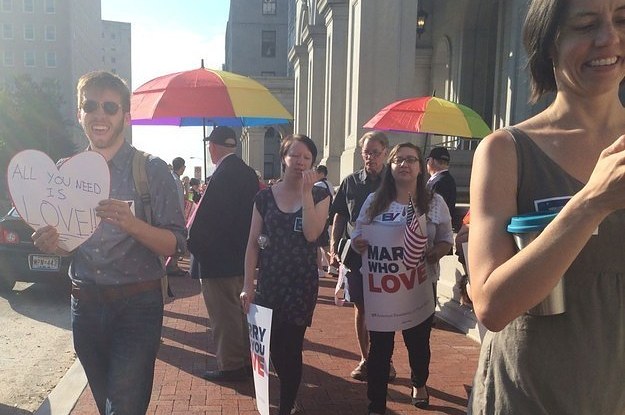
The winds of change are upon us, and nowhere is this clearer than in the hallowed halls of the judiciary. The Federal Appeals Court’s groundbreaking decision to strike down Virginia’s same-sex marriage ban isn’t merely an incremental step in the long fight for equality; it is a seismic shift that reverberates through the veins of feminism and the broader quest for human rights. The implications of this ruling extend far beyond the lining of a wedding dress or the glimmer of a diamond ring. This is a clarion call for young feminists and allies alike to unify and advocate for the rights of all individuals to love freely and openly. Marriage equality is not merely a legal construct; it is a potent symbol of the autonomy and liberation that every person, regardless of gender or sexual orientation, deserves.
In this insidious age of oppression, it’s imperative to dissect how this ruling paves the way for a new feminist agenda that embodies inclusivity, sexual liberation, and systemic change.
Understanding the Intersection of Feminism and Marriage Equality
Feminism, at its core, champions the notion of equality, justice, and autonomy for all genders. When we speak of marriage, we confront a social institution that has historically marginalized a myriad of voices—particularly those of women and LGBTQ+ individuals. The traditional framework of marriage, often patriarchal and heteronormative, has confined personal choices and relegated love to a rigid box. But as the Federal Appeals Court recognized, it is high time to dismantle this antiquated paradigm.
The essence of feminism is liberation—the ability for all individuals to define their identities, relationships, and familial structures without state-imposed restrictions. With marriage equality, we unshackle the remnants of a discriminatory past, allowing marginalized groups to participate fully in a celebrated social contract. This is not just a “gay issue”; it’s an intricate tapestry woven into the very fabric of feminist discourse. Feminism flourishes when it stands against all forms of oppression, and the court’s ruling embodies that fight.
Why Gender and Sexual Diversity Matter in Marriage Equality
It’s crucial to interrogate what marriage equality signifies in a society still steeped in heteronormativity. Embracing gender and sexual diversity transcends mere acceptance; it is about celebrating the vast spectrum of human experiences. A ruling like this reshapes societal perceptions, urging us to reconsider entrenched notions of ‘normalcy’ and ‘respectability’.
Young feminists, who are now at the forefront of activism, should amplify the voices of all marginalized groups within the LGBTQ+ community. Non-binary, genderqueer, and other identities often find themselves sidelined in conversations about marriage. It’s time for all feminists to hold space for diverse narratives, illustrating that love isn’t confined to rigid gender roles but is a fluid entity deserving of recognition and respect. Marriage equality empowers us to embrace an expansive definition of love—one that honors the intersections of gender, sexuality, race, and class.
The Economic Dimensions of Marriage Equality: A Feminist Perspective
Marriage may be enshrined in love, but let’s not kid ourselves; it is also an economic institution. The Federal Appeals Court’s ruling begs us to consider marriage from a fiscal lens. When same-sex couples are denied the right to marry, they are systematically excluded from a plethora of economic benefits afforded to heterosexual couples. Think about tax breaks, healthcare rights, and inheritance laws—all circumscribed by the stagnant laws of exclusion.
From a feminist perspective, economic inequality is a core issue that intersects with gender and sexuality. Women, particularly women of color and those in marginalized communities, are already grappling with economic disparities. When same-sex partners cannot access the full benefits of marriage, the economic chasm broadens.
This ruling creates a pathway for economic progress. Empowering queer folks through marriage equality is tantamount to addressing gender and income inequality, galvanizing young feminists to advocate for a comprehensive economic overhaul. It’s not enough to fight for emotional and social recognition; we must also elevate our demands for economic equity.
Creating a Culture of Inclusivity: Next Steps for Feminists
The Federal Appeals Court’s decision is a powerful affirmation, but it is merely a chapter in an ongoing saga. To truly honor this victory, feminists must adopt a proactive stance toward fostering a culture of inclusivity. It begins with challenging the normative narratives surrounding marriage and pushing for legislative reforms that further protect LGBTQ+ rights.
Educating the youth—our future leaders—is crucial. Informing young people about the history of marriage, from its patriarchal roots to its current struggles for equality, is essential. Building awareness fosters empathy and sparks a collective consciousness that transcends generational divides. Young feminists should spearhead initiatives, workshops, and community dialogues focused on the intricacies of intersectionality, ensuring that the fight for marriage equality remains woven into the broader feminist agenda.
Furthermore, allyship is vital. Heterosexual feminists must recognize their privilege and actively support LGBTQ+ rights without taking center stage. It’s imperative to listen, learn, and elevate the voices of those most impacted by the struggles at hand.
The Ripple Effects of the Marriage Equality Ruling on Society
While the Federal Appeals Court’s ruling has far-reaching implications for the LGBTQ+ community, the social ramifications extend beyond marriage licenses and pretty ceremonies. This decision serves as a springboard for broader discussions about social justice, gender identity, and sexual liberation.
As marriage equality becomes normalized, we move toward a society that recognizes love in all its forms, challenging entrenched prejudices and dismantling systemic discrimination. The conversations about gender and sexual identity fostered by this ruling compel us to confront the uncomfortable realities within our communities. It is not just about who can legally marry; it’s about who gets to love authentically, without fear of marginalization.
This ruling emboldens activists to explore other realms of injustice, encouraging a holistic approach to activism that embraces the interconnected nature of social issues. By uniting under the banner of love, we create a formidable force against misogyny, transphobia, and homophobia alike.
Conclusion: A Call to Action
The Federal Appeals Court’s decision has ignited a spark in our societal framework, reinforcing the importance of marriage equality as an extension of feminist principles. To truly engage young minds, let us frame this issue not just as a legal victory but as a moment of reckoning. Feminism is incomplete if it does not fully embrace the diversity of love and the spectrum of gender.
It is our collective responsibility to ensure that the struggles of the past inform our activist strategies for the future. A future where love is limitless, where everyone has the right to love freely, and where equality is more than just a word—it is a way of life. Mobilize, educate, and advocate. This victory is just the beginning, and the revolution for love, justice, and equality is in full swing. Together, we can usher in a world where every form of love is celebrated, unfettered, and unapologetically fierce.