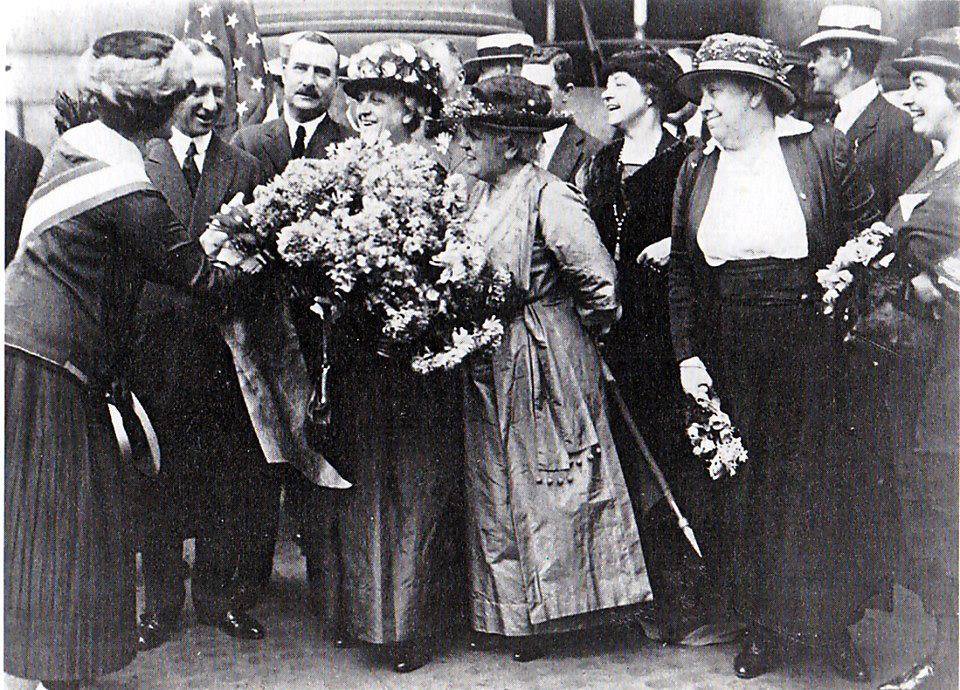
August 27, 1920, marks a pivotal moment in the annals of American history, a day when Carrie Chapman Catt, an indomitable force in the suffrage movement, triumphantly returned to New York City. This wasn’t merely a homecoming; it was the celebratory herald of a monumental victory—the ratification of the 19th Amendment, which granted women the right to vote. In a society rife with gender politics and structural barriers, Catt’s return signifies not just a personal triumph, but the dawning of a new era of feminist activism and an undeniable shift in societal perspective regarding women’s rights.
The significance of this triumph ripples through our modern context, as it invites an examination of how far we have come—and how far we still have to go in realizing true equality. Catt’s passionate leadership, strategic prowess, and unwavering resolve drew a line in the sand against a patriarchal system bent on disenfranchisement. Historically, the landscape of women’s rights has been littered with struggles and sacrifices, yet Catt’s return encapsulated a collective hope that promised to propel feministic ideals into a brighter tomorrow. Let us explore the intricacies of this celebrated moment and its enduring relevance for contemporary feminism.
The 19th Amendment wasn’t merely an endpoint; it was a catalyst. The ramifications of this monumental occasion extend beyond the façade of a singular event, prompting a re-evaluation of societal norms and expectations concerning women. Catt stands as a testament to the efficacy of organized activism, illuminating the path for future generations of feminists who cherish the hard-won triumphs but dare not rest on their laurels. It’s a clarion call to harness this victory and unearth an unrelenting vigor within the feminist movement.
In exploring Catt’s multifaceted legacy, one must address the notion of collective identity within the feminist tapestry, which she skillfully wove throughout her life. Catt’s leadership in the National American Woman Suffrage Association (NAWSA) bespeaks an era wherein women were undergoing an awakening—a surge of consciousness that transcended beyond their domestic confines. Her return to New York City was layered in complexity, representing both a personal and collective assertion of women’s rightful place in the political sphere.
While the day shone brightly for women’s suffrage, it also encapsulated a more intricate narrative involving race and class. The suffrage movement involved various voices, yet it too often marginalized the perspectives of women of color and those from diverse socioeconomic backgrounds. Catt’s narrative, while striking, begs the question: who was truly included in this victory? Did the ratification of the 19th Amendment extend to all women, or did it serve primarily those in power? This matter necessitates a robust discourse on inclusivity, challenging the monolithic portrayal of women’s experiences.
One cannot overlook Catt’s strategic savvy, which characterized her suffragist efforts. Her dedication to the cause was grounded not merely in fervent speeches but also in astute political maneuvering—an art often underappreciated in a world that romanticizes passion over pragmatism. Catt was keenly aware of the need to cultivate relationships with influential political figures, understanding that access and legitimacy could only be achieved through persuasive engagement. This pragmatic approach can act as a blueprint for modern feminists, suggesting that radical change often requires navigating and, at times, leveraging existing power structures.
Within this dynamic sphere, it is equally essential to dissect the portrayal of Catt in contemporary feminist dialogue. Far too often, historical figures are canonized without a critical lens. Catt’s unwavering commitment to white women’s suffrage raises unsettling conversations regarding intersectionality. A feminist movement that does not actively self-reflect and confront its historical shortcomings runs the risk of repeating the very systems of exclusion it seeks to dismantle. As we celebrate Catt’s legacy, we must also commit to amplifying the diverse voices within the feminist narrative, ensuring that all women, regardless of race or class, are seen and heard in the tapestry of change.
The day of Catt’s return to New York was imbued not only with jubilation, but also with the recognition of a fervent responsibility resting upon the shoulders of women who now had a voice. As Catt herself proclaimed during that period, “Women are going to be tested as to their worthiness of the franchise.” The struggles that followed did not dissolve into thin air. Instead, they evolved into a myriad of complications that would shape the trajectory of feminist discourse for decades to come. The question inheriting from this celebration of suffrage frames a more poignant narrative: how do we measure the worthiness of that gained voice—and what responsibilities does it entail?
The political sphere, emboldened by women’s increased participation, saw tremendous shifts in legislation, but the societal fabric remained laden with inequities. The echoes of Catt’s return resonate deeply, reflecting ongoing disparities in representation and power. The exhilarating victory of 1920 was merely a gateway into a more complex labyrinth of rights yet to be thoroughly realized. In this context lies a challenge—the eternal struggle to ensure that advancements in feminist progress do not stagnate but continue to invigorate a movement emboldened by its origins.
Modern feminism stands at a precipice, one that requires both reflection on history and a clear-eyed view towards the future. The celebrations of suffrage that took place in the wake of Catt’s return cannot simply be romanticized; they warrant rigorous interrogation of the struggles that lay ahead, encapsulated in the ongoing battles against systemic racism, economic inequality, and reproductive rights. The movement must shift its lens from merely commemorating past victories to ensuring that those victories translate into substantive, equitable frameworks for all women.
As we delve into the historical significance of August 27, 1920, we unearth not only a celebration but also an imperative: to sustain the momentum of change, empower marginalized voices, and challenge existing power structures. Catt’s triumphant return was but a moment in time, a flashpoint for an impending societal shift requiring continual advocacy and action. In reflecting upon her legacy, we unearth the tools necessary to dismantle oppressive systems, ensuring that women’s voices echo through the halls of history—not as whispers of the past, but as fervent calls for justice that resonate resoundingly into the future.