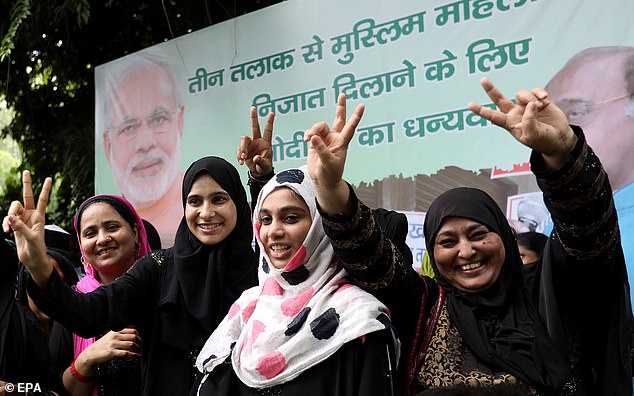
Indian Muslim women stand at a pivotal crossroads in the struggle for marriage rights and gender equality. With the recent prohibition of instant triple talaq, or ‘talaq-e-biddah’—a practice allowing men to divorce their wives in an instant—there is palpable tension and excitement in the air. This ban not only heralds a novel dawn for these women but simultaneously exposes the complex interplay of religion, culture, and gender politics in a rapidly evolving society. While some celebrate this monumental change, others remain ambivalent, signaling a fractured perception of feminism within Muslim communities. The complexities of this situation demand a nuanced exploration, one that positions the narratives of Indian Muslim women front and center in the discourse on gender equality.
In understanding this struggle, we must first unravel the fabric of tradition and modernity woven intricately into the lives of Muslim women in India. The discourse is not merely about legal rights; it encapsulates a broader struggle for dignity, respect, and agency within both familial and societal structures. Herein lies a cry for justice, one that is often muffled by patriarchal norms and an overly simplistic narrative of cultural preservation.
Yet, the ban on instant divorce is just a stepping stone—if it is to be meaningful, it must be contextualized within a broader framework of women’s rights and empowerment. It is essential to examine the implications of this shift for Muslim women, who have long found themselves at the intersection of personal rights and societal expectations.
Feminism, particularly in the context of Indian Muslim women, is not a monolith. It is a cacophonous symphony of voices, each resonating with its own struggles, aspirations, and experiences. A concert of diverse narratives deserves to be heard, and this exploration aims to amplify them.
Reimagining Feminism: The Diverse Voices of Indian Muslim Women
The feminist movement in India is often criticized for its perceived ‘universalism,’ wherein the experiences of women from privileged backgrounds overshadow those of marginalized communities. This oversimplification of feminism must end. Muslim women in India articulate their needs and rights in a distinctly different framework that respects cultural nuances while demanding equality. They are not victims of dogma but active participants in the reshaping of their identities and roles.
Enter the narrative of reform and resistance; this dynamic creates a fertile battleground for reimagining feminism. Women like Shabnam Hashmi and others have been at the forefront, challenging patriarchal interpretations of religion and culture. They seek not to erase their faith but to innovate within it, evolving their understanding of what it means to be both a woman and a Muslim in contemporary India.
This perspective allows for a deeper understanding of how faith and feminism can coexist. Women who advocate for rights often pull from the wellspring of their religious texts, finding verses that promote justice, equity, and respect. Such reinterpretations are not new; they echo the sentiments of early Islamic feminism, where women actively engaged with texts to advocate for their rights.
Legal Battles and Social Justice: The Fight for Marriage Rights
The legal status of marriage and divorce is a contentious issue in India’s diverse tapestry of personal laws. For Muslim women, the recent legal changes regarding divorce underscore both progress and potential pitfalls. The prohibition of instant triple talaq undoubtedly empowers women, yet it must be approached with caution. The risk is that this shift may inadvertently reinforce other patriarchal structures. A deeper analysis is warranted to ensure that legal reforms do not merely modify the existing oppressive systems but dismantle them altogether.
Moreover, these women often find themselves navigating a quagmire of discrimination, not only within their communities but also from state mechanisms that are slow to evolve. The intersectionality of their struggles is crucial; they grapple with race, class, and gender simultaneously. Organizations that focus on social justice, such as the Bharatiya Muslim Mahila Andolan, emphasize the need for comprehensive legal protections that go beyond mere divorce laws. The call for laws to maintain a woman’s right to inheritance, freedom from domestic violence, and equitable economic opportunities must be an essential part of the feminist conversation for Muslim women.
Solidarity and Intersectionality: Bridging the Gaps in Feminism
The road to gender equality for Indian Muslim women is fraught with obstacles. Building solidarity across diverse feminist movements is essential for amplifying their struggle. The necessity of intersectional feminism cannot be overstated. Women from different backgrounds must engage in dialogue to understand the unique challenges faced by their peers, fostering an environment where collective action thrives.
Acts of solidarity can take myriad forms, from public demonstrations advocating for legal reforms to grassroots initiatives that empower women through education and entrepreneurship. Feminist alliances must emerge not only to champion the rights of Muslim women but also to combat the divisive culture that often pits various communities against the other.
As the promises of change ripple through society, it is crucial for women to own their narratives. Muslim women must not only participate in discussions surrounding their rights but lead them. This leadership encapsulates a radical rethinking of societal roles and the demand for representation in decision-making processes, be it in political arenas or community platforms.
Empowerment through Education: A Fundamental Right
For many, the gravitas of educational reform represents a linchpin in the struggle for rights. Education is more than just a tool of empowerment; it is the foundation upon which lives are built and futures are reimagined. Higher literacy rates among women often correlate with increased social mobility, better health outcomes, and economic independence. It is imperative to prioritize educational reform that is inclusive and accessible to all, particularly for marginalized groups. There is a potent irony in circumstances where women are still denied their basic right to education, especially in the wake of legal reforms that are supposed to promote their equality.
Grassroots initiatives, supported by both local NGOs and larger civil society organizations, can adequately address the educational disparities faced by Muslim women. Tutoring programs, scholarship opportunities, and vocational training can galvanize the youth and usher in a wave of change, breaking the cycle of poverty and ignorance.
The journey toward equal rights for Indian Muslim women is indeed complex. Yet, it is rife with promise and resilience—a testament to the indomitable spirit of women challenging the status quo. As they continue to fight for their marriage rights and broader gender equality, they illuminate pathways leading to societal transformation. By asserting control over their individual narratives, they possess the power to redefine the contours of feminism, inviting all voices into a greater dialogue on equality and justice.
As society witnesses these changes, it is crucial to remember that true feminist solidarity extends beyond mere celebrations of legal victories. It encompasses a steadfast commitment to cultural competence, active listening, and sustained engagement with the multifaceted identities of women everywhere. The fight is far from over, yet Indian Muslim women are rising to the occasion, ready to reclaim their narratives and assert their presence in the ever-evolving landscape of feminism.