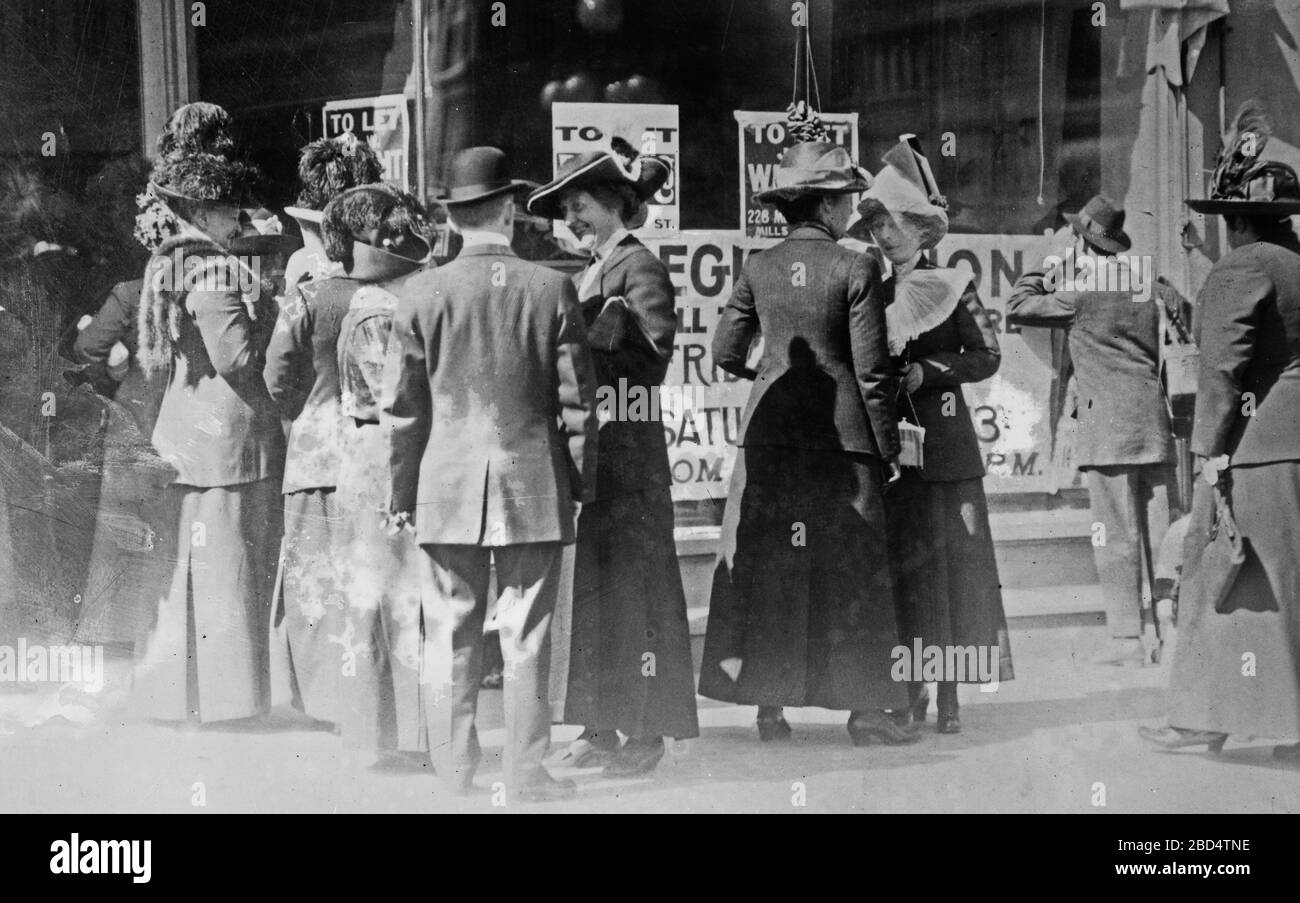
On October 7, 1911, an intense and impassioned debate unfolded in California — a pivotal moment that would echo through the annals of feminism and women’s rights. Men filled the seats of a packed theater, their voices rising in fervor as they grappled with the contentious question: Should women be granted the right to vote? The fervor surrounding the issue was emblematic of broader societal norms, yet it also foreshadowed an inevitable shift towards equality. This debate was not merely a discussion among men about the suffrage movement; rather, it signified a crucial intersection of gender roles, power dynamics, and societal evolution.
Consider the theater itself — a monument of civic engagement, hosting not just entertainment but also the fierce collision of ideas. At a time when women were largely relegated to domestic spheres, the very notion that a space traditionally occupied by men was now a battleground for women’s rights speaks volumes.
The atmosphere was electric, charged with passion and conviction. Proponents of suffrage stood firmly on the stage, presenting arguments that ranged from moral imperatives to practical benefits. Their opponents, however, filled the opposing corners with skepticism and age-old justifications. Here we witness a convergence of ideologies: the traditionalist mindset: the belief that women belonged in the home, nurturing the next generation instead of participating in the political arena, clashed sharply with the burgeoning sentiments of equality and autonomy.
As men debated the merits of women’s suffrage, it is critical to recognize the absurdity of their position. Why were men, rather than women, dictating this discourse? It underscores the patriarchal parameters that dictated societal norms. Had the stakes not been so high and the implications so deeply felt, one might even find humor in the irony that men were deciding the fate of half the population.
**The Battle of Ideas: Flawed Arguments Against Suffrage**
The opposition to women’s suffrage was rife with deeply entrenched misconceptions. Critics freely paraded flawed arguments and misguided fears, painting suffragists as radicals threatening the sanctity of family life. “Women are too emotional,” they claimed, a stereotype rooted in the antiquated belief that emotions are a detriment in the rational world of politics. This argument presupposes that emotional intelligence—often seen as a female trait—is somehow incompatible with sound governance.
Moreover, opponents wielded the specter of social upheaval, contending that granting women the ballot would lead to chaos. They reiterated the notion that women, if given suffrage, would abandon their familial roles, embarking on a crusade that could destabilize society. The absurdity here cannot be understated: how could a few added ballots disrupt the very fabric of a nation? In essence, this argument was a smoke screen for fear of losing control.
Obfuscating the reality of women’s lives only strengthened the resolve of suffragists. These women were not asking for the world to be turned upside down; they were demanding a basic right — the right to participate in their own governance.
**Women’s Voices in the Shadows**
On that momentous day in October, it is crucial to acknowledge the absence of female voices in the debate itself. Though the theater resonated with the fervor of advocacy, women were largely relegated to the sidelines, unable to speak for themselves. This absence is emblematic of the very struggle for agency and representation that defined the suffrage movement.
While men debated their merits, women were organizing and mobilizing behind the scenes — hosting rallies, networking with allies, and challenging local authorities. Their tenacity was not merely a response to being on the sidelines; it was a fierce determination to reclaim their voice in an arena that denied them agency.
Furthermore, the suffragists were not a monolithic group. They represented a tapestry of diversity — women of different races, classes, and backgrounds — each infusing the movement with unique perspectives and aspirations. It is essential to recognize that the struggle for suffrage intersected with other issues, including labor rights and racial equality.
**A Turning Point: The Fight Continues**
October 7, 1911, represents more than just a debate; it symbolizes a turning point in California’s history. The discussions and deliberations, charged with conviction, were a rallying cry. Men standing in judgment were unwittingly helping to galvanize a movement that would change the course of history. As they argued, a subtle realization began to take root: the fight for women’s rights was inextricably linked to the very essence of democracy itself.
This debate instigated conversations that rippled across the nation. Communities began organizing, mobilizing women and allies from diverse backgrounds, spanning the state from urban centers to rural enclaves. As conversations burgeoned, so too did political action. The election of 1911 loomed on the horizon, a battleground that would test California’s social fabric and determine whether the suffragists would emerge victorious.
Ultimately, the tireless efforts of these suffragists bore fruit. In the wake of their endeavors, California did expand the franchise to women in 1911, marking a significant victory in the fight for gender equality. Yet, the battle did not end there; it was merely an opening act in a grander symphony of struggle.
**Conclusion: The Echoes of the Past in Modern Feminism**
The debate on October 7, 1911, serves as a poignant reminder of the complexities surrounding women’s rights and the voice of dissent. It illustrates the often-overlooked truth that feminism does not exist in a vacuum; it is a dynamic and ever-evolving struggle.
Today, as modern feminists continue to confront inequality and strive for equity, the historical context provided by such debates remains vital. They serve as reminders that victory is not automatic; it is hard-fought and requires eternal vigilance. The echoes of Californian men debating women’s suffrage resonate in contemporary discussions on gender, power, and voice — an enduring call to arms for equality.