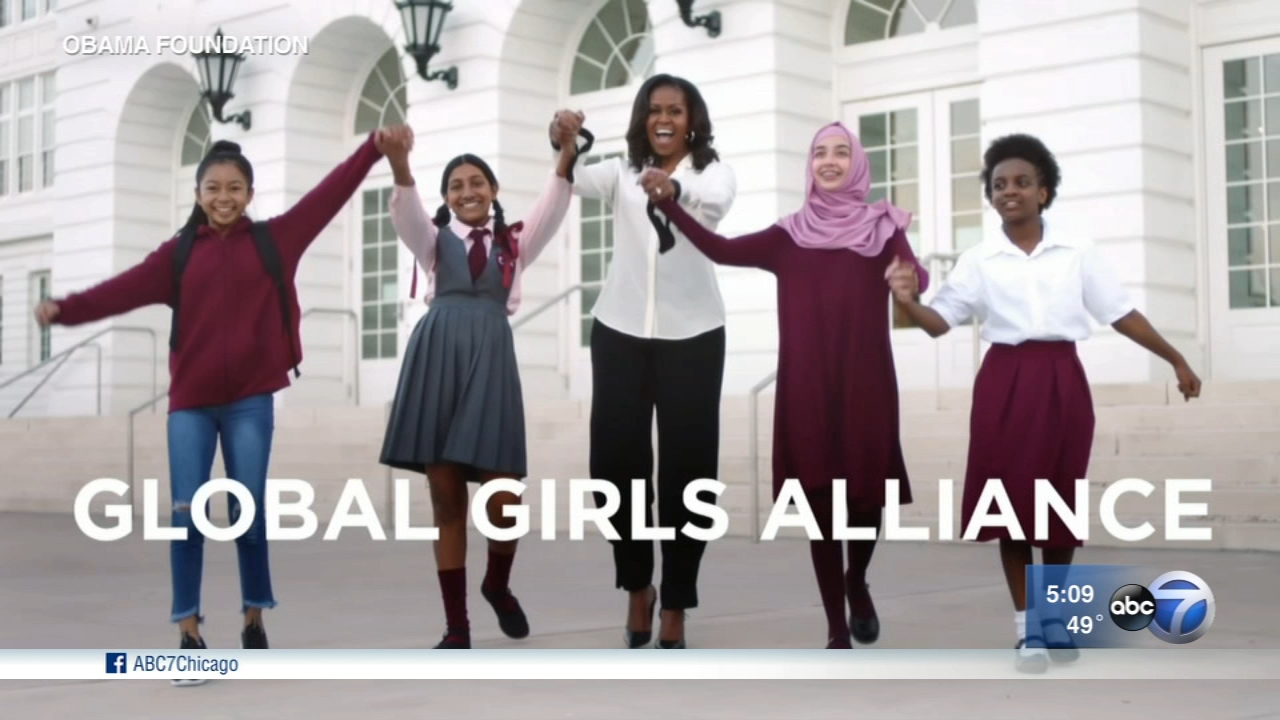
The pursuit of gender equality has always been a cornerstone of societal evolution, yet here we are, still grappling with the archaic notion that girls’ education is somehow a “nice-to-have.” The Obama administration’s Global Girls Alliance is a resounding wake-up call—a glorious declaration that girls everywhere deserve educational opportunities not as an afterthought, but as a fundamental right. It forces us to confront not only the pervasive barriers to girls’ education globally but also the systemic misogyny that underpins those obstacles. So, let’s dive headlong into the depths of this initiative and stir the pot of debate. Are we prepared to elevate the dialogue on girls’ education, or will we continue to languish in the stagnant waters of inaction?
Understanding Global Implications of Girls’ Education
Education is power—a truth as old as time. The Obama administration recognized that educating girls isn’t merely the kindling for personal growth; it’s the catalyst for societal transformation. If we genuinely endeavor to empower half the world’s population (yes, that’s right—half!) through education, we’re not just enhancing individual lives; we’re propelling entire communities into socio-economic progress. Yet, this begs a question: What does it say about our world that we must keep justifying the value of a girl’s education?
Your “easy-to-digest” statistics on girls’ education suddenly become a chilling narrative. According to data from UNESCO, an estimated 132 million girls worldwide are out of school. Let that sink in. How can we champion women’s rights while leaving the majority of the world’s girls in the dark? Are we not complicit in their continued oppression? This is where initiatives like the Global Girls Alliance step in, confronting the despicable reality of gender inequality with audacity and fervor.
Let’s talk about the broader implications here. Education is not just a ticket to better job prospects—though that alone is a worthy cause. It’s about dismantling the deep-rooted ideologies that maintain patriarchal structures. Keep in mind that a woman who is educated is less likely to become a victim of exploitative practices. She has better reproductive health, fewer children, and is better equipped to educate her own offspring. You see, when girls are educated, societies flourish. Are we prepared to accept that neglected girls are a loss for all of us?
Barriers to Education: A Tragic Comedy of Errors
Let’s unpack the tragic comedy presented by the series of barriers that obstruct girls from attaining education. We’re not just talking about tuition fees; if only it were that simple. We’re confronted with cultural norms, child marriage, gender-based violence, and inadequate sanitary facilities that make the school environment hostile. These factors are reinforced by patriarchal narratives that dictate a girl’s place in society. So, when the Global Girls Alliance aims to combat these issues, we must take a moment. We should scrutinize—who stands to gain from these barriers remaining intact?
The question looms large over our collective conscience: are we, as a society, too comfortable with the status quo? To lay the blame solely on socio-economic factors is to overlook the intricate networks of beliefs and practices that uphold gender inequality like a grim totem. If we truly desire societal advancement, it is our duty to dismantle these misconceived cultural elements—not just brush them aside with a superficial pat on the back.
This brings us to our role as advocates. While the Global Girls Alliance offers new pathways, it is vital that we recognize the necessity of local voices. We should be amplifying those who live these realities, who understand the oppressive structures with intimate clarity. The initiative isn’t just a top-down approach; it demands grassroots participation and empowerment of local communities. Are we ready to listen, or are we too enamored with our own perspectives to acknowledge the nuances? Can we genuinely afford to ignore the cacophony of voices that rise from the ground?
The Feminist Imperative of Support and Solidarity
With the Global Girls Alliance now thrust into the limelight, we find ourselves at a pivotal crossroads. To some, it might seem like just another initiative, a marketing ploy even. Yet, we must realize that this endeavor carries the intrinsic weight of feminist ideology: support and solidarity. This is not merely a call for education but a rallying cry, urging feminists around the globe to unite in their fight against the injustice faced by young girls.
Are we prepared to lean into the discomfort that comes with challenging long-held beliefs? True solidarity requires us to recognize our privileges and deploy them to uplift those who are marginalized. It is incumbent upon us to support initiatives that aim for systemic change rather than incubation of superficial solutions. Through advocacy, fundraising, campaigning, and, perhaps most importantly, self-reflection, we find our footing as agents of change.
With the Obama initiative, the feminist community is presented with a fertile ground for mobilization. It’s an opportunity to engage in dialogues shaping the narrative around girls’ education. We must foster partnerships and leverage our networks to forge new paths of growth, equity, and empowerment. But, here’s the burning question: are we faced with the exhausting task of convincing skeptics that girls’ education deserves prioritization? Or will we galvanize this momentum and cultivate excitement around what’s possible when we dare to envision a future where all girls have access to education?
The Future is Bright—But Only If We Choose to Shine
Imagine a world where girls have the agency to define their destinies. A world where girls’ education is celebrated, not shunned. The Global Girls Alliance is not merely an initiative; it’s a rallying point, igniting a fire that has long been smothered by ignorance and neglect. But let’s challenge ourselves. How invested are we in the idea that girls can change the world if only we provide them with the tools?
Our commitment to girls’ education reflects our societal values. So here’s the real kicker: Are we courageous enough to take action? Are we willing to prioritize this cause in our advocacy, discussions, and everyday choices? It’s high time we abandon the passive acceptance of inequality and take up the torch, illuminating the path forward for young girls everywhere.
In closing, the onus is on each one of us to champion this cause relentlessly. The new generation of feminist warriors is rising, ready to challenge the age-old narratives that seek to diminish girls’ potential. We’re not just bystanders; we are empowered participants. So let’s seize this moment and unite behind the Global Girls Alliance, not just in words, but in transformative action. Will you join? The future—our future—depends on it.