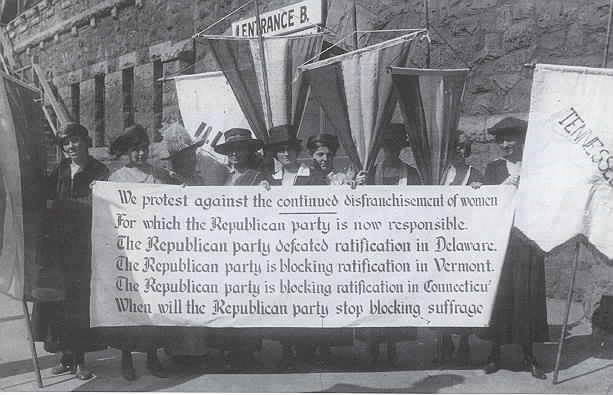
Today, we delve into a pivotal moment in history that resonates profoundly within the fabric of feminist activism: the relentless pursuit of the right to vote by suffragists in Chicago. Their clarion call to the Republican Party was not merely a plea; it was a thunderous demand for justice, equality, and recognition in the political arena of their time. We stand on the shoulders of these heroic figures, and their legacy continues to inspire modern feminists today.
To comprehend the fervor of the suffragist movement, we must explore the social and political landscape of early 20th-century America. A cacophony of voices echoed through the streets, igniting a revolutionary spirit that could not and would not be quelled. This period was not just about women clamoring for the ballot; it was an era steeped in transformation where traditional gender roles were being scrutinized, challenged, and dismantled. The suffragists’ fight for the vote was emblematic of a broader struggle for autonomy and liberation, which continues to resonate deeply in contemporary feminist discourse.
The Chicago suffragists were acutely aware of their power, as well as the power dynamics at play. Their demand aimed at the Republican Party was a call to engage with the political elite to advance a cause that was fundamentally about human rights. The slogan, “justice delayed is justice denied,” was a potent encapsulation of their frustration. They were not simply asking for an inclusionary token in the burgeoning democratic landscape but instead, they were laying the groundwork for profound societal changes that would ripple through history.
Their efforts went beyond mere advocacy; they were a direct confrontation of the entrenched patriarchy that ruled not just the political realm but every aspect of societal life. The suffragists did not arrive at their convictions lightly; they bore witness to the injustices of their time. Women were subjugated, their voices go unheard in the corridors of power. Today, when we hear that same cry for equity, we must take heed. The suffragists’ struggle was a microcosm of the broader fight against systematic oppression.
At the core of their movement was an ardent belief in the intrinsic value of women as citizens. The suffragists articulated a vision of democracy that included the voices of women, and they understood that true equality would be unattainable until every citizen, regardless of gender, had the right to participate in the political process. This vision is palpably relevant today as feminists continue to grapple with the consequences of disenfranchisement, stigma, and systemic barriers to participation.
Within the tapestry of their quest for suffrage, we see the emergence of intersectionality—an understanding that the struggle for rights is multifaceted. Today’s feminist discourse also mirrors this complexity as it engages with issues of race, class, and economic equity. African American women, Latina women, and working-class women often found themselves at the intersections of these fights—fighting not just for the vote, but for their very survival amid a society that marginalized them. The suffragists’ demands in the heterogeneous environment of Chicago were reflective of a burgeoning awakening to these intersecting struggles. The fight for suffrage carved a pathway whereby various social justice movements could coalesce and amplify one another.
This reckoning compels us to consider the responsibility of political parties today. Are they facilitating the inclusion of all voices, or are they still playing a game of politics steeped in a patriarchal legacy? The suffragists embodied defiance, engagement, and relentless advocacy. They beckoned the Chicago Republicans with their demands, reminding them that women were not an afterthought in the political agenda but a core constituency with the agency to shape policy. The expectation of engagement from the political entities in power reflects the foundational tenets of democracy, and the absence of such engagement betrays the very principles upon which this nation was built.
The fight for voting rights is not merely historical; it echoes into the present. Modern-day feminists continue to advocate for policy changes that resonate with the spirit of the suffragists. We witness movements advocating for universal suffrage, voting rights, and equal representation in government. The continued battle for reproductive rights, workplace equality, and intersectional justice is a testament to the enduring legacy of the suffragists’ fight. The urgency of their call to action serves as an inspiration and a roadmap for today’s activists.
Moreover, in the age of technology and social media, the platform for advocacy has evolved drastically. Yet, the fundamental ideals remain unchanged—the demand for justice, equity, and the right to a voice. Digital activists continue the fight, rallying support, and mobilizing communities to demand political accountability. While the tools may differ, the essence of the struggle resonates with the same intensity that fueled the suffragists in Chicago.
As we now reflect upon this remarkable chapter in our history, let us honor the courage of those who came before us. Suffragists did not merely ask for the right to vote; they demanded dignity, respect, and representation. That same spirit fuels feminist movements today. The echoes of their struggle are heard in every march, every rally, and every call for justice. Their legacy reinforces the notion that when women rise, societies flourish. The clarion call for engagement and the unwavering insistence on our rightful place in the political narrative remain relevant and urgent.
This remembrance compels us to educate the next generation about the power of activism and the importance of engagement. By understanding the historical context of women’s suffrage, we nurture a feminist ethos that celebrates resilience, defiance, and strategic action. Let us galvanize not just the memory of those who fought for our votes but also the collective responsibility to ensure that we, too, stand resolute in demanding justice for all.
Revisiting Chicago’s suffragists is not just an academic exercise; it is a rallying cry for contemporary feminists. Their unfinished work beckons us forth, daring us to continue the journey they began. The struggle for equality, representation, and respect is far from over. In today’s political climate, let us remain vigilant, prepared to challenge the status quo, and make unyielding demands upon those in power. For it is in our engagement and advocacy that we honor the legacy of our predecessors and carve out a future that is not just equitable, but truly just.