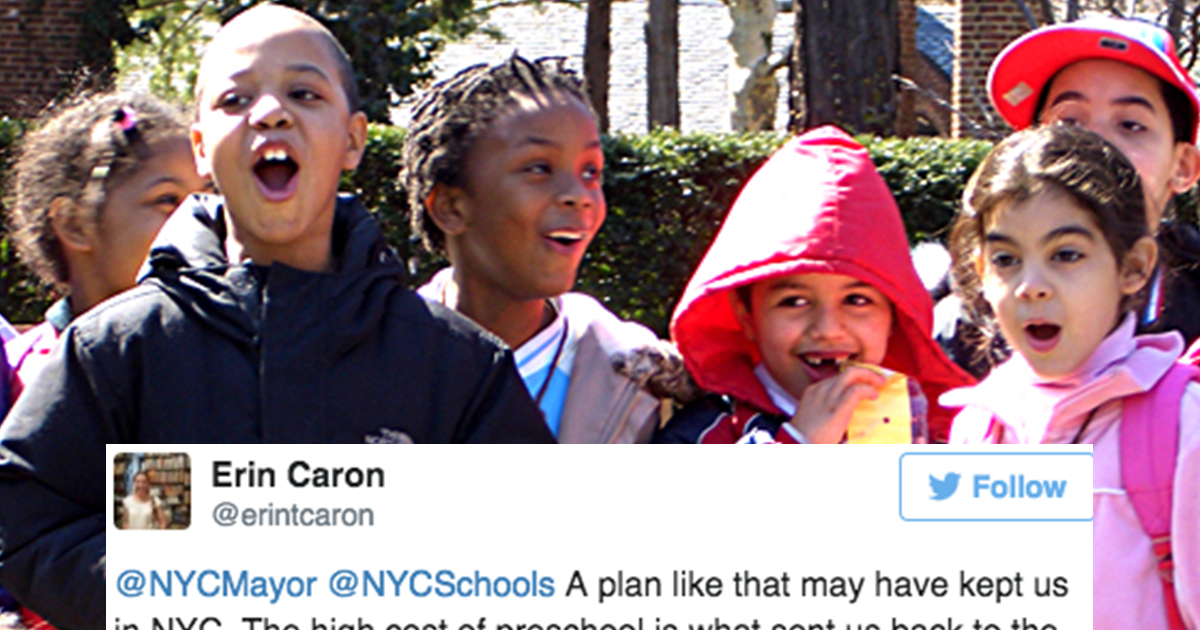
The dawn of an exciting era in education is upon us! New York City has officially embraced the notion of free universal preschool. This bold initiative marks a significant leap toward dismantling systemic inequalities and creating a more equitable society for future generations. But what does this mean for our youngest learners—and for the feminist movement at large? Let’s delve into the implications of this transformative opportunity.
Imagine a world where every child, regardless of socioeconomic background, has access to quality education at the tender age of three. A universal preschool system offers more than mere educational benefits; it serves as a catalyst for social change. It is essential to recognize that education is not just a personal achievement but a societal imperative. By providing free preschool to all children in New York City, we initiate a shift that can redefine the parameters of success and opportunity.
Therein lies the intersectionality of education and feminism. Education empowers individuals, elevating women who have historically been marginalized. Early childhood education can pivotally alter the fate of young girls—who will someday become leaders, innovators, and change-makers. The question emerges: How will free universal preschool fortify a feminist framework, and what ripple effects will it create in the socio-economic fabric of society?
Before diving deeper, let’s explore the dimensions of universal preschool and its implications for gender equity, economic empowerment, and social justice.
Universal Preschool and Its Feminist Significance
At its core, the establishment of universal preschool is an act of defiance against the entrenched injustices faced by women and marginalized communities. Early childhood education serves as a great equalizer, dismantling barriers that disadvantage specific groups. As we witness this policy’s implementation, it is crucial to highlight that education can forge paths to economic mobility, thereby destabilizing the oppressive cycles of poverty that predominantly affect women and single-parent households.
Women have long carried the burden of childcare responsibilities, often at the expense of their careers. With the advent of universal preschool, mothers can pursue professional aspirations while their children receive quality education and care. Consequently, this initiative doesn’t merely facilitate access to education; it offers liberation—unshackling women from the relentless cycle of unpaid labor. The ramifications are profound, reshaping household dynamics and fostering a new generation of empowered women who can advocate for themselves and their communities.
The Core of Equity: The Need for Representation in Education
Representation in early education is as vital as access. Many educators and caretakers, especially in preschool settings, are women. By ensuring a diverse workforce that reflects the demographics of New York City, we can create a nurturing environment that celebrates every child’s unique identity. This diversity in representation is doubly significant because it influences how young children view gender roles and different cultural identities.
Exposure to positive role models in educational settings is crucial for all children but is particularly salient for girls. They grow up seeing capable women in authoritative positions, nurturers, and educators; thus, the cycle of empowerment continues. However, this isn’t merely a celebration of female role models. It is about dismantling stereotypes, acknowledging the array of backgrounds, and paving the way for inclusive dialogue surrounding gender, race, and identity.
Moreover, New York City’s universal preschool initiative can heighten awareness of gender bias and discrimination, which can begin in educational environments. Educators trained in equity-focused methodologies can address microaggressions and bias early on, shaping a generation more attuned to social justice and equity. When children learn to recognize and challenge prejudices, they become the advocates for change in their communities.
The Economic Case: Investing in Our Future
While the social implications of early childhood education are compelling, we must also consider the economic ramifications of investing in preschool. The cost deficit of quality preschool education pales significantly in comparison to long-term benefits. Study after study shows that early education yields exponential returns on investment—enhanced cognitive development, lowered dropout rates, increased high school graduation rates, and reduced criminal activities. Such outcomes contribute not only to individual success but to a thriving, vibrant economy.
A workforce strengthened by skilled, educated individuals directly translates to heightened productivity and innovation. Universal preschool thus becomes an economic imperative, not merely a social one. It lays the groundwork for a more robust economy, one where women can partake fully, alleviating their financial burdens and fueling economic growth. It becomes clear: investing in girls’ education ensures a healthier economy, and the cycle of empowerment creates new waves of opportunity.
Challenges Ahead: Bridging the Institutional Gap
However, as we usher in this revolutionary shift, we must critically evaluate the roadblocks that lie ahead. Implementing universal preschool is not an isolated process; it requires grappling with complex bureaucracies and combating traditional viewpoints resistant to change. Some may see this as an overreach of governmental authority, while others view it as an erosion of family structures. The truth sits somewhere in the middle, nestled in the belief that society must collectively nurture its future.
Furthermore, ensuring quality remains non-negotiable. Access without quality encapsulates the risk of simply adding to the quantity of underperforming programs rather than fostering enriching environments. Funding must be strategically allocated, focusing on professional development for educators and the creation of tailored curricula that meet the diverse needs of all children. Quality education should not be reserved for only the privileged; it should be the birthright of every child in New York City.
An Ongoing Conversation: The Role of Advocacy
The success of universal preschool hinges not only on policy implementation but also on the collective commitment of activists, educators, and community members to support these initiatives. Advocacy must take the forefront—holding the government accountable, ensuring that promises are kept, and collectively fighting against any attempts to undermine or dismantle these systems. We must ensure that this monumental shift is sustained and continuously critiqued from a feminist lens that prioritizes the voices of those most impacted.
Conclusion: A Bright Future Awaits
The introduction of free universal preschool in New York City is a significant stride toward gender equity, economic reformation, and social justice. The benefits are multifaceted, reverberating through the lives of not just children but their families and communities. As we navigate this exciting new paradigm, let us remain vigilant, ensuring that this opportunity cultivates a generation of empowered individuals ready to challenge the status quo.
In this pivotal moment, we are not merely advocates for education accessibility—we are advocates for a future that values every individual’s potential, dismantles oppressive structures, and fosters a society rooted in equity and opportunity. Let us seize this moment, igniting curiosity and provoking thought as we navigate the profound implications of universal preschool through a feminist perspective.