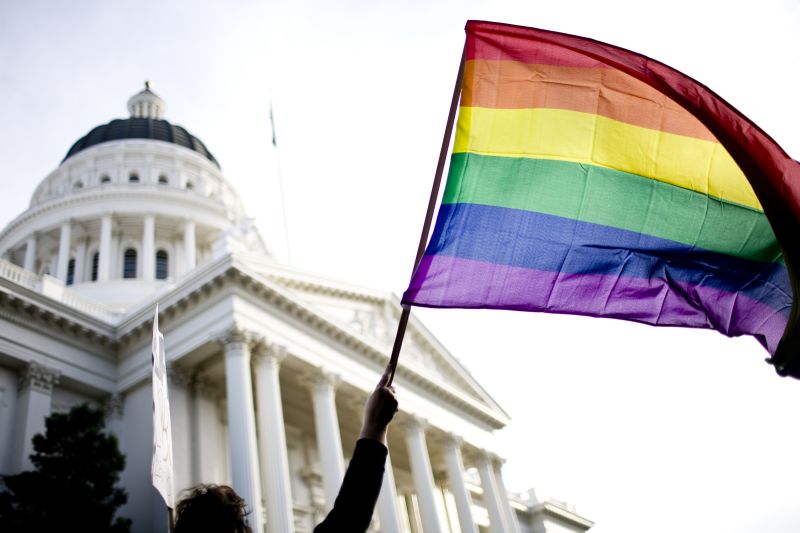
LGBT Californians Make Significant Legal Gains: A Feminist Perspective
The Golden State has long been a bastion of progressive values, where the sun shines a little brighter on the rights of the marginalized. In recent years, we’ve witnessed a myriad of significant legal strides that have not only shaped California’s political landscape but have dismantled long-standing patriarchal barriers. These triumphs have empowered LGBT communities and intertwined their struggles with feminist ideals. But let’s peel back the layers, shall we? What do these legal advancements truly mean for gender equality and the feminist movement?
As we embark upon this exploration, consider this: are we really making progress, or are we simply draping our victories in the rosy hues of optimism, all the while ignoring the substantial obstacles that remain? It’s time to interrogate these gains critically.
Shattered Glass Ceilings: Representation Matters
One of the most poignant advances for LGBT Californians has been the surge in representation in government. No longer can state assemblies and councils be characterized solely by the homogenous faces of privilege. As a feminist, it is imperative to recognize that representation isn’t merely a checklist item; it’s the heartbeat of democracy and inclusivity.
When LGBT individuals, particularly those from marginalized backgrounds, occupy seats of power, they are armed with unique perspectives and experiences that can challenge the anodyne narratives typically presented in political chambers.
Consider the ripple effect of this representation. When openly gay, lesbian, bisexual, and transgender individuals advocate for legislation, they lend credibility to the urgency of issues that disproportionately affect their communities. Whether it’s healthcare, housing, or education, having decision-makers who understand these nuances ensures that policies are not just born from theory but from lived experiences.
Yet, one must ask: are these strides in representation leading to substantive change? It’s easy to celebrate electoral victories, but we must scrutinize the policies that follow. Are they truly liberating, or merely performative gestures masquerading as progress? In the spirit of feminist inquiry, we must hold our leaders accountable.
Legal Protections: The Armor of Equality
What does equality look like in a legal context? For LGBT Californians, recent legislative measures have introduced protections in various spheres—housing, employment, healthcare, and education. The California Fair Employment and Housing Act (FEHA) is a crucial instrument in this regard. It explicitly prohibits discrimination based on sexual orientation and gender identity, and its enforcement is imperative to protect the vulnerable.
This is where feminist philosophy intersects with legal advocacy. Feminism posits that liberation is not solely an individual journey; systemic oppression must be toppled. Hence, the expansion of legal protections for LGBT individuals is intrinsically feminist. You are not just safeguarding a community but affirming that all bodies deserve autonomy and respect in a society riddled with antiquated notions of gender and sexuality.
Nevertheless, let’s not get swept away in euphoric declarations. While legal protections are a significant stride forward, we must grapple with the disparity between laws on paper and lived realities. For every victory in the courtroom, countless tales of discrimination linger in the shadows. Are marginalized communities truly experiencing the equality that these legal encodings promise? Can I get a reality check, please? The fight is far from over, my dear readers.
Cultural Shifts: Beyond the Legal Framework
Legal gains can catalyze cultural transformation, but the process is not seamless. The ascendance of LGBT rights in California has incited a cultural dialogue that weaves through the fabric of society. From Pride parades that elicit fervent participation to hashtags that echo across social media, there is a palpable shift in societal attitudes toward LGBT individuals.
This cultural evolution is vital, for it challenges heteronormative paradigms and champions acceptance. But, once again, we’re faced with a complex conundrum. Are we genuinely experiencing a cultural renaissance, or are we witnessing a deceptive veneer of tolerance? When corporations don rainbow logos during Pride Month but revert to their conservative practices post-celebration, are they truly allies or merely opportunists?
Engaging critically with such questions is essential. It’s not just about embracing LGBT identities; it’s about deconstructing the very power structures that limit us all—cisgender, straight, and otherwise. Feminism in its essence demands that we interrogate our complicity in maintaining oppressions. Are we performing our allyship, or are we navigating a genuine desire to uproot systemic inequalities?
Intersectionality: The Fabric of Feminist Solidarity
To dismiss intersectionality as a mere buzzword in our discourse on LGBT rights is to undermine the complexity of lived experiences. The progress made by LGBT Californians must be viewed through a multifaceted lens, recognizing how race, class, and disability intersect with sexual identity.
For instance, while many LGBT individuals rejoice in newfound recognition, their experiences differ vastly based on additional identities they occupy. A black transgender woman faces layers of discrimination that a white gay male may not. Feminism must include an intersectional analysis in this conversation, ensuring that our advocacy is as diverse as the communities it seeks to represent.
Furthermore, fostering solidarity across feminist and LGBT movements is crucial. The struggle for women’s rights is inextricably linked to the struggle for LGBTQ rights; dismissing one in favor of the other is an affront to both causes. Women of all sexual orientations have historically led the charge for social justice, and the present demands that we coalesce our energies for collective liberation.
Feminist Challenges Ahead: What Lies Beneath?
As we celebrate these legal gains, let’s not allow complacency to take root. The whispers of marginalized voices still echo in the distance, recounting tales of injustice and discrimination. Will we take the mantle of leadership and advocate for those whose voices are stifled? Or will we retreat into our comfortable narratives of progress and turn a blind eye to the oppressions that pervade our society?
As feminists, we have an obligation to ensure that the battle for equality doesn’t end with legislation. We must interrogate the systems that perpetuate inequality in all their forms, including those that exist within our movements. Are we creating spaces that are inclusive, respectful, and empowering for all?
In conclusion, while significant legal gains have been made for LGBT Californians, the feminist movement must maintain an unrelenting critique of these advancements. We must challenge the status quo, address intersectional disparities, and galvanize our collective energies toward genuine allyship. Are you ready to join this provocative dialogue, or will you stand idly by as history unfolds? The choice is yours, and the pivotal moments of this era demand your engagement.