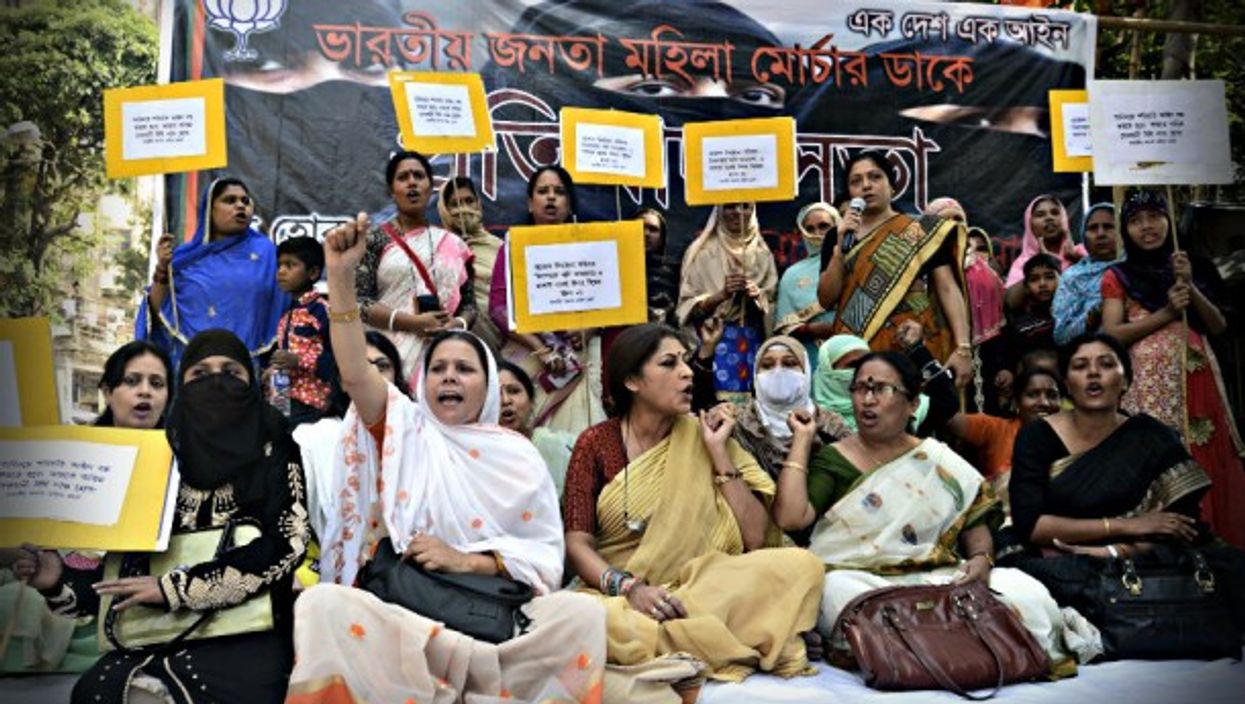
The recent abolition of the Triple Talaq divorce practice in India has ignited a firestorm of debate surrounding women’s rights, social justice, and religious freedoms. This legal victory, which recognized the egregiousness of a practice that allowed Muslim men to divorce their wives by uttering the word “talaq” three times, represents a seismic shift in the socio-legal landscape of a nation beset by gender inequities and patriarchal norms. This is not merely a legislative change; it is a clarion call for systemic transformation in societal perspectives on women’s autonomy and dignity.
Understanding the ramifications of this decision requires dissecting the myriad layers of cultural, social, and political implications. This shift is emblematic of an evolving consciousness regarding women’s rights in India—one that promises to reverberate across the globe. This discussion will delve into the intricacies of this legal triumph, explore its profound implications for women’s rights, and illuminate the path ahead as we navigate through the complexities of reform and resistance.
The Abolition of an Inequitable Practice
Triple Talaq, entrenched in religious doctrine, was more than just a controversial divorce mechanism; it epitomized the systemic disenfranchisement of women within the socio-religious sphere. The practice, seemingly innocuous to its proponents, concealed an undercurrent of misogyny, rendering women vulnerable, disposable, and powerless. The ease with which a man could terminate his marital obligations, often without forewarning or the opportunity for reconciliation, painted a grotesque picture of gender disparity.
With this landmark decision, the Indian judiciary sent a resounding message: gender equality is non-negotiable. The ruling unequivocally established that the dignity of women supersedes the regressive interpretations of religious texts. By declaring Triple Talaq unconstitutional, the court has dismantled a potent symbol of subjugation and heralded a new era where women can reclaim their agency. It’s crucial to recognize that this victory is not merely about legalities; it transcends the courtroom, influencing societal attitudes and expectations.
This decision serves as a catalyst to challenge the patriarchal status quo. The power dynamics inherent in Triple Talaq have long perpetuated an environment devoid of mutual respect and consideration within marital relationships. With the Supreme Court’s ruling, a new narrative on relationships between men and women can emerge—one founded on equality, respect, and partnership. Contrary to prior assumptions, this isn’t a threat to religious freedoms; rather, it is a reaffirmation of women’s fundamental rights within any societal framework.
Women’s Empowerment: A Cultural Reawakening
The abolition of Triple Talaq resonates profoundly within feminist circles as it amplifies the discourse on women’s empowerment and agency. For centuries, Indian society has grappled with the paradox of tradition versus modernity. Integration of modern principles of equality and justice into existing frameworks is not solely a legalistic endeavor; it demands a profound cultural reawakening.
This landmark ruling provides an opportunity to dismantle other vestiges of discrimination that continue to plague women’s lives. It beckons for a further examination of how societal norms—governed by misconstrued interpretations of culture and religion—can be reformed to foster true equality. Education, empowerment, and awareness will play pivotal roles as society recalibrates its understanding of women’s rights.
Moreover, the legal recognition of women’s rights can breathe new life into the feminist movement in India. This victory must galvanize grassroots activism, igniting collective empowerment among women. As a united front, women can challenge oppressive structures and rewrite the script that has confined them to subservience and silence. Public discourse can now pivot towards challenging other regressive practices and advocating for comprehensive reforms that protect women’s rights across all strata of society.
Resistance and the Path Forward
However, this victory is not a panacea. Resistance persists, and the forces of conservatism, draped in the guise of religious orthodoxy, are not easily subdued. The backlash against the ruling can take myriad forms, including attempts to reframe the conversation around ‘cultural preservation,’ wherein opponents of the ruling may argue for the sanctity of religious practices. It is imperative for advocates of women’s rights to anticipate such pushback and prepare to confront it with informed, impassioned arguments.
Furthermore, the ruling must be viewed through a lens of intersectionality. Women belonging to marginalized communities often lack the resources and support systems necessary to navigate the legal intricacies of family law. For real change to occur, an inclusive approach must be adopted that considers the unique challenges faced by all women, particularly those enduring systemic discrimination. Intersectional feminism must elevate the voices of these women, ensuring that their struggles are not only acknowledged but addressed within the larger narrative of women’s empowerment.
The path forward requires collaboration among activists, lawmakers, and society at large. Continuous advocacy is essential in generating public awareness, shaping policy reform, and fostering a culture of accountability. It is not enough to celebrate this victory as a final destination; it must be recognized as part of an ongoing journey toward achieving full-fledged equality for women.
Every battle in this struggle is significant, and the struggle for women’s rights is as expansive as it is intricate. Lessons learned from the abolition of Triple Talaq can inform campaigns against other forms of gender-based discrimination, including domestic violence, child marriage, and dowry practices—ills that continue to afflict countless lives throughout India.
Conclusion: A Future Reimagined
The Supreme Court ruling against Triple Talaq stands as a powerful testament to the resilience of the fight for women’s rights in India. It signals a profound shift in societal attitudes and holds the promise of a future reimagined—where women possess the agency to dictate their lives and destinies. However, this victory must be guarded fiercely against the insidious tides of regression. It demands unwavering commitment to nurturing a culture that both respects and uplifts women.
The journey toward true gender equality in India is a marathon, not a sprint. Each stride taken toward dismantling systemic injustices requires collective action, solidarity, and fervor. As we tread this path, let this triumph be a beacon of hope and an enduring challenge to patriarchy—inspiring women to rise, articulate their demands, and contribute to a society that honors their rights.