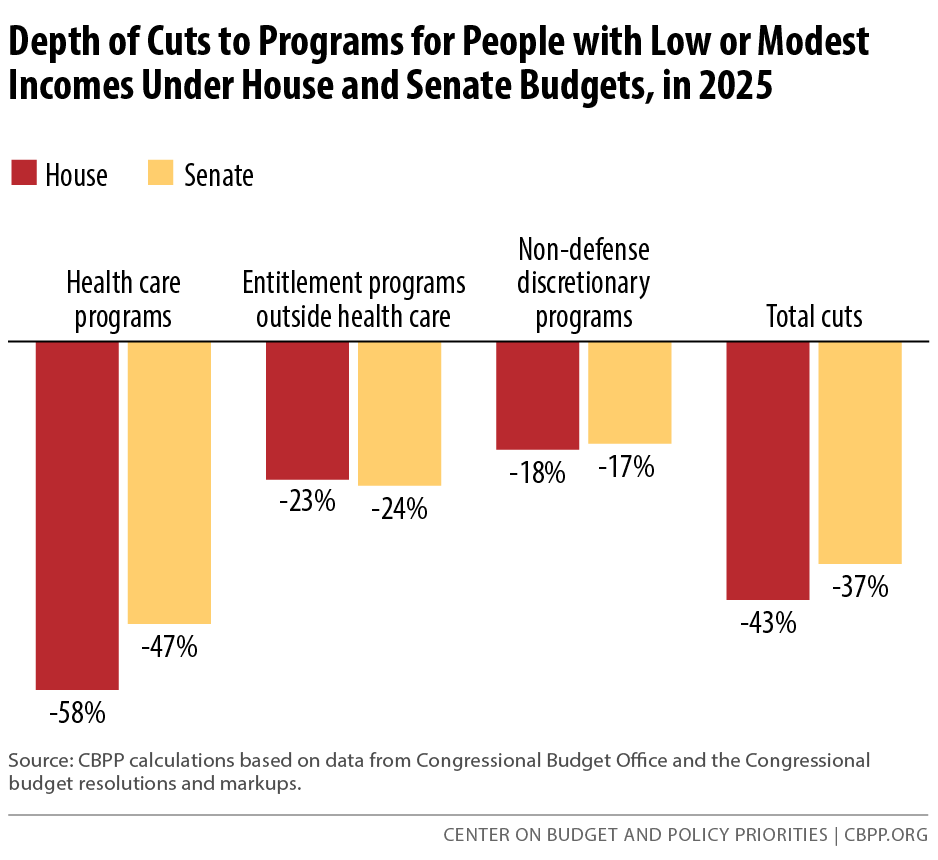
The recent passage of a budget blueprint by the House, with its profound cuts to social programs, marks not just a financial maneuver; it’s a clarion call that echoes throughout the landscape of feminism. The impending strife birthed from these cuts raises critical questions about equity, sustenance, and the ongoing war against poverty straining women disproportionately. As advocates of gender equality, we should interrogate not only the implications of these financial decisions but also the insidious narrative framing them. Welcome to a fresh reckoning that juxtaposes economic austerity with women’s rights and welfare.
At the crux of this budget dilemma lies a monstrous paradox. Social programs, often the safety nets for society’s most vulnerable—particularly women, children, and the elderly—are being meticulously unraveled. It’s crucial to scrutinize how deeply these cuts will reverberate among those who are already precariously perched on the edges of survival. The feminist lens, therefore, amplifies a glaring truth: when economic policies reduce funding for essential services, the burden inevitably falls hardest on women. Moreover, understanding the interconnectedness of economic strife with gender inequality unveils a broader systemic oppression that demands urgent attention and action.
With that premise laid bare, we venture forth into the intricate tapestry woven between budgetary allocations and gender rights, dissecting the emergence of a grim reality for women across the nation.
Understanding the Social Safety Net and Its Gendered Impact
Social programs are not mere lines on a balance sheet; they are lifelines tethered to the multispectral fabric of society. Programs like Medicaid, food assistance, and housing support do not exist in a vacuum; rather, they serve as foundational components that uphold dignity within the most marginalized communities. Feminist discourse examines this interplay with a critical eye, revealing how economic structures systematically disadvantage women.
Consider this: approximately 70% of individuals receiving benefits from social assistance programs are women. These programs often sustain single mothers, elderly women living in poverty, and those escaping domestic violence. The budgetary cuts, therefore, don’t just threaten numbers; they jeopardize livelihoods, families, and futures. When funds are slashed, it’s not only financial support that is eradicated; it’s a crucial acceptance of the societal responsibility to nurture and protect our communities.
This dramatic shift in fiscal policy displays a blatant disregard for the unique experiences of women. The argument for austerity often implies an improvement in economic conditions, yet studies consistently show that disinvestment in social programs results in exacerbated poverty, mental health issues, and long-term societal disengagement. Feminism demands that we dissect these implications; it charges us with the task of scrutinizing who the cuts impact most profoundly and, crucially, who benefits from the minimization of social safety nets.
Women of Color and the Budget Blueprint: Injustice Unraveled
As the budget blueprint looms ominously over our socio-political landscape, it is essential to emphasize the intersectionality that characterizes this discussion. For women of color, the repercussions of cutting vital social programs compound into layers of systemic oppression that demand immediate redress. While the ideological underpinnings of these budget cuts may aim to streamline government spending, they largely ignore the stark reality of racial inequalities permeating economic opportunities.
Women of color, particularly Black and Latina women, experience higher rates of poverty, unemployment, and reliance on social service programs. These inequities necessitate a nuanced feminist perspective that considers race, class, and gender simultaneously. The pernicious nature of cutting these programs can be likened to a tightening noose—where every snip irrevocably constricts the life chances of marginalized groups, igniting cycles of despair and unrelenting economic disenfranchisement.
It is urgent that feminist activism rises to counter this reality. A budget devoid of sensitivity towards the unique challenges faced by women of color only amplifies existing inequalities. The fight must be for comprehensive reform that not only preserves social programs but also expands them, ensuring that they can adapt to the evolving needs of all women in an equitable society. Advocating for robust funding becomes not only a financial issue but a moral imperative—a rallying cry that insists on justice for all women, regardless of race or socioeconomic status.
Mobilizing for the Future: Building a Feminist Economic Agenda
In light of the harsh impacts of the House’s budget blueprint, what is the way forward? The path toward a feminist economic agenda necessitates collective mobilization and resistance against austerity measures that disproportionately affect women. It calls for a revitalization of activist efforts, steering the conversation toward innovative policy-making balanced with compassion and justice.
This mobilization must originate from an acknowledgement of the current landscape—a landscape that promotes the myth of scarcity at the cost of humanity. Feminism posits that with the right policies in place, society can generate abundant opportunities for everyone, especially those historically excluded from that abundance. It champions a reallocation of resources that affirms the worth of caregiving, education, and community support.
Creating coalitions across various social justice movements strengthens our position and underscores the importance of solidarity. As austerity measures reemerge under the guise of fiscal responsibility, women must unite, emphasizing our shared struggles and aspirations. Intersectionality must serve as our cornerstone as we challenge the status quo, advocating not only for the protection of existing social programs but the introduction of new ones that account for the complexities of our lived experiences.
This budget battle serves as a catalyst for a larger discussion—one that questions the very determinants of economic health and the values they espouse. Ultimately, to dismantle the patriarchal structures that bind us, we must cultivate an economic narrative that genuinely reflects equity, inclusivity, and sustainability. Failure to do so risks consigning women to the dark margins of an unfathomable economic future.
In conclusion, as the ramifications of the House’s budget cuts unfold, they present an urgent call to action—a chance to engage critically with issues that interlace feminist activism and economic justice. It is a time to cultivate resilience, awareness, and an unwavering resolve to not only resist these shortsighted policies but to illuminate a path towards a just and equitable future. The time has come for women everywhere to reclaim their narrative; ensuring it resonates through every chamber of government and into the hearts of every community served.